Home
Home
 About Us


Viet Nam flexibly overcomes trade barriers
24/06/2026 01:53
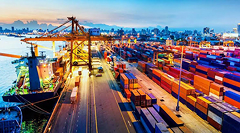
Associate Professor Dr. Dinh Cong Hoang, from the Institute of South Asia, West Asia and Africa Studies, Viet Nam Academy of Social Sciences, shared his views with a reporter from Hanoi Moi Newspaper regarding the US announcement of a 46% retaliatory tariff on goods imported from Viet Nam.
Facing trade barriers
According to Associate Professor Dr. Dinh Cong Hoang, facing pressure from the US imposing retaliatory tariffs of up to 46%, Viet Nam demonstrated flexible, adaptable, and proactive responses.
"Bamboo diplomacy " is a symbolic representation of Viet Nam's policy: flexibility combined with steadfastness, enabling adaptation to change while protecting core interests. In the context of a global economic downturn due to major countries focusing on domestic development and restructuring value chains, Viet Nam has leveraged its strong manufacturing and export base. Viet Nam continues to attract over $38 billion in investment and achieve impressive export and import growth in 2024, thanks to an open business environment and "new generation" free trade agreements such as EVFTA, CPTPP, and RCEP.
To counter US tariffs, Viet Nam is striving to balance its trade deficit by increasing imports of strategic items such as machinery, high-tech equipment, and agricultural products from the US; while simultaneously encouraging US businesses to invest in high-tech projects in Viet Nam. These measures not only help reduce the trade imbalance but also promote bilateral economic cooperation, demonstrating the spirit of "bamboo diplomacy"—flexible in response but steadfast in protecting national interests.
Viet Nam is not only dealing with tariffs, but is also proactively overcoming increasingly sophisticated non-tariff barriers in the international arena. New-generation free trade agreements have significantly reduced import and export taxes, bringing them close to 0%.
However, in major markets such as the United States, the EU, and Japan, legal regulations, technical standards, and administrative requirements remain significant challenges. These barriers not only impact export turnover but also profoundly affect the structure of Viet Nam's production value chains.
For example, the footwear industry – a key export item – has faced pressure from EU anti-dumping measures and technical requirements, diminishing competitiveness and impacting small and medium-sized enterprises. Similarly, the seafood industry also faces stringent regulations on traceability and environmental standards in the US and EU markets.
"To integrate more deeply into the international market, Viet Nam needs to study and overcome diverse barriers, from tariff to non-tariff barriers, while simultaneously enhancing the internal capacity of businesses," Associate Professor Dr. Dinh Cong Hoang emphasized.
Diversify markets, targeting potential areas.
Associate Professor Dr. Dinh Cong Hoang argues that instead of directly confronting US tariffs, Viet Nam needs to flexibly expand its export markets, exploiting the potential of "dormant" regions such as the Middle East and North Africa, Latin America, etc. This approach not only diversifies markets but also reduces dependence on traditional markets such as the US, EU, or China.
In particular, the government has implemented a project to develop the Halal industry, targeting a consumer market of over 1 billion high-income Muslims. This is a strategic move, seeking new growth drivers and affirming Viet Nam's comprehensive vision in the context of a volatile global economy.
Viet Nam's success stems not only from its strategic geographical advantages but also from its determined efforts to transform from the traditional FDI model – which was primarily based on low-value processing – to high-tech fields such as artificial intelligence (AI), chip technology, semiconductors, electronics, renewable energy, digital economy, and innovation. This transformation not only reflects the aspiration to "master technology" and build domestic brands but also marks a turning point from quantity-based production to high-quality production, creating superior added value for the economy.
The practical evidence is clearly demonstrated by the success of corporations such as VinFast, Viettel, and FPT. VinFast has achieved international recognition in the electric vehicle industry, affirming its competitiveness in the green technology sector. Viettel leads in telecommunications technology, making significant contributions to the national digital infrastructure, while FPT is a pioneer in digital transformation, bringing Vietnamese technology solutions to the global market. These achievements not only illustrate the determination to control technology but also affirm the role of the private sector in enhancing Viet Nam's standing.
Furthermore, the shift towards high technology helps Viet Nam overcome stringent technical barriers from developed markets such as the United States and the EU, where technological standards and regulations are increasingly strict. This not only increases economic value but also strengthens competitiveness, bringing Viet Nam closer to a prominent position in the global value chain. With a foundation built on groundbreaking strategies and policies such as Resolution 57, Viet Nam is gradually asserting its ability to adapt and develop sustainably in the new technological era.
These strategies exemplify Viet Nam's "bamboo diplomacy," characterized by flexibility in approach and steadfastness in protecting national interests. By diversifying markets, restructuring trade, investing in high technology, and expanding international cooperation on a mutually beneficial basis, Viet Nam has not only overcome challenges but also strengthened its position in the global value chain.
In the new economic era, Viet Nam is not only adapting to challenges but also aiming to become a high-tech hub and a crucial link in the global supply chain, opening up opportunities for sustainable development for the nation.
Source: Vietnam.vn
Các tin khác
- Thai canned pineapple exporters face five-year Mexico duty as Viet Nam and China gain ground (24/06/2026)
- The new US tariff strategy: Some laugh, some cry, and the unknowns remain (24/06/2026)
- Japan is imposing anti-dumping duties on imports of stainless steel from China and Taiwan (24/06/2026)
- India: Govt launches anti-dumping probe into electrical steel imports from China, Japan, Korea and Russia (24/06/2026)
- India imposes anti-dumping duty on insoluble sulphur imports from China, EU, US (24/06/2026)