Home
Home
 About Us


The new US tariff strategy: Some laugh, some cry, and the unknowns remain
24/06/2026 01:49
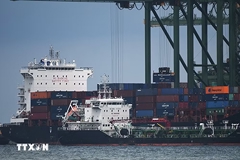
When the temporary 10% tariff imposed by Trump on all goods expires at the end of July, some countries may gain a competitive advantage with lower tariffs than before.
Following the Supreme Court's ruling that previous retaliatory tariffs were illegal, President Donald Trump is deploying new tools but remains committed to trade protectionism.
To strengthen the legal basis of its tariff measures, the U.S. is conducting investigations into alleged trade unfair practices with numerous countries, with two of the most prominent focusing on forced labor regulations and industrial overcapacity. Not all countries are targets of these investigations.
Therefore, when Trump's provisional 10% tariff on all goods expires at the end of July, some countries may gain a competitive advantage with lower tariffs than before. Conversely, others risk a worse situation.
The one who laughs…
Under previous reciprocal tariffs, the Philippines was subject to a 19% tax. However, the Southeast Asian nation would only face a 12.5% tariff if the proposed penalties for forced labor were implemented.
Because it is not subject to an investigation into excess production capacity, the Philippines is not expected to face future tariff increases. This opens up the possibility that the Philippines' tariff rates will decrease by nearly 7 percentage points compared to April 2025.
Similarly, in April 2025, South Africa faced a tariff of up to 30% due to Trump's frequent accusations that the government discriminated against white Afrikaners. This tariff is now projected to stabilize at 12.5% after the investigation into forced labor concludes.
Additionally, some countries with trade volumes with the U.S. below $10 billion may also benefit from lower tariffs under the new tariff barriers. Some of these countries may even be able to move from extremely high tariff rates back to the rates applied to most-favored-nation countries.
Tariffs on Pakistan will be reduced by 19 percentage points, from 29% to 10%. Myanmar, which was subject to a 44% tariff in April 2025, may now see tariffs on most of its goods reduced to between 0-2%. Laos and Lesotho are in a similar situation.
This reality has the potential to open up a new avenue for multinational corporations to shift their supply chains in order to avoid higher tariffs.
...people crying
Although the final details remain unclear, Singapore – a small but important trading partner of the U.S. – will almost certainly be at a greater disadvantage under the new tariff regime. The country will not be subject to separate, country-by-country emergency tariffs in April 2025.
However, the island nation was already subject to a 10% tariff applied to all other countries earlier this year. This tariff is now at risk of further increases as the Southeast Asian economy faces both a 12.5% tariff related to forced labor and the potential for additional taxes from an investigation into excess production capacity.
What makes the situation more difficult for American importers – who have to pay the taxes and handle the paperwork – is that Singapore is one of the world's busiest transit hubs. This means that a large amount of raw materials are imported into the country's ports and industrial zones before being exported as finished products.
The unknowns
At first glance, Canada appears to be in a better position, with tariffs on its goods projected to be lower than they were in April 2025. It also enjoys significant exemptions for qualifying goods under the U.S.-Mexico-Canada Agreement (USMCA). However, tariffs on specific sectors, such as metals, have placed considerable pressure on Canadian industry.
President Trump has frequently threatened to withdraw from the USMCA, while also clearly expressing his dissatisfaction with Canada for its retaliatory actions. Even if these threats are merely a bargaining chip, it still means Canada cannot afford to be complacent as it enters the USMCA renegotiations in the latter half of this year.
Similarly, Mexico is seeking ways to reduce the tariffs applied to its automotive industry, arguing that the tariffs are higher for them than for some vehicles imported from South Korea or Japan.
As part of the ongoing USMCA negotiations, the U.S. is urging Mexico to implement a regulation requiring automobiles within the North American Free Trade Area to have at least 50% of their components originating from the U.S.
Negotiations are expected to continue until at least the end of July, making the short-term trade impact for Mexico unclear.
Furthermore, the European Union (EU) is also facing pressure from the US regarding the implementation of the trade agreement between the two sides. The European Parliament (EP) and EU member states still need to vote to ratify the agreement on its implementation with the US before the July 4 deadline set by President Trump. The US President has stated that if the agreement is not implemented by the deadline, he will increase tariffs on European cars from 15% to 25%.
The European Parliament completed its part last week by voting to approve the agreement. EU countries are expected to make their decisions later this week, marking the final step in a year-long and arduous ratification process.
However, in a development that could further complicate matters, last week, Trump launched a Section 301 investigation into Germany, alleging that the country consistently undervalues innovative pharmaceutical products.
Responding to this move, German Chancellor Friedrich Merz said he expected the US to respect its trade commitments with Europe, while further emphasizing that decisions about pharmaceutical payments are an internal matter for the country.
China is also in a state of uncertainty regarding US tariffs. The country is in a significantly more favorable position than it was at the beginning of Trump's second term.
During his 2024 presidential campaign, he declared he would impose a 60% tariff on China. However, according to analysis from Bloomberg Economics, the current effective tariff rate is only around 21%.
The US and China are expected to review their tariff truce agreement this year, and many variables could arise between now and then.
Source: Vietnam.vn
Các tin khác
- Viet Nam flexibly overcomes trade barriers (24/06/2026)
- Thai canned pineapple exporters face five-year Mexico duty as Viet Nam and China gain ground (24/06/2026)
- Japan is imposing anti-dumping duties on imports of stainless steel from China and Taiwan (24/06/2026)
- India: Govt launches anti-dumping probe into electrical steel imports from China, Japan, Korea and Russia (24/06/2026)
- India imposes anti-dumping duty on insoluble sulphur imports from China, EU, US (24/06/2026)