Home
Home
 About Us



Thai canned pineapple exporters face five-year Mexico duty as Viet Nam and China gain ground
24/06/2026 01:51
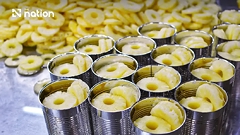
Mexico has imposed a five-year anti-dumping duty of US$0.93 per kilogramme on Thai canned pineapple, raising concerns over Thailand’s long-term competitiveness as Viet Nam and China expand in the Mexican market.
Thai exporters face five-year duty in Mexico
Thai canned pineapple exporters are facing a new long-term challenge in Mexico after the government imposed anti-dumping duties on imports from Thailand, Indonesia and the Philippines for five years.
The measure, which took effect on June 20, 2026, places an anti-dumping duty of US$0.93 per kilogramme on canned pineapple from Thailand. The new duty could weaken Thailand’s price competitiveness in Mexico, even as Mexican importers continue to value Thai products for their quality.
Mexico’s Ministry of Economy published its final anti-dumping ruling on June 19, covering canned pineapple under tariff code 2008.20.01 from Thailand, the Philippines and Indonesia.
Mexico says imports damaged local industry
According to the final ruling, Mexico found that canned pineapple imports from the three countries had caused injury to its domestic industry.
The duties were set at US$0.93 per kilogramme for Thailand, US$0.94 per kilogramme for the Philippines, US$0.99 per kilogramme for Indonesian exporter PT Great, and US$1.02 per kilogramme for other Indonesian exporters.
The Thai Office of Commercial Affairs in Mexico City under the Department of International Trade Promotion (DITP) said Mexico’s investigation found that imports from Thailand, the Philippines and Indonesia were priced about 40% below Mexican domestic producers’ selling prices and 23% below imports from other sources.
Mexico also cited signs of damage to its domestic industry, including a 21% drop in total production, a 22% fall in production for the domestic market, a 12.9% decline in market share, lower employment, weaker wages, reduced productivity and falling revenue.
Market already shifting after provisional duties
The final ruling follows Mexico’s anti-dumping investigation, launched on December 20, 2024, after Mexican producers Productos Santa Mónica and Sabormex filed a complaint alleging unfair competition from canned pineapple imported from Thailand, the Philippines and Indonesia. The investigation period covered April 1, 2023, to March 31, 2024.
Mexico had earlier imposed provisional anti-dumping duties from October 4, 2025, to February 4, 2026. Those temporary measures have already reshaped the market, with imports from Indonesia and the Philippines falling sharply while Viet Nam and China gained ground.
Bank of Mexico data cited by the Thai trade office showed that Mexico imported canned pineapple worth US$19.48 million in January-April 2026, up 136.08% from the same period a year earlier. Imports from Thailand were worth US$4.76 million, up 43.86% year on year.
However, Viet Nam’s exports to Mexico surged to US$5.83 million, up 3,438.04%, while China entered the market with imports worth US$2.49 million after recording no imports in the comparable period. Imports from Indonesia and the Philippines dropped by 88.21% and 66.41%, respectively.
Thailand’s market lead under pressure
Although Thailand remains one of Mexico’s key canned pineapple suppliers, its market position is coming under pressure from fast-growing rivals.
The Thai trade office said Mexican importers continued to trust the quality of Thai canned pineapple, but warned that the five-year anti-dumping duty could hurt Thailand’s competitiveness in the long run. The office advised Thai exporters to respond by strengthening product quality, branding and premium positioning rather than competing mainly on price.
Thai exporters were urged to market Thai canned pineapple as a premium product with strong taste, high safety standards and reliable quality. They were also encouraged to develop higher-value products, such as organic pineapple packed in juice or real fruit juice, to match health-conscious consumer trends.
Premium products seen as way forward
The trade office said innovative packaging could also help Thai exporters defend their market share. Options include sealed clear plastic cups and easy-to-open pouches aimed at consumers seeking convenience and portability.
Such moves would allow Thai exporters to avoid direct competition with lower-priced products from China and Viet Nam, while preserving Thailand’s reputation for quality in the Mexican market.
Source: TheNation
Các tin khác
- Viet Nam flexibly overcomes trade barriers (24/06/2026)
- The new US tariff strategy: Some laugh, some cry, and the unknowns remain (24/06/2026)
- Japan is imposing anti-dumping duties on imports of stainless steel from China and Taiwan (24/06/2026)
- India: Govt launches anti-dumping probe into electrical steel imports from China, Japan, Korea and Russia (24/06/2026)
- India imposes anti-dumping duty on insoluble sulphur imports from China, EU, US (24/06/2026)