Home
Home
 About Us



What new WTO appeals by foreign steel manufacturers could mean for U.S. Steel
24/09/2015 12:00
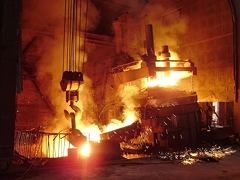
United States Steel Corp. and other domestic steel producers suffered a setback last week that may open the door for more countries to appeal duties that have been placed on imports of pipes for the energy industry.
Last August, U.S. Steel (NYSE: X) and other domestic pipe makers received a big win when the U.S. International Trade Commission ruled imports of oil country tubular goods (OCTGs) from a number of foreign countries would be subject to duties of up to 118 percent. But another court has ruled the duties levied against South Korea—the largest contributor of unregulated imports—should be reconsidered. In the wake of this decision, on Monday, Reuters reported Turkey could file an appeal of its own with the World Trade Organization.
Securing duties on OCTG imports has been an ongoing battle for U.S.-based steel manufacturers. In July 2013, a consortium of steel producers including U.S. Steel filed a petition with the Department of Commerce and International Trade Commission seeking antidumping relief. Between 2010 and 2012, OCTG imports from nine countries — India, Philippines, Saudi Arabia, Taiwan, Thailand, Turkey, Ukraine, Vietnam and most notably South Korea — more than doubled from 850,000 to 1.8 million tons, according to the Alliance for American Manufacturing. The products, which are used to build pipelines for the energy industry, are often sold at hundreds of dollars less per ton.
Pittsburgh-based U.S. Steel, the largest U.S.-based producer of tubular steel, has been heavily impacted by the imports, which have lowered prices and led to the closure of several plants, including one in McKeesport. A representative of the company was not immediately available to comment on what the most recent ruling means for the company.
But even if the duties are upheld against countries like South Korea and Turkey, it's unlikely trade litigation alone can turn around U.S. Steel's tubular division, according to John Tumazos, president and CEO at John Tumazos Very Independent Research. Crude oil and natural gas prices have dropped while at the same time about 4 million tons of new domestic tubular capacity has come online from competitors, he said.
"Two to three years ago everybody was optimistic the shale was going to boom, boom, boom…but there was anticipation of a much larger market than what has come to pass," Tumazos said.
Sales in the company's tubular segment dropped significantly in its most recent quarter with the company recording a net loss of $66 million for the second quarter of 2015. This compares to income of $47 million in the second quarter of 2014.
"Shipments continue to be adversely impacted by reduced drilling activity caused by low crude oil prices and the near record levels of tubular imports, much of which we believe are unfairly traded," the company said in a statement announcing its second quarter performance. "The decrease in results is also attributable to operating inefficiencies as a result of reduced production levels."
The learning curve has also improved to allow oil companies to get more production from fewer wells, he said.
Because the market has shrunk, product differentiation and service is going to be key in securing those orders that remain, according to Tumazos.
In July, U.S. Steel Tubular Products announced the introduction of USS-Liberty TC, a highly engineered connection offering for the energy industry. The connection was successfully installed at a Range Resources Corp. (NYSE: RRC) well in West Alexander, Pa., about 45 miles southwest of Pittsburgh near the West Virginia border.
"It's a tough environment, and in the end, U.S. Steel is going to have to lower their own costs," Tumazos said.
The Department of Commerce has until Nov. 2 to respond. A spokesperson for the department did not immediately respond to a request for comment.
Last August, U.S. Steel (NYSE: X) and other domestic pipe makers received a big win when the U.S. International Trade Commission ruled imports of oil country tubular goods (OCTGs) from a number of foreign countries would be subject to duties of up to 118 percent. But another court has ruled the duties levied against South Korea—the largest contributor of unregulated imports—should be reconsidered. In the wake of this decision, on Monday, Reuters reported Turkey could file an appeal of its own with the World Trade Organization.
Securing duties on OCTG imports has been an ongoing battle for U.S.-based steel manufacturers. In July 2013, a consortium of steel producers including U.S. Steel filed a petition with the Department of Commerce and International Trade Commission seeking antidumping relief. Between 2010 and 2012, OCTG imports from nine countries — India, Philippines, Saudi Arabia, Taiwan, Thailand, Turkey, Ukraine, Vietnam and most notably South Korea — more than doubled from 850,000 to 1.8 million tons, according to the Alliance for American Manufacturing. The products, which are used to build pipelines for the energy industry, are often sold at hundreds of dollars less per ton.
Pittsburgh-based U.S. Steel, the largest U.S.-based producer of tubular steel, has been heavily impacted by the imports, which have lowered prices and led to the closure of several plants, including one in McKeesport. A representative of the company was not immediately available to comment on what the most recent ruling means for the company.
But even if the duties are upheld against countries like South Korea and Turkey, it's unlikely trade litigation alone can turn around U.S. Steel's tubular division, according to John Tumazos, president and CEO at John Tumazos Very Independent Research. Crude oil and natural gas prices have dropped while at the same time about 4 million tons of new domestic tubular capacity has come online from competitors, he said.
"Two to three years ago everybody was optimistic the shale was going to boom, boom, boom…but there was anticipation of a much larger market than what has come to pass," Tumazos said.
Sales in the company's tubular segment dropped significantly in its most recent quarter with the company recording a net loss of $66 million for the second quarter of 2015. This compares to income of $47 million in the second quarter of 2014.
"Shipments continue to be adversely impacted by reduced drilling activity caused by low crude oil prices and the near record levels of tubular imports, much of which we believe are unfairly traded," the company said in a statement announcing its second quarter performance. "The decrease in results is also attributable to operating inefficiencies as a result of reduced production levels."
The learning curve has also improved to allow oil companies to get more production from fewer wells, he said.
Because the market has shrunk, product differentiation and service is going to be key in securing those orders that remain, according to Tumazos.
In July, U.S. Steel Tubular Products announced the introduction of USS-Liberty TC, a highly engineered connection offering for the energy industry. The connection was successfully installed at a Range Resources Corp. (NYSE: RRC) well in West Alexander, Pa., about 45 miles southwest of Pittsburgh near the West Virginia border.
"It's a tough environment, and in the end, U.S. Steel is going to have to lower their own costs," Tumazos said.
The Department of Commerce has until Nov. 2 to respond. A spokesperson for the department did not immediately respond to a request for comment.
Sep 14, 2015
Source: Pittsburgh Business Time
Source: Pittsburgh Business Time
Các tin khác
- New-generation FTAs open wider export opportunities to Middle East and South Asia (15/06/2026)
- Updated regulations on foreign trade management and import quotas (15/06/2026)
- Mandatory traceability for high-risk goods from July 1st: What should businesses prepare for? (15/06/2026)
- Tariff pressure is forcing businesses to restructure in order to adapt. (15/06/2026)
- Coffee Citizens model aims to lift Vietnamese value chain (15/06/2026)