Home
Home
 About Us


Tariff pressure is forcing businesses to restructure in order to adapt.
15/06/2026 05:30
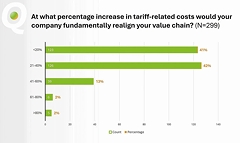
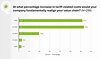
Up to 42% of businesses can only accept a maximum increase in tax costs of around 40%; while 41% are willing to consider restructuring if the cost increase is below 20%...
This is Deloitte's survey data on the complexity of taxes and tariffs in Asia Pacific in 2025. The survey is Deloitte's fifth study on the increasing complexity of the tax and business environment in the region. With the changing business landscape, this research focuses more on the executive level, gathering opinions not only from tax leaders but also from senior leaders with decision-making power.
Accordingly, instead of relying heavily on price adjustments to absorb tariff shocks, leaders now view these as temporary solutions rather than sustainable long-term strategies.
The research team suggests that this shift in mindset reflects a broader readjustment: As cost pressures mount, leaders are increasingly willing to reassess their operating models, indicating a more proactive and strategic approach to supply chain resilience.
“Vietnam is one of the markets directly impacted by the shift in regional supply chains, so what the survey found is quite close to what we observed when working with businesses here,” said Bui Tuan Minh, Head of Tax and Legal Advisory Services, Deloitte Vietnam.
Vietnam amidst the global tariff flow.
In the earlier stages of globalization, businesses typically prioritized the lowest-cost links in their supply chains to maximize economic efficiency. However, successive shocks from pandemics, geopolitical conflicts, logistics disruptions, and tariff adjustments have altered this thinking.
According to Deloitte, nearly 70% of respondents indicated that their primary focus in supply chain decisions has shifted from cost reduction to a focus on reliability, stability, or strategic alignment.
This integrated approach faces several internal hurdles, beyond the realm of macroeconomic volatility. More than half of those surveyed (51%) shared operational challenges stemming from internal constraints, including incomplete processes, limited data capabilities, and a lack of critical skills.
As a result, transforming the tax operating model is increasingly becoming a priority on the agenda of C-level executives. Operational readiness is no longer a basic expectation but a genuine competitive differentiator.
This shift shows that the lowest cost does not necessarily create the greatest value. In a volatile business environment, the ability to maintain continuous operation and minimize disruption risks is increasingly becoming a more valuable competitive advantage.
Experts believe that for Vietnam, this presents both opportunities and challenges. The opportunity arises as many global corporations continue to seek new production locations beyond traditional centers.
However, competitive advantage in this new phase will no longer rely primarily on tax incentives or low costs. Investors will increasingly focus on infrastructure quality, data transparency, the ability to meet international standards, and the stability of the business environment.
One of the most significant changes currently underway is the implementation of the OECD's Pillar 2. This mechanism establishes a global minimum corporate tax rate of 15% for multinational corporations with consolidated revenues of €750 million or more, aiming to curb the tax race among nations.
The OECD stated that this mechanism began to be implemented in 2024 and an increasing number of countries are participating in its implementation. Simultaneously, Vietnam officially adopted the global minimum tax rate from the beginning of 2024 and continues to refine the legal framework for its enforcement. This creates a major turning point in the competition to attract investment. For decades, tax incentives have been one of the key tools for attracting FDI flows.
Furthermore, with the widespread application of global minimum tax rates, the effectiveness of traditional tax incentives will significantly diminish for many large corporations. In other words, the competition to attract investment is shifting from tax incentives to the quality of the investment environment. Therefore, this is the time for countries and businesses to invest more heavily in substantive capabilities, from logistics infrastructure and high-quality human resources to innovation and data governance.
Experts at Deloitte Vietnam believe that taxation is shifting from a compliance factor to a strategic variable. Therefore, any changes in tariffs or international regulations can impact cost structures, investment flows, and a company's position in the global value chain. Monitoring and forecasting policies is becoming an integral part of strategic management capabilities.
Taxation is shifting from a risk control role to a value creation role. The ability to understand and predict the impact of tariffs, international tax reforms, or new regulations will directly affect investment decisions, supply chain design, and resource allocation.
"Gradually elevating the tax function from compliance to strategic decision support will help businesses respond more effectively to future uncertainties," said Bui Tuan Minh, head of tax and legal advisory services at Deloitte Vietnam.
Source: Vietnam.vn
Các tin khác
- New-generation FTAs open wider export opportunities to Middle East and South Asia (15/06/2026)
- Updated regulations on foreign trade management and import quotas (15/06/2026)
- Mandatory traceability for high-risk goods from July 1st: What should businesses prepare for? (15/06/2026)
- Coffee Citizens model aims to lift Vietnamese value chain (15/06/2026)
- Exports gain momentum from high-tech growth drivers (15/06/2026)