Home
Home
 About Us



What is the difference between Antidumping and Countervailing duties?
27/03/2015 12:00
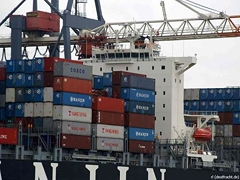
Antidumping and Countervailing duties essentially seek to remedy the same problem: artificially low priced imports. The root cause of the artificially low price is what differentiates antidumping and countervailing duties.
Anti-dumping duties are for combating “dumping”, which means that an exporter is setting prices at such a low point, that they are intentionally losing money in order to harm the domestic producers of the importing country. It is a predatory pricing model where the exporter prices its goods below production costs or below what they sell for in their home market.
Countervailing duties seek to counteract artificially low prices that are a result of subsidies. Governments often offer all sorts of subsidies on exports in the form of tax breaks and credits. Because of these subsidies, exporters are able to offer lower prices than domestic producers in the importing country. Countervailing duties level the playing field and negate the advantage that exporters get from subsidies.
Antidumping and countervailing duties go hand in hand. In fact, a petitioner can file both antidumping and countervailing duty petitions as a single document.
Filing of a petition
Interested parties can file on behalf of an industry by submitting a petition via a completed questionnaire or as text to the Dept. of Commerce and the Intl Trade Commission. A Draft petition can be shared with both agencies before the official petition is filed. The Dept. of Commerce and the Intl. Trade Commission welcome the opportunity to review the draft and share any deficiencies with the petitioner before they file.
A Petition contains and Introduction, Conclusion, and the following sections:
1. General Information
2. Description of Imported Goods, Exporters and Importers
3. Subsidy Information and Price Information
4. Critical Circumstances Information
5. Injury Information
Chronology of Events
Once the petition has been filed with the Dept of Commerce and the Intl Trade Commssion (on the same day), the investigation follows a five stage process. Each stage ends with a determination by either the Dept of Commerce or the Intl Trade Commission. If one of the agencies at any point in the process decides not to go forward, both agencies terminate proceedings. The five stages are:
1. Initiation of the investigation by Dept. of Commerce
2. The preliminary phase of the Intl. Trade Commission’s investigation
3. The preliminary phase of the Dept. of Commerce’s investigation
4. The final phase of Dept of Commerce’s investigation
5. The final phase of Intl. Trade Commission’s investigation
Each step has a required deadline stipulated by The Tarff Act of 1930 (the “Act”) as added to and emended by subsequent laws. The statutory deadlines relating to the five stages are as follows:
1. Initiation – 20 days after the filing of the petition.
2. Preliminary determination by the Intl. Trade Commission – 45 days after the filing of the petition.
3. Preliminary determination by the Dept. of Commerce – 115 days after the Commission’s preliminary determination in antidumping cases or 40 days in countervailing duty cases.
4. Final determination by the Dept. of Commerce – 75 days after the Dept. of Commerce’s preliminary determination.
5. Final determination by the Intl. Trade Commission – 120 days after the Dept. of Commerce’s preliminary determination or 45 days after its final determination, whichever is later.
How does Customs Info Reference help with researching AD/CV Duties?
Inside of Customs Info Reference there is a sizable database of over 6 million reference documents, including cross-referenced and searchable duty rates.
Within the CI Search tab, a user can search daily Federal Register Publications From 1998 up to the current day by HS code. You can keep up to date with the latest ADD/CVD investigations by checking the latest Federal Register, or you can sign up for daily Federal Register alerts.
In the Research Tools Tab, the ADD/CVD Lookup tool will look up rates for any 10 digit HS Code. Search results for a HS Code query show a link to the rates, case numbers, related case numbers, a short description, the affected country’s two letter ISO code, effective date, date added, and inactive date. Clicking on one of the “Rates” links pulls up a list of extended case numbers with the names of Manufacturers, exporters, and their corresponding AD/CV Duty rates. The general AD/CV Duty rate is also shown.
Also in the Research Tools tab is a link to download a spreadsheet with all the HS codes that are currently tagged as having antidumping or countervailing duties.
The Global Tariff and International Mapping tool (tab) enables users to look up Duty and Taxes by selecting the destination country, HS Code, Origin Country, and where it is shipped from. Results include Duties, Taxes, VAT, Harbor Fees, Maintenance Fees, Arbitrary Fees, and Veterinary Fees.
Source: customsinfo
Các tin khác
- New-generation FTAs open wider export opportunities to Middle East and South Asia (15/06/2026)
- Updated regulations on foreign trade management and import quotas (15/06/2026)
- Mandatory traceability for high-risk goods from July 1st: What should businesses prepare for? (15/06/2026)
- Tariff pressure is forcing businesses to restructure in order to adapt. (15/06/2026)
- Coffee Citizens model aims to lift Vietnamese value chain (15/06/2026)