Home
Home
 About Us



Vietnamese steel products face anti-dumping investigations
24/09/2015 12:00
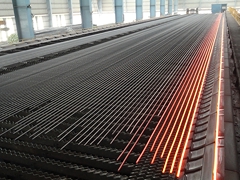
The Malaysian Ministry of International Trade and Industry (MITI) has started an anti-dumping investigation on Vietnamese exports of alloy and non-alloy cold-rolled steel coils with the thickness of 0.2-2.6 mm and width of 700-1,300 mm.
Analysts said that steel was one of several products that regularly face anti-dumping investigations conducted by importing countries.
Deputy director of the Competition Administration Department (CAD) Nguyen Phuong Nam, confirming the news, said MITI would send questionnaires to Vietnamese steel manufacturers, while domestic manufacturers could ask MITI for questionnaires.
According to the Ministry of Industry and Trade, Malaysia imported around 151,000 tons of steel worth $110 million from Vietnam in 2014.
Prior to that, the Australian Anti-Dumping Commission (ADC) conducted an investigation over zinc-coated (galvanised) steel imported from Vietnam.
The probe finished last month when ADC stated that Vietnamese galvanised steel shipped to Australia was not sold at dumping prices, therefore posing no threat to Australia’s domestic steel production.
Professor Nguyen Thi Mo from the International Arbitration Center (IAC) noted that the majority of Vietnamese enterprises subject to the investigations did not have deep knowledge about the laws and the management mechanisms applied by the import countries.
Mo also noted that in many cases, Vietnamese businesses could not anticipate risks and they signed contracts without legal instruments to protect their benefits.
When negotiating with foreign partners, businesses only paid attention to some basic provisions on quantity, quality, prices and payment methods, while they ignored the provisions on fines and compensation for damages.
Meanwhile, Le Sy Giang, an expert in competition, noted that steel products regularly face anti-dumping lawsuits because steel has a wide range of products and a high investment rate.
Most countries want to protect their local steel manufacturers.
Vietnam’s steel products face more lawsuits because Vietnamese enterprises only focus on some phases of the steel production chain that require low production costs.
Hoa Phat is the only Vietnamese enterprise which makes steel from ore.
It mostly makes black steel, and cannot make high-end products. Other steel manufacturers have to import ingot steel to make finished products.
Vietnam’s steel industry has experienced a ‘hot development stage’, but Vietnamese enterprises have not prepared well enough to join the ‘global playing field’.
They have been relying on low labor costs to compete with foreign products.
A CAD report shows that Vietnam is one of the countries which have many categories of products subject to anti-dumping investigations: 52 cases have been initiated by 15 importing countries so far, while 29 percent of the cases were related to steel products.
Analysts said that steel was one of several products that regularly face anti-dumping investigations conducted by importing countries.
Deputy director of the Competition Administration Department (CAD) Nguyen Phuong Nam, confirming the news, said MITI would send questionnaires to Vietnamese steel manufacturers, while domestic manufacturers could ask MITI for questionnaires.
According to the Ministry of Industry and Trade, Malaysia imported around 151,000 tons of steel worth $110 million from Vietnam in 2014.
Prior to that, the Australian Anti-Dumping Commission (ADC) conducted an investigation over zinc-coated (galvanised) steel imported from Vietnam.
The probe finished last month when ADC stated that Vietnamese galvanised steel shipped to Australia was not sold at dumping prices, therefore posing no threat to Australia’s domestic steel production.
Professor Nguyen Thi Mo from the International Arbitration Center (IAC) noted that the majority of Vietnamese enterprises subject to the investigations did not have deep knowledge about the laws and the management mechanisms applied by the import countries.
Mo also noted that in many cases, Vietnamese businesses could not anticipate risks and they signed contracts without legal instruments to protect their benefits.
When negotiating with foreign partners, businesses only paid attention to some basic provisions on quantity, quality, prices and payment methods, while they ignored the provisions on fines and compensation for damages.
Meanwhile, Le Sy Giang, an expert in competition, noted that steel products regularly face anti-dumping lawsuits because steel has a wide range of products and a high investment rate.
Most countries want to protect their local steel manufacturers.
Vietnam’s steel products face more lawsuits because Vietnamese enterprises only focus on some phases of the steel production chain that require low production costs.
Hoa Phat is the only Vietnamese enterprise which makes steel from ore.
It mostly makes black steel, and cannot make high-end products. Other steel manufacturers have to import ingot steel to make finished products.
Vietnam’s steel industry has experienced a ‘hot development stage’, but Vietnamese enterprises have not prepared well enough to join the ‘global playing field’.
They have been relying on low labor costs to compete with foreign products.
A CAD report shows that Vietnam is one of the countries which have many categories of products subject to anti-dumping investigations: 52 cases have been initiated by 15 importing countries so far, while 29 percent of the cases were related to steel products.
Sep 22, 2015
Source: Vietnamnet
Source: Vietnamnet
Các tin khác
- New-generation FTAs open wider export opportunities to Middle East and South Asia (15/06/2026)
- Updated regulations on foreign trade management and import quotas (15/06/2026)
- Mandatory traceability for high-risk goods from July 1st: What should businesses prepare for? (15/06/2026)
- Tariff pressure is forcing businesses to restructure in order to adapt. (15/06/2026)
- Coffee Citizens model aims to lift Vietnamese value chain (15/06/2026)