Home
Home
 About Us



Vietnam set to boost agricultural exports to China
24/07/2024 04:03
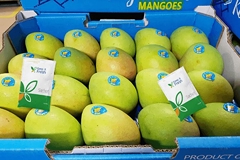
Vietnam in the first six months of this year harvested a bumper crop from its agro-forestry-fishery exports to China which is now its largest buyer in this sector.
According to the Ministry of Agriculture and Rural Development, in the first half of 2024, the total export turnover of agro-forestry-fishery products reached $29.2 billion, up 19 per cent compared to the same period in 2023.
China accounted for 20.2 per cent of this, an increase of 9.5 per cent on-year, ranking second among export markets.
According to tienphong.vn, China typically spends $230 billion annually on agricultural imports, with nearly $100 billion spent in the first five months of this year alone. Among agricultural products, China imports over $20 billion worth of items such as fruit, seafood, and rice each year.
Nguyen Dinh Tung, general director of Vina T&T Group, said that the demand for fruit and vegetables in current markets is very high. "For example, durian exports to China have seen a surge in orders, with the company expecting to export 2,500 tonnes of fresh durian this year," Tung said.
Nong Duc Lai, Vietnam's trade counsellor in China, predicted strong growth in agricultural exports for the rest of the year.
"China has many long holidays in the second half of the year, including the current summer break for students, followed by the mid-Autumn festival. During these holidays, the demand for agricultural products increases significantly. Vietnamese businesses should take advantage of this time to boost exports. The registration of growing area codes and packaging facilities facilitates exports to this market," Lai said.
While Vietnam is the largest exporter of agro-fishery products to China, it also receives the most warnings, especially for agricultural and food products.
Additionally, the Chinese market is vast, with each province essentially being a separate market. China has diverse culinary cultures, with different regions having different consumer needs.
Lai recommended that trade promotion efforts should consider these factors. Businesses and localities should provide specific information to trade offices for market research before conducting trade promotion activities. Additionally, the Ministry of Industry and Trade (MoIT) should strengthen relationships with Chinese localities to exploit specific markets for particular products.
"Currently, trade promotion efforts should focus on large markets in western, central, and northeastern China. In Guangdong province, there's a huge demand for seafood, while Shandong province needs rubber the most. Businesses must research to exploit these markets effectively," Lai said.
To Ngoc Son, deputy director of the Asia-Africa Market Department under the MoIT, noted that while businesses have made significant efforts recently, quality remains a challenge, especially for agricultural products. Ensuring the quality of agricultural exports is crucial in today's globalised world, as issues in one market can lead to similar policies being adopted in others.
In addition to trade promotion, Son suggested that trade offices should enhance market research and information to provide market assessment reports, impact forecasts, and trend predictions.
Source: Vietnam Investment Review
Các tin khác
- Viet Nam extends anti-dumping duties on some Thai sugar products to 2031 (05/06/2026)
- Hong Kong: Ministry of Commerce Rules on Inheritance of Anti-dumping Duty Rates for Copolymer Polyoxymethylene Imports Originating from S Korea, Thailand and Malaysia (05/06/2026)
- Early-season Vietnamese lychees conquer US consumers (05/06/2026)
- Global rubber prices surge, raising hopes for Vietnamese exporters (05/06/2026)
- Modern logistics creates new growth opportunities for Lang Son’s border-gate economy (05/06/2026)