Home
Home
 About Us



Vietnam has a market economy: Expert
02/08/2024 05:10
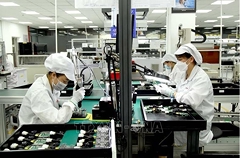
Vietnam has a market economy, if the pace of reforms it has undertaken from the Doi Moi (Renewal) period in 1986 to now is taken into consideration, Senior Lecturer in Economics at Australia’s Deakin University Dr. Cong Pham has assessed.
Vietnam joined the World Trade Organisation (WTO) in 2007 and has since signed numerous multilateral and bilateral free trade agreements (FTAs) with various countries, including the Comprehensive and Progressive Agreement for Trans-Pacific Partnership (CPTPP), the EU-Vietnam Free Trade Agreement (EVFTA), and the Vietnam-US Bilateral Trade Agreement.
The FTAs signed have increasingly integrated Vietnam into the global economy with stringent competitive rules and also encouraged the country to adopt practices of free competition, the scholar said.
According to the expert, another point showing Vietnam has rapidly transitioned from a centrally planned economy to a market one is the emergence of private companies and startups. He noted that the private sector has grown alongside a reduction in the number of state-owned enterprises (SOEs) through the equitisation of small- and medium-sized enterprises.
He pointed to six factors that prove Vietnam is a market economy. First, the private sector has grown rapidly, and now accounts for nearly 45% of GDP, contributes one-third of the state budget, provides 40% of investment capital, and employs 85% of the country’s workforce.
Second, Vietnam has reformed its foreign investment laws, and attracted over 18 billion USD in foreign direct investment (FDI) in the first seven months of this year.
Third, Vietnam has developed a competitive market environment across various sectors.
Fourth, the legal framework has evolved to support the growth of the private sector, with the promulgation of intellectual property protection laws, the Enterprise Law, and the Investment Law. These laws, introduced in the mid-2000s and revised several times, have become crucial in creating a transparent environment, stated Cong Pham.
Fifth, Vietnam’s financial market is developing rapidly, with significant increases in stock market capitalisation over the past time.
Sixth, Vietnam’s national target programme for poverty reduction for 2021-2025 aims to reduce the poverty rate by 1-1.5% per year on average. According to the Ministry of Labour, Invalids, and Social Affairs, the poverty rate is projected to be around 0.9% by the end of 2025, he added.
Source: Nhan Dan News
Các tin khác
- Viet Nam extends anti-dumping duties on some Thai sugar products to 2031 (05/06/2026)
- Hong Kong: Ministry of Commerce Rules on Inheritance of Anti-dumping Duty Rates for Copolymer Polyoxymethylene Imports Originating from S Korea, Thailand and Malaysia (05/06/2026)
- Early-season Vietnamese lychees conquer US consumers (05/06/2026)
- Global rubber prices surge, raising hopes for Vietnamese exporters (05/06/2026)
- Modern logistics creates new growth opportunities for Lang Son’s border-gate economy (05/06/2026)