Home
Home
 About Us


US Gov’t Lays Countervailing Duties on Korean Steel over Electricity Subsidies
09/10/2023 09:03
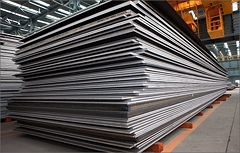
The U.S. Department of Commerce has imposed countervailing duties on Hyundai Steel and Dongkuk Steel, alleging that Korea’s cheap electricity rates are effectively subsidizing the Korean steel industry. This is the first time the U.S. government has slapped tariffs due to cheap electric power in a final determination for imposing countervailing duties.
According to Korea’s Ministry of Trade, Industry and Energy (MOTIE) on Oct. 5, the U.S. Department of Commerce finally announced through a gazette in September that it will slap countervailing duties of 1.08 percent on steel plates produced in 2021 from Hyundai Steel and Dongkuk Steel. Countervailing duties are tariffs imposed on an exporting country’s products to prevent damage to a country that imports the products when the exporting country provides subsidies or other benefits to certain exported goods. They can make the exporting country’s products less competitive.
U.S. steelmakers consistently complained to the U.S. Department of Commerce in the past that electricity charges are too low in Korea, so they act as a subsidy for Korean steelmakers. Until now, the U.S. Department of Commerce has only mentioned Korea’s cheap electricity prices in preliminary determinations and ultimately ruled them as de minimis dumping margins. However, in 2021, when Korean industrial electricity prices were locked in at a below-cost level, the U.S. Department of Commerce imposed countervailing duties, analysts say.
Given that electricity prices were below cost in 2021 and 2022, similar issues may arise in the future. KEPCO’s overall cost recovery rate for electricity plummeted to 85.9 percent in 2021 and 64.2 percent in 2022 from 101.3 percent in 2020. In 2022, KEPCO’s cost recovery rate was the lowest since 2005, when the government began to compile such statistics. This is because the cost of electricity climbed due to rising international fuel prices, but the Korean government did not properly reflect that in electricity bills.
Hyundai Steel and Dongkuk Steel plan to file a complaint with the U.S. International Trade Court (ITC). “We cannot avoid the impact of the countervailing duties on our steel products,” said a Hyundai Steel official, “But we do not agree on the final verdict and will file a complaint with the ITC.”
Source: Business Korea
Các tin khác
- Viet Nam extends anti-dumping duties on some Thai sugar products to 2031 (05/06/2026)
- Hong Kong: Ministry of Commerce Rules on Inheritance of Anti-dumping Duty Rates for Copolymer Polyoxymethylene Imports Originating from S Korea, Thailand and Malaysia (05/06/2026)
- Early-season Vietnamese lychees conquer US consumers (05/06/2026)
- Global rubber prices surge, raising hopes for Vietnamese exporters (05/06/2026)
- Modern logistics creates new growth opportunities for Lang Son’s border-gate economy (05/06/2026)