Home
Home
 About Us



TPP will push Japanese farmers to grow cheaper rice in bid to boost exports
11/04/2016 12:00
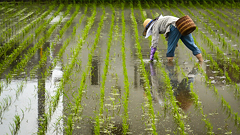
The nation’s farmers are set to produce less expensive rice than existing brands to boost exports, following the signing of a Pacific free trade deal that will expose them to fierce foreign competition, farming sources said Sunday.
While Japanese rice is recognized for its quality, high prices have hampered any significant growth in exports, according to industry experts.
With the domestic market showing signs of leveling off, partly due to the country’s aging and declining population, an industry body is aiming to secure growth by competing with foreign rice in overseas markets, the sources said.
The National Federation of Agricultural Cooperative Associations is planning to direct some areas of the country to focus on growing cheaper rice by cutting costs and specializing in varieties with higher yields, the sources said.
The federation is aiming to increase Japan’s annual rice exports by more than six times to 10,000 tons over the next three years.
Japan and 11 other countries, including the United States, signed the Trans-Pacific Partnership free trade agreement in February.
The agreement will enter into force 60 days after all 12 countries ratify it. But if all 12 nations have not ratified it after two years, it will take effect 60 days after at least six countries, accounting for 85 percent of the combined gross domestic product of the 12 signatories, do so.
Under the TPP, Japan’s agricultural sector will face an influx of cheaper foreign products and the government of Prime Minister Shinzo Abe says it will take steps to help enhance the international competitiveness of domestic farmers.
While Japanese rice is recognized for its quality, high prices have hampered any significant growth in exports, according to industry experts.
With the domestic market showing signs of leveling off, partly due to the country’s aging and declining population, an industry body is aiming to secure growth by competing with foreign rice in overseas markets, the sources said.
The National Federation of Agricultural Cooperative Associations is planning to direct some areas of the country to focus on growing cheaper rice by cutting costs and specializing in varieties with higher yields, the sources said.
The federation is aiming to increase Japan’s annual rice exports by more than six times to 10,000 tons over the next three years.
Japan and 11 other countries, including the United States, signed the Trans-Pacific Partnership free trade agreement in February.
The agreement will enter into force 60 days after all 12 countries ratify it. But if all 12 nations have not ratified it after two years, it will take effect 60 days after at least six countries, accounting for 85 percent of the combined gross domestic product of the 12 signatories, do so.
Under the TPP, Japan’s agricultural sector will face an influx of cheaper foreign products and the government of Prime Minister Shinzo Abe says it will take steps to help enhance the international competitiveness of domestic farmers.
Source: The Japan Times
Các tin khác
- New-generation FTAs open wider export opportunities to Middle East and South Asia (15/06/2026)
- Updated regulations on foreign trade management and import quotas (15/06/2026)
- Mandatory traceability for high-risk goods from July 1st: What should businesses prepare for? (15/06/2026)
- Tariff pressure is forcing businesses to restructure in order to adapt. (15/06/2026)
- Coffee Citizens model aims to lift Vietnamese value chain (15/06/2026)