Home
Home
 About Us



The violation of the quality of exported aquatic products shows signs of an increase
23/10/2023 08:44
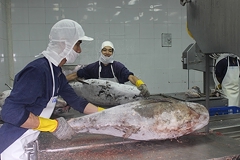
The situation of violations in the quality and food safety of exported aquatic products is showing signs of an increase, especially in cases where excess chemical residues and antibiotics have been detected.
According to the assessment of the Ministry of Agriculture and Rural Development, in the first 9 months of 2023, there has been an increase in violations of the quality and food safety of exported aquatic products. Particularly, cases where excessive chemical residues and antibiotics were detected in products destined for import markets account for a significant proportion of the total shipments that have received warnings.
The main reasons for this situation are the widespread misuse of antibiotics in aquaculture and the numerous existing limitations in terms of identification and control at processing facilities.
Currently, EU authorities have implemented strict control measures for businesses whose shipments have received warnings regarding antibiotic residues and have not implemented effective corrective measures. This includes enhanced inspection procedures, including on-site sampling for each shipment. Additionally, they have requested Vietnamese authorities to remove these processing facilities from the list of establishments permitted to export to the EU.
Based on the aforementioned circumstances, the Ministry of Agriculture and Rural Development has recently issued Official Letter 993/CCPT-ATTP concerning Vietnamese seafood shipments that have received warnings for antibiotic residues. This letter mandates that all entities strictly adhere to Directive No. 6433/CT-BNN-CCPT, dated September 13, 2023, issued by the Minister of Agriculture and Rural Development. This directive aims to strengthen the management and ensure the food safety and hygiene of seafood production for both domestic consumption and export purposes.
At the same time, to fulfill commitments to the EU authorities following the inspection in June 2023 and to maintain a strong presence in export markets, the Department of Quality, Processing, and Market Development has mandated seafood processing export businesses to rigorously implement the following measures: Collecting warnings and information from the relevant authorities in Vietnam and the importing countries. Self-monitoring data during the processing stages and assessing the risks associated with production prior to processing. Based on this information, conducting reviews and making necessary adjustments to the quality management program according to HACCP (Hazard Analysis and Critical Control Points).
Focusing on establishing a systematic approach to control measures ensuring food safety for raw materials from the initial production phase. Referencing risk advisory information and products that have received warnings in recent times.
Prioritizing resources to enhance the capacity for quality control and food safety within the enterprise system is crucial. This includes actively sending staff for external training and workshops, promptly updating Vietnam's regulations and import market requirements for quality management and production personnel to apply in practical production. Emphasis should also be placed on investing in machinery and equipment to support self-monitoring activities. Standardizing the sampling process, sample coding, and enhancing internal testing capabilities are important steps. Additionally, choosing external testing laboratories with recognized competence to ensure reliable test results is essential.
Regularly or on an ad hoc basis, the enterprise's quality management department should self-evaluate the effectiveness and efficiency of established control measures, making modifications or additions when necessary. This is particularly vital in ensuring food safety at facilities supplying raw materials to processing plants.
Regional Quality Centers for Agriculture and Aquatic Products directly evaluate the implementation of the above-mentioned requirements at enterprises through inspection and certification of export batches. Based on this, enterprises can refine their internal self-control systems.
Reviewing the batch certification and post-certification monitoring processes is essential to ensure tight control over the production and export procedures, with particular attention to assessing the risk of antibiotic residue excess. This review should encompass information related to breeding households, warning areas, and the enterprise's self-monitoring capabilities when establishing sampling and testing plans for batch certification in accordance with legal regulations.
Source: Customs News
Các tin khác
- Viet Nam extends anti-dumping duties on some Thai sugar products to 2031 (05/06/2026)
- Hong Kong: Ministry of Commerce Rules on Inheritance of Anti-dumping Duty Rates for Copolymer Polyoxymethylene Imports Originating from S Korea, Thailand and Malaysia (05/06/2026)
- Early-season Vietnamese lychees conquer US consumers (05/06/2026)
- Global rubber prices surge, raising hopes for Vietnamese exporters (05/06/2026)
- Modern logistics creates new growth opportunities for Lang Son’s border-gate economy (05/06/2026)