Home
Home
 About Us



Testimonies Coming Out Of The US Anti-Dumping Hearings
18/06/2015 10:30
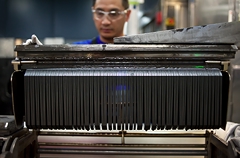
The testimonies coming out of US anti-dumping hearings are heart-rending. The deluge of cheap solar modules began around 2011. The U.S. manufacturing industry went into a downward spiral at the very time that solar power was catching on. More than twenty companies went out of business or had significant layoffs. Thousands of workers are said to have lost their jobs, impacting their families, communities and local businesses. Sharp Solar closed its factory in Memphis; Evergreen filed for bankruptcy; Schott and BP Solar have both disappeared.
Many think of SolarWorld Americas as a German company, but the Oregon company has gone through many changes of ownership since it was founded in the late 1970’s. SolarWorld Americas employed 1,350 people in 2011.
“Now, our workforce has dropped to about seven hundred,” said Mukesh Dulani, President of SolarWorld Americas Inc.
SolarWorld was forced to shut down all production at our Camarillo facility, which had made solar products since the late 1970s.We have now closed even our sales, marketing and other commercial activities there. In Oregon, we also had to lay off workers and curtail production on our 100-acre campus. In August 2013, we were forced to shut down our U.S. production of ingots and wafers, and our state-of-the-art crystal and wafer production equipment now sits idle in our facility. Despite rising demand for solar products, and even after winning the first trade case, we were still forced to dismiss workers and idle facilities. We have suffered huge operating losses and lost market share.
“The solar industry is an anchor of Oregon’s manufacturing base and is a central driver of Oregon’s innovation economy. It supports high skill, high wage jobs that are critical to helping attract investment and new economic opportunities for the 21st century economy,” said Senator Ron Wyden, Chairman of the Senate Finance Committee.
Yet the solar industry has been under siege by its Chinese competitors for the last five years. It isn’t that American solar can’t compete; it is because China isn’t playing by the rules. Chinese solar producers were bankrolled by the Chinese government. So they overproduced and dumped solar panels into the U.S. market at prices that were below the cost of production.
Silicon Energy was just entering the market when the flood of Chinese products started. They produce a high-quality PV solar system used for commercial awnings, carports and other overhead structural solutions. Silicon was suddenly confronted by contractors and distributors whose primary interest was price.
“Last year, we had to lay off our entire floor production team at our Minnesota facility. Most recently, we have been forced to idle our production facility in Washington state,” said Gary Shaver, the President of Silicon Energy.
“These large volumes of subject imports were priced at extremely low levels – they overwhelmed the U.S. market and drove down market prices for solar panels. A price war essentially broke out among manufacturers, distributors and installers. I would and still do receive daily emails from Chinese manufacturers and distributors offering solar modules well below $0.70 cents per watt. As a result, we felt that we had no choice but to give into the enormous price pressure and start buying subject imports ourselves if we were to stay in business,” said Erin Clark, President of PetersenDean’s Solar Division Solar4America.
(His company eventually returned to their vision of supporting American jobs and American manufacturing.)
One of the other installation companies testified,
Many distributors and installers have given into the pricing pressure. They have either left the business or now buy their panels from Chinese and Taiwanese producers. In fact, these installers and developers have business models that, quite simply, depend on the use of dumped and subsidized solar products. They often do not even identify the specific module manufacturer – they wait to get the lowest possible price on the date of installation.
SolarWorld filed a complaint with the US Commerce Department and US International Trade Commission, which imposed a tariff in December 2012.
Source: cleantechnica.com
Các tin khác
- New-generation FTAs open wider export opportunities to Middle East and South Asia (15/06/2026)
- Updated regulations on foreign trade management and import quotas (15/06/2026)
- Mandatory traceability for high-risk goods from July 1st: What should businesses prepare for? (15/06/2026)
- Tariff pressure is forcing businesses to restructure in order to adapt. (15/06/2026)
- Coffee Citizens model aims to lift Vietnamese value chain (15/06/2026)