Home
Home
 About Us


Seoul mulls actions against U.S. anti-dumping duties on steel
08/06/2016 12:00
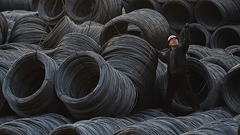
The South Korean government is mulling both diplomatic and legal actions against the bombshell anti-dumping levies Washington has slapped on Korea along with four other exporter of corrosion-resistant steel.
If the findings by the U.S. Commerce Department are upheld by the U.S. International Trade Commission, Korean steelmakers would have to pay an average 28.3 percent in penalty duties for their exports of corrosion-resistant steel to the U.S. market. For the same product, Chinese companies were hit with duties of up to 450 percent.
Trade minister Joo Hyung-hwan and ministry officials met with local exporters accused of unfair trade practices and pledged to take administrative and legal actions. It will scrutinize over the findings by its U.S. counterpart and send a letter of protest to Washington. If determined unreasonable and unfair, the government will consider taking the matter to the World Trade Organization (WTO).
Seoul has turned aggressive to defend its industry as local steelmakers face a string of anti-dumping and countervailing charges.
A high-level government official who asked to be unnamed said that the anti-dumping duty on corrosion-resistant steel by the U.S. Commerce Department mainly targets Chinese steelmakers but also would be hard on Korean steelmakers.
The U.S. Commerce Department imposed 47.8 percent penalty on Hyundai Steel, 31.7 percent on Posco, and 8.75 percent on Dongkuk Steel Mill. Although the tariffs are significantly lower than those imposed to Chinese peers, they are much higher than the preliminary dumping finding of up to 3.5 percent.
Local industry believes the U.S. Commerce Department has slapped the levies after dismissing defense materials from Hyundai Steel. It applied the so-called Adverse Facts Available (AFA) and primarily referred to documents submitted by U.S. Steel Corp. to side entirely with domestic steelmakers.
Moreover, the outrageous duty levels could affect other rulings on Korean steel products under scrutiny on charges of injuring the U.S. industry with unfair pricing. In July, final anti-dumping ruling is planned on cold-rolled steel, and a preliminary ruling for steel plates slated for November.
Seoul fears Korean products could be hit with a series of harsh levies ahead of the U.S. presidential election. The local government is also considering filing a suit against the Commerce Department to the higher U.S. Court of International Trade (CIT).
If the findings by the U.S. Commerce Department are upheld by the U.S. International Trade Commission, Korean steelmakers would have to pay an average 28.3 percent in penalty duties for their exports of corrosion-resistant steel to the U.S. market. For the same product, Chinese companies were hit with duties of up to 450 percent.
Trade minister Joo Hyung-hwan and ministry officials met with local exporters accused of unfair trade practices and pledged to take administrative and legal actions. It will scrutinize over the findings by its U.S. counterpart and send a letter of protest to Washington. If determined unreasonable and unfair, the government will consider taking the matter to the World Trade Organization (WTO).
Seoul has turned aggressive to defend its industry as local steelmakers face a string of anti-dumping and countervailing charges.
A high-level government official who asked to be unnamed said that the anti-dumping duty on corrosion-resistant steel by the U.S. Commerce Department mainly targets Chinese steelmakers but also would be hard on Korean steelmakers.
The U.S. Commerce Department imposed 47.8 percent penalty on Hyundai Steel, 31.7 percent on Posco, and 8.75 percent on Dongkuk Steel Mill. Although the tariffs are significantly lower than those imposed to Chinese peers, they are much higher than the preliminary dumping finding of up to 3.5 percent.
Local industry believes the U.S. Commerce Department has slapped the levies after dismissing defense materials from Hyundai Steel. It applied the so-called Adverse Facts Available (AFA) and primarily referred to documents submitted by U.S. Steel Corp. to side entirely with domestic steelmakers.
Moreover, the outrageous duty levels could affect other rulings on Korean steel products under scrutiny on charges of injuring the U.S. industry with unfair pricing. In July, final anti-dumping ruling is planned on cold-rolled steel, and a preliminary ruling for steel plates slated for November.
Seoul fears Korean products could be hit with a series of harsh levies ahead of the U.S. presidential election. The local government is also considering filing a suit against the Commerce Department to the higher U.S. Court of International Trade (CIT).
Source: pulsenews.co.kr
Các tin khác
- New-generation FTAs open wider export opportunities to Middle East and South Asia (15/06/2026)
- Updated regulations on foreign trade management and import quotas (15/06/2026)
- Mandatory traceability for high-risk goods from July 1st: What should businesses prepare for? (15/06/2026)
- Tariff pressure is forcing businesses to restructure in order to adapt. (15/06/2026)
- Coffee Citizens model aims to lift Vietnamese value chain (15/06/2026)