Home
Home
 About Us


S. Korean companies facing double whammy of shrinking export market and trade disputes
29/12/2016 12:00

Seeking economic recovery, countries around the world are adopting a 21st-century version of “beggar-thy-neighbor” trade policies.
With countries around the world taking steps to restrict the imports of South Korean products by imposing anti-dumping duties and setting up non-tariff barriers to trade, commercial conflicts and disputes are spreading and intensifying. The old free trade system appears to be in decline as countries compete to adopt a 21st-century version of “beggar-thy-neighbor” trade policies, which are designed to stimulate an economic recovery at other countries’ expense. As it becomes more common for foreign companies and trade authorities to cooperate to find fault with South Korean products, South Korean companies that depend upon trade are facing the double whammy of a shrinking export market and trade disputes.
According to figures released by the Korea International Trade Association (KITA) on Dec. 22, as of November there were a total of 182 import regulations on South Korean products in 30 countries. 132 of these were anti-dumping duties, which are imposed on products being sold for less than in the domestic market, and 43 are safeguard measures, or emergency restrictions on imports, which are imposed after a dramatic increase in import volumes. The countries with the most trade restrictions were India (33), the US (23) and China (13).
With countries around the world taking steps to restrict the imports of South Korean products by imposing anti-dumping duties and setting up non-tariff barriers to trade, commercial conflicts and disputes are spreading and intensifying. The old free trade system appears to be in decline as countries compete to adopt a 21st-century version of “beggar-thy-neighbor” trade policies, which are designed to stimulate an economic recovery at other countries’ expense. As it becomes more common for foreign companies and trade authorities to cooperate to find fault with South Korean products, South Korean companies that depend upon trade are facing the double whammy of a shrinking export market and trade disputes.
According to figures released by the Korea International Trade Association (KITA) on Dec. 22, as of November there were a total of 182 import regulations on South Korean products in 30 countries. 132 of these were anti-dumping duties, which are imposed on products being sold for less than in the domestic market, and 43 are safeguard measures, or emergency restrictions on imports, which are imposed after a dramatic increase in import volumes. The countries with the most trade restrictions were India (33), the US (23) and China (13).
.jpg)
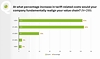
The number of restrictions on South Korean imports. Data: Korea International Trade Association
The problem is that anti-dumping duties and safeguard measures suddenly began to climb in 2012. The number of restrictions on South Korean imports has increased rapidly, with 18 in 2012, 20 in 2013, 24 in 2014, 27 in 2015 and 38 in 2016 (as of the end of November). The main targets of these import restrictions are steel and petroleum products, which are currently suffering from a supply glut. 85% (US$2.7 billion) of the value of steel exported to the US is subject to import restrictions (under review), and the US is currently considering a request by US chemical companies to place anti-dumping duties on dioctyl terephthalate (DOTP) produced in South Korea.
South Korean products are also caught up in commercial disputes in Asia, with 92 import controls in effect in 11 countries. “The anti-dumping duties imposed by other countries are connected with fluctuations in their industries. Not only the US and the EU but also China, India and countries in Southeast Asia are moving to impose import controls on steel products in order to protect and foster their domestic industry,” said a Ministry of Trade, Industry and Energy official.
But it’s not just anti-dumping duties and safeguard measures. There has also been a noticeable increase in non-tariff barriers, which cover such a wide range of categories that they are difficult to track. These categories include technical barriers (such as technical regulations, standardization and certification), customs delays and hygiene regulations. That is also why the Ministry has been hurrying to take action by launching a comprehensive database of non-tariff barriers this month. Thus far, the database includes 900 examples of foreign non-tariff barriers on South Korean products (on 20 items in 12 countries).
“The World Trade Organization was established to expand free trade, but it long ago strayed from the purpose for which it was originally established. Over the last few years, the countries that have led the way in globalization have been implementing more anti-dumping duties and trade controls,” said the LG Economic Research Institute in a report published last month called “Globalization in the Age of Anti-Globalization,” which predicts a contraction of globalization. The institute believes that the framework of international cooperation known as free trade has been shattered and that we are entering a new and unfamiliar environment that will be different from the previous system of trade.
Why are companies increasingly turning to anti-dumping duties and non-tariff barriers to protect trade? One possible reason is the decreasing competition over exchange rates. After the financial crisis, various countries competed to increase the price competitiveness of their export products by using policies of monetary easing to lower the value of their currency. But now quantitative easing has slowed, with major countries deciding not to expand the policy any further. This means an effective lull in the monetary competition over trade.
Instead, these countries are engineering a shift toward expansionary fiscal policy. We have entered a time when countries seek to revitalize domestic demand in the private sector through fiscal policy, and they are protecting domestic products as they vie to be the first to achieve an economic recovery. That is to say, the countries stuck in a long-term economic downturn are grasping at any signs of a recovery, no matter how weak, as they race to adopt beggar-thy-neighbor protectionist policies focused solely on national prosperity. Beggar-thy-neighbor policies were widely used around the world during the Great Depression of the 1930s.
Another reason is that numerous free trade agreements (FTA) are being signed and taking effect around the world. These agreements have greatly reduced the utility of traditional tariffs as a means of protecting domestic industries. This is demonstrated by the fact that countries that have signed a free trade agreement with South Korea tend to rely less on tariffs and more on import controls such as anti-dumping duties and safeguard measures. The EU (bilateral FTA with South Korea went into force in 2011) has been using a variety of non-tariff barriers to protect domestic products against South Korean products. It tightened the power consumption standards for large televisions, specified ingredient percentages for fish cakes (pollack content) and delayed hygiene inspections for imports of samgyetang, a Korean chicken and ginseng soup.
India (bilateral FTA with South Korea went into force in 2010) has been making a focused attack on South Korean products since 2013, implementing a total of 33 import controls (including nine this year). Member states of ASEAN (bilateral FTA with South Korea went into force in 2007) have also been imposing anti-dumping duties and countervailing duties (used to counter domestic subsidies) on South Korean products, with nine in Indonesia, seven in Malaysia, eleven in Thailand and five in Vietnam.
In contrast, only one import control (in 2015) has been imposed since the 2000s by Japan, which does not have a free trade agreement with South Korea. During the G-20 summit that was held in China in September, Minister of Trade, Industry and Energy Joo Hyung-hwan called for a standstill and a rollback. A standstill means banning any regulations that are stronger than those in place when an FTA was signed, and a rollback means returning to the regulations that were in place when an FTA was signed.
Dec 25, 2016
Source: Hankyoreh
Source: Hankyoreh
Các tin khác
- New-generation FTAs open wider export opportunities to Middle East and South Asia (15/06/2026)
- Updated regulations on foreign trade management and import quotas (15/06/2026)
- Mandatory traceability for high-risk goods from July 1st: What should businesses prepare for? (15/06/2026)
- Tariff pressure is forcing businesses to restructure in order to adapt. (15/06/2026)
- Coffee Citizens model aims to lift Vietnamese value chain (15/06/2026)