Home
Home
 About Us



Russia to introduce export tariff on grain
22/12/2014 12:00
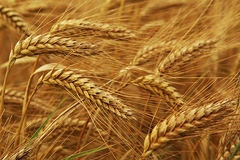
Russia, one of the world’s biggest suppliers of wheat, is preparing to introduce export duties on grain in an effort to keep prices in check and prevent further selling by traders.
“We will prepare a draft resolution on grain export duties, this will be done in the next 24 hours,” said deputy prime minister Arkady Dvorkovich on Monday at a meeting of the government.
Russia last week tightened restrictions on grain exports to prevent a shortage on the domestic market as traders sought to acquire foreign currency by selling grain amid a tumble in the value of the rouble. Sanitary controls were also stepped up, which curbed transport of grain by rail, traders said.
“This was not enough. In order to stabilise the situation, proposals on grain export duties will be prepared,” Mr Dvorkovich said.
He said that out of its harvest of 104m tonnes, Russia could afford to export up to 28m tonnes without risking the stability of the domestic market. Exports so far this marketing season, which started in July, have totalled 21m tonnes, he said.
Russia is the fourth biggest exporter of wheat, shipping about 20m tonnes a year, and the second-largest exporter of barley, selling about 4m tonnes to overseas buyers.
Falling oil prices, western sanctions against Moscow over its actions in eastern Ukraine, and a plummeting rouble have all taken a heavy toll on the Russian economy. The rouble plunged 36 per cent last week but after a move by the central bank to increase interest rates, the currency ended the week just 2 per cent lower.
Assuming it goes ahead with the export duties, Russia will have introduced export restrictions on grains three times since 2007. It used an embargo in 2010 when the crop was hit by a drought and slapped a protection duty on wheat during the global food crisis in 2007-08.
The price of wheat has rallied nearly 40 per cent since the end of September, partly on concerns about Russian supply. However, it remains below the level of $7 a bushel it reached in May and well below the levels seen in 2007-08 and 2010. On Monday, CBOT March Wheat rose 7.5 cents to $6.40.
Analysts said Russia had already shipped the bulk of its exports for 2014/15 and the market was well supplied with grain.
Stefan Vogel, head of agricultural commodity markets research at Rabobank International, said the market was still waiting for details on the export restrictions and in particular whether Turkey and Egypt will be exempt.
If those two countries were allowed to continue buying Russian wheat without duties, that would only leave about 3m tonnes of Russian wheat supply where the new tax would apply and that could be absorbed by the wider market.
“If Egypt and Turkey are not exempt, if every country needs to pay these duties that would bring uncertainty to the market,” he said. “The market will be nervous in the next days to see if it will be implemented and when.”
Another question will be how long the restrictions will be in place, and how easily they could be removed again, he added.
While restricted Russian trade could justify wheat prices of $6.50 in the first half of next year, analysts at ANZ said a sustained rise to $7 was unlikely.
“We don’t expect any Russian grain trade restrictions to last past the middle of 2015. Once some surety is in place as to the yield of the 2015 winter crop, the Russian government should allow the resumption of exports in the second half of the year,” they said in a report.
Source: ft.com
Các tin khác
- New-generation FTAs open wider export opportunities to Middle East and South Asia (15/06/2026)
- Updated regulations on foreign trade management and import quotas (15/06/2026)
- Mandatory traceability for high-risk goods from July 1st: What should businesses prepare for? (15/06/2026)
- Tariff pressure is forcing businesses to restructure in order to adapt. (15/06/2026)
- Coffee Citizens model aims to lift Vietnamese value chain (15/06/2026)