Home
Home
 About Us



Japan to relax criteria for anti-dumping duty applications
08/04/2016 12:00
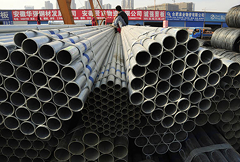
TOKYO -- The Japanese government intends to loosen its rules on anti-dumping duties to better protect industries such as steel and chemicals, which are susceptible to floods of cheap imports from China and elsewhere.
When foreign companies export products for significantly less than the prices in their own countries, World Trade Organization agreements allow the imposition of duties. Industry organizations that believe they are being hurt by unfair trade can ask their government to take defensive measures. But Japan has maintained stricter application requirements than other countries.
Until now, a majority of a trade group's companies had to make the specific products in question. The diversity of the steel and chemical industries, in particular, made this requirement difficult to meet. The rule change will permit applications as long as at least two companies produce the affected goods.
An official at the Ministry of Economy, Trade and Industry said no other country has such harsh conditions for applications.
Japan's record of imposing anti-dumping duties appears to bear that out. From 2010 to 2014, the U.S. took that step 57 times, while the European Union did so on 32 occasions. Japan's tally: zero. Over the past two decades, Japan has imposed anti-dumping duties only seven times.
After World War II, Japan was affected by Western anti-dumping measures. Tokyo has since been reluctant to resort to them. Now, however, the Japanese government wants to bring its rules in line with those of other nations.
As emerging economies slow, companies in China and other countries are looking to export excess products at low prices to maintain their capacity utilization rates. Amid a global supply glut, Japan worries its companies could find themselves at a serious competitive disadvantage.
When foreign companies export products for significantly less than the prices in their own countries, World Trade Organization agreements allow the imposition of duties. Industry organizations that believe they are being hurt by unfair trade can ask their government to take defensive measures. But Japan has maintained stricter application requirements than other countries.
Until now, a majority of a trade group's companies had to make the specific products in question. The diversity of the steel and chemical industries, in particular, made this requirement difficult to meet. The rule change will permit applications as long as at least two companies produce the affected goods.
An official at the Ministry of Economy, Trade and Industry said no other country has such harsh conditions for applications.
Japan's record of imposing anti-dumping duties appears to bear that out. From 2010 to 2014, the U.S. took that step 57 times, while the European Union did so on 32 occasions. Japan's tally: zero. Over the past two decades, Japan has imposed anti-dumping duties only seven times.
After World War II, Japan was affected by Western anti-dumping measures. Tokyo has since been reluctant to resort to them. Now, however, the Japanese government wants to bring its rules in line with those of other nations.
As emerging economies slow, companies in China and other countries are looking to export excess products at low prices to maintain their capacity utilization rates. Amid a global supply glut, Japan worries its companies could find themselves at a serious competitive disadvantage.
Source: Nikkei
Các tin khác
- New-generation FTAs open wider export opportunities to Middle East and South Asia (15/06/2026)
- Updated regulations on foreign trade management and import quotas (15/06/2026)
- Mandatory traceability for high-risk goods from July 1st: What should businesses prepare for? (15/06/2026)
- Tariff pressure is forcing businesses to restructure in order to adapt. (15/06/2026)
- Coffee Citizens model aims to lift Vietnamese value chain (15/06/2026)