Home
Home
 About Us



Italy defends EU tariffs as last defence against China
05/10/2015 12:00
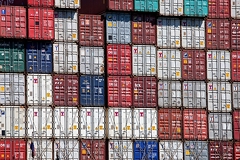
Italy has fired the first shots in one of Europe’s most difficult impending trade decisions, arguing that the EU must not surrender its power to retaliate against Chinese dumping.
A fierce debate over whether the EU should designate Beijing as a “market economy” is due to come to a head in the coming months. If Brussels does so, EU countries will be largely stripped of their ability to hit back against unfair export practices with countervailing tariffs.
Carlo Calenda, Italy’s trade envoy and vice-minister for economic development, said that the 28-member bloc would be making a mistake if it were to “unilaterally disarm”.
Mr Calenda warned that China could even step up the use of unfair trade practices in response to its economic slowdown. He said that if China sought to tackle its industrial overcapacity by dumping — exporting goods priced below their cost of production — it was liable to put “entire industrial lines of our economy and our continent on its knees”.
“China is not a market economy, it doesn’t meet the conditions,” Mr Calenda said.
Most large EU countries have been far more reticent about speaking out than Italy, as they seek to forge closer political and economic ties with Beijing.
A person close to George Osborne, UK finance minister said: “The chancellor has said he supports market economic status before, and still does, but this is an EU decision which needs legislation which will be difficult to get through.”
Germany, the EU’s most powerful state, declined to comment until the European Commission had produced its legal verdict on whether China deserved market economy status.
France is also guarded. People briefed on the French position say that the trade minister is trying to handle it as a “technical” and “objective” issue in dealings with the commission.
The debate is highly legalistic and hinges on the terms of China’s agreement of accession to the World Trade Organisation in 2001. Beijing interprets this accord to mean that it will automatically become a “market economy” at the end of 2016.
This has piled pressure on to both the US and EU to make a call on whether they agree with China’s interpretations of the rules. This is important as it is very difficult to impose tariffs against a market economy, whose price structures are, by definition, supposed to be set fairly.
The strongest resistance in Europe comes from traditional manufacturing industries — such as steel, garments and bicycles — that see themselves as vulnerable.
Under the government of Matteo Renzi, Italy has generally encouraged trade liberalisation, and is particularly supportive of the massive trade deal being negotiated between the EU and the US, known as the Transatlantic Trade and Investment Partnership.
But as the eurozone’s second-largest manufacturing economy after Germany, it is particularly sensitive to the threat posed by Chinese competition in a wide range of industrial sectors.
Mr Calenda noted that the “legal” question related to the wording of China’s accession to the WTO should be debated, if anywhere, by the WTO’s dispute settlement mechanism.
Meanwhile, he urged Washington and Brussels to agree on the criteria against which countries should be designated as market economies within the negotiations over TTIP.
A fierce debate over whether the EU should designate Beijing as a “market economy” is due to come to a head in the coming months. If Brussels does so, EU countries will be largely stripped of their ability to hit back against unfair export practices with countervailing tariffs.
Carlo Calenda, Italy’s trade envoy and vice-minister for economic development, said that the 28-member bloc would be making a mistake if it were to “unilaterally disarm”.
Mr Calenda warned that China could even step up the use of unfair trade practices in response to its economic slowdown. He said that if China sought to tackle its industrial overcapacity by dumping — exporting goods priced below their cost of production — it was liable to put “entire industrial lines of our economy and our continent on its knees”.
“China is not a market economy, it doesn’t meet the conditions,” Mr Calenda said.
Most large EU countries have been far more reticent about speaking out than Italy, as they seek to forge closer political and economic ties with Beijing.
A person close to George Osborne, UK finance minister said: “The chancellor has said he supports market economic status before, and still does, but this is an EU decision which needs legislation which will be difficult to get through.”
Germany, the EU’s most powerful state, declined to comment until the European Commission had produced its legal verdict on whether China deserved market economy status.
France is also guarded. People briefed on the French position say that the trade minister is trying to handle it as a “technical” and “objective” issue in dealings with the commission.
The debate is highly legalistic and hinges on the terms of China’s agreement of accession to the World Trade Organisation in 2001. Beijing interprets this accord to mean that it will automatically become a “market economy” at the end of 2016.
This has piled pressure on to both the US and EU to make a call on whether they agree with China’s interpretations of the rules. This is important as it is very difficult to impose tariffs against a market economy, whose price structures are, by definition, supposed to be set fairly.
The strongest resistance in Europe comes from traditional manufacturing industries — such as steel, garments and bicycles — that see themselves as vulnerable.
Under the government of Matteo Renzi, Italy has generally encouraged trade liberalisation, and is particularly supportive of the massive trade deal being negotiated between the EU and the US, known as the Transatlantic Trade and Investment Partnership.
But as the eurozone’s second-largest manufacturing economy after Germany, it is particularly sensitive to the threat posed by Chinese competition in a wide range of industrial sectors.
Mr Calenda noted that the “legal” question related to the wording of China’s accession to the WTO should be debated, if anywhere, by the WTO’s dispute settlement mechanism.
Meanwhile, he urged Washington and Brussels to agree on the criteria against which countries should be designated as market economies within the negotiations over TTIP.
Oct 4, 2015
Source: ft.com
Source: ft.com
Các tin khác
- New-generation FTAs open wider export opportunities to Middle East and South Asia (15/06/2026)
- Updated regulations on foreign trade management and import quotas (15/06/2026)
- Mandatory traceability for high-risk goods from July 1st: What should businesses prepare for? (15/06/2026)
- Tariff pressure is forcing businesses to restructure in order to adapt. (15/06/2026)
- Coffee Citizens model aims to lift Vietnamese value chain (15/06/2026)