Home
Home
 About Us


India To Insist For Safeguard Tool Against Import Surge At WTO
17/12/2015 12:00
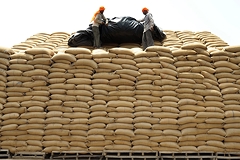
Special safeguard measures (SSM) is a necessary tool for developing nations to check import surge and it will be at the centre of discussion along with the issues emanating from the Doha Development Agenda during the coming WTO conference, India has said. Representatives from more than 160 member countries of the WTO (World Trade Organisation) are scheduled to meet in Nairobi, Kenya during the ministerial conference to be held on December 15-18.
Addressing a press conference on Thursday, Commerce Secretary Rita Teaotia said that apart from SSM, permanent solution to the development issues discussed during WTO’s Doha round in 2001 and a package for least developed countries will be on top of the agenda at Nairobi.
“As of now, there is a large group of countries that feels that SSM is necessary for a simple reason that subsidies to agriculture have not been reduced by developed countries; two, some developed and some developing countries do have protection in terms of the kind of safeguard measures they can use. And therefore, it’s only fair that others should have that. And this is the reason why there is a lot of support around SSM,” Teaotia said.
She said several developed countries are giving subsidies to agriculture sector up to 70-80% and this distorts the market when their product enters the export market.
“This is a facility which is available to so many countries, why should it not be available to us,” she said, adding, “It’s not a bargaining chip.”
At Nairobi, while the developing countries want to continue with the discussion under the framework of Doha Development Agenda (DDA), developed nations are trying to bring in fresh issues. Despite the prevailing differences over food subsidies, India hopes that the negotiation will bring positive results.
Addressing a press conference on Thursday, Commerce Secretary Rita Teaotia said that apart from SSM, permanent solution to the development issues discussed during WTO’s Doha round in 2001 and a package for least developed countries will be on top of the agenda at Nairobi.
“As of now, there is a large group of countries that feels that SSM is necessary for a simple reason that subsidies to agriculture have not been reduced by developed countries; two, some developed and some developing countries do have protection in terms of the kind of safeguard measures they can use. And therefore, it’s only fair that others should have that. And this is the reason why there is a lot of support around SSM,” Teaotia said.
She said several developed countries are giving subsidies to agriculture sector up to 70-80% and this distorts the market when their product enters the export market.
“This is a facility which is available to so many countries, why should it not be available to us,” she said, adding, “It’s not a bargaining chip.”
At Nairobi, while the developing countries want to continue with the discussion under the framework of Doha Development Agenda (DDA), developed nations are trying to bring in fresh issues. Despite the prevailing differences over food subsidies, India hopes that the negotiation will bring positive results.
Source: TheDollarBusiness
Các tin khác
- New-generation FTAs open wider export opportunities to Middle East and South Asia (15/06/2026)
- Updated regulations on foreign trade management and import quotas (15/06/2026)
- Mandatory traceability for high-risk goods from July 1st: What should businesses prepare for? (15/06/2026)
- Tariff pressure is forcing businesses to restructure in order to adapt. (15/06/2026)
- Coffee Citizens model aims to lift Vietnamese value chain (15/06/2026)