Home
Home
 About Us



Hard works but little gains
18/06/2015 10:20
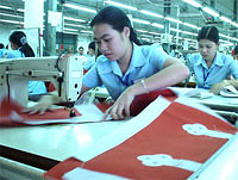
About 2 million Vietnamese workers in textile industry have worked hard to create a -$5,8 million - export turn-over but they enjoyed a small part of “the cake” and had to bear all the risks due to the anti-dumping and trade restriction policies by the import countries. It’s time the textile industry changed the way to gain the bigger part of “the cake”.
Although Vietnamese textile and garment businesses were not no longer anxious about exports quota for the US market, the possible investigation and anti-dumping measure imposition by the US Department of Commerce (DOC) have been the regular concerns of producers and importers as it poses direct threat to the industry stable development.. These issues were also mentioned by many businesses in the conference on WTO integration effects on the industries of textile- garment and leather-footwear which is held in Ho Chi Minh City late last week.
Mr Diep Thanh Kiet, Deputy Chairman of the HCM City Knitting, Embroidery, Textile and Garment Association (AGTEK) said that big customers in the US are waiting to see how Vietnam cope with to avoid being investigated. “Textile and garment export turnover in the first 2 months of 2007 increases 32,5%. If textile enterprises competed with each other by decreasing price to gain more contracts, making the industry export turnover increase more, it would easily raise the investigation by the US. When this happened, many importers would shifted orders out of Vietnam” said Kiet.
Because the Ministry of Trade now hasn’t had the exact export figures of the textile and garment industry in the past 2 months, it is unable to know which have been the main factors contributing to the development and whether the average export price would lower or not. In the condition that manufacturing capacity is still efficient and not restricted by quota system, once there are many enterprises using every capability to create low- price products aiming at competing with Chinese manufacturers, Vietnam’s average price level will lower, which the US allege as a reason for carrying out investigation.
Mr Le Quoc An, Chairman of the Vietnam Textile and Apparel Association (Vitas) said “According to the figures of the US Custom Service, last year the average export unit price of Vietnam-made textile products was $3/m2, doubling China’s. Cat 338-339 was among the items that were imported most into the US at the price of about $3.4/m2. However, there still were manufacturers who use cheap materials to produce second-rate products sold at less than $1”. Due to the restriction of export volume during the past years, businesses have paid much attention to producing medium and high quality products, which make Vietnam-made products sell better than Chinese ones. However, it will be the potential risk if manufacturing and exportation of low- quality products is boosted.
In order to keep the export price level not decrease, giving the US reason for raising investigation, Vitas called for textile enterprises to attach importance to medium and high quality products. It is what all enterprises target, however, the small and medium-sized enterprises who newly join the market, have little potentiality and face with competition from well-known businesses in the medium and high-class market segmentation could not miss the second-rate product outsourcing contracts.
The Ministry of Trade (MOT) and Ministry of Industry (MOI) have temporarily applied export license system to some groups of textile and garment product exporting to the US. This decision could only help the state management bodies get more exact and sufficient information about exporting situation but not control the development rate. In the case of over-development in exportation into the US, Vietnam would have two choices: having measures to slowdown development rate or being imposed restriction measures by the US DOC like China last year. Under any circumstance would the textile industry be seriously affected, that’s why Vietnam textile industry shouldn’t only pay attention to the increasing rate of export turnover but have another way to push the effectiveness and stability.
22/03/2007
Source: Saigon Economics Times
Các tin khác
- New-generation FTAs open wider export opportunities to Middle East and South Asia (15/06/2026)
- Updated regulations on foreign trade management and import quotas (15/06/2026)
- Mandatory traceability for high-risk goods from July 1st: What should businesses prepare for? (15/06/2026)
- Tariff pressure is forcing businesses to restructure in order to adapt. (15/06/2026)
- Coffee Citizens model aims to lift Vietnamese value chain (15/06/2026)