Home
Home
 About Us



Further Tariff Cuts Under China-Australia FTA
13/01/2017 12:00
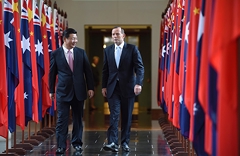
A third round of tariff reductions under the Australia-China free trade agreement went into effect on January 1, 2017.
As the FTA went into force on December 20, 2015 – just before the end of that year – the agreed first-year tariff cuts were offered immediately. Second-year reductions then took effect on January 1, 2016. And so, despite the agreement being in place for little more than a year, the third-year installment of tariff cuts is now in place.
In his press briefing on January 5, Chinese Ministry of Commerce spokesman Sun Jiwen said that up to 98.5 percent of Chinese products exported to Australia now enjoy zero tariffs, with Australia eventually reducing tariffs to zero on all goods from China. He added that China's automobile parts, home appliances, steel, and garment products would be the FTA's major beneficiaries.
96 percent of Australia's agricultural, resource, energy, and manufactured goods exports to China will be tariff free upon full implementation of the FTA.
Australia's Minister for Trade, Tourism, and Investment, Stephen Ciobo, noted that, on January 1 this year, the FTA cut tariffs again on more than 5,500 Australian products, with premium Australian bottled wine, ice cream, seafood, and some fruits and nuts now being more than halfway to full tariff elimination in January 2019. These products now enter China with tariff rates of less than half those paid by Australia's competitors.
As the FTA went into force on December 20, 2015 – just before the end of that year – the agreed first-year tariff cuts were offered immediately. Second-year reductions then took effect on January 1, 2016. And so, despite the agreement being in place for little more than a year, the third-year installment of tariff cuts is now in place.
In his press briefing on January 5, Chinese Ministry of Commerce spokesman Sun Jiwen said that up to 98.5 percent of Chinese products exported to Australia now enjoy zero tariffs, with Australia eventually reducing tariffs to zero on all goods from China. He added that China's automobile parts, home appliances, steel, and garment products would be the FTA's major beneficiaries.
96 percent of Australia's agricultural, resource, energy, and manufactured goods exports to China will be tariff free upon full implementation of the FTA.
Australia's Minister for Trade, Tourism, and Investment, Stephen Ciobo, noted that, on January 1 this year, the FTA cut tariffs again on more than 5,500 Australian products, with premium Australian bottled wine, ice cream, seafood, and some fruits and nuts now being more than halfway to full tariff elimination in January 2019. These products now enter China with tariff rates of less than half those paid by Australia's competitors.
Jan 9, 2017
Source: Tax News
Source: Tax News
Các tin khác
- New-generation FTAs open wider export opportunities to Middle East and South Asia (15/06/2026)
- Updated regulations on foreign trade management and import quotas (15/06/2026)
- Mandatory traceability for high-risk goods from July 1st: What should businesses prepare for? (15/06/2026)
- Tariff pressure is forcing businesses to restructure in order to adapt. (15/06/2026)
- Coffee Citizens model aims to lift Vietnamese value chain (15/06/2026)