Home
Home
 About Us


EU, US Spar Over Aircraft Subsidies at WTO Hearing
01/06/2016 12:00
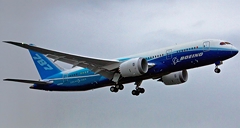
The global trade arbiter organised a public screening last week of dispute panel hearings between the EU and the US regarding whether tax incentives provided by Washington state to American aerospace giant Boeing are in violation of WTO rules.
Brussels claims that Washington state unfairly subsidises Boeing, with that state aid conditional on local content requirements which are prohibited by the WTO rules. This support is estimated to be worth nearly US$9 billion, making it the largest-ever subsidy for the civil aerospace industry.
The EU filed its request for consultations (DS487) – the first stage in WTO dispute settlement proceedings – in December 2014. A panel was then established in February 2015.
The public screening last week featured two substantive meetings between the panel and the parties that were held this past February and April. During these meetings, representatives from both sides presented their arguments and counterarguments, answered the panel’s questions on legal and factual issues, and joined in some sessions by members participating as third parties.
Previous disputes
The two big international trade players have already sparred publicly at the WTO over domestic government support for the aerospace industry.
In late 2004, the US challenged the EU’s support of civil aircraft manufacturer Airbus (DS316); the following year, Brussels tabled its own WTO complaint over Washington’s federal, state, and local-level support of Boeing (DS353).
Those two disputes, which both involved claims of illegal subsidies, saw the WTO Appellate Body deem that the US and EU had each violated certain WTO subsidy rules. In those respective cases, compliance panels are now reviewing whether the US and EU have made the necessary changes to bring their policies in line with global trade rules.
The new dispute screened last week focused on a 2013 Washington state law known as Substitute Senate Bill 5952, together with its relevant amendments and implementing measures, in the form of seven tax incentives.
According to the EU, the legislation is meant to give Boeing an incentive to manufacture its new 777X model of large civil aircraft in that same US state. The tax breaks are now in place through end-2040, having originally been set to expire in 2024.
Brussels claims that the legislation extended and amended the state-level tax incentives which the WTO Appellate Body had already deemed to be illegal in DS353, and had earlier asked that the same DS353 compliance panel review the bill. The request was rejected for procedural reasons, which prompted the EU to launch these new proceedings (DS487).
Financial contribution, benefit
Under the WTO’s Subsidies and Countervailing Measures (SCM) Agreement, subsidies are defined as a financial contribution by a government or public body which confers a benefit.
The US told the panel that, among other issues, the EU’s claims involve revenue that would be lost in the future, specifically during the 2024-2040 period. The US argued that for a measure to qualify as a subsidy, the benefit “must actually exist as of the present time – and cannot merely be a speculative possibility at some point in the future.”
The EU, in turn, emphasised that “when a government confers upon a taxpayer an entitlement to a tax reduction, it forgoes its own entitlement to raise a part of the revenue that would otherwise be due from the taxpayer under the normative benchmark” adding that such a move does not necessarily have to happen after the revenue becomes available.
The EU also cited examples of tax exemptions under the legislation which Boeing could currently use, arguing that in this case revenue has already been foregone. Furthermore, the EU noted, the allegedly “prohibited” subsidy programme will remain in place through the year 2040.
For Brussels, these tax breaks are tantamount to a multi-billion dollar gift from Washington state to Boeing, thus providing a benefit. The US, in turn, argued that even if an “abstract entitlement” exists, it is not in use, and that the EU has therefore not proven that there is such a benefit.
Domestic content requirements
The SCM Agreement Article 3.1(b) prohibits subsidies that require recipients to use domestic goods instead of their imported equivalent.
According to Brussels, under the US state law, government aid will not be granted unless a new commercial airplane programme using domestically-made fuselages and wings is set up in Washington state.
In addition, the law would “serve to remove a large portion of one of the most valuable tax incentives in the package if Boeing were to use any foreign-made wings in manufacturing the 777X in Washington state,” said the EU.
The US, in its oral statements, argued that this WTO provision does not prohibit production subsidies. Even if the challenged measures were proven to be “subsidies,” they would essentially be production subsidies provided to “ensure that a significant manufacturing programme was sited in Washington state, in order to maintain and grow Washington’s aerospace industry workforce,” said the US.
Much of the ensuing debate involved questions and disagreements over terminology, relating specifically to the understanding each side has of certain WTO definitions, as well as their implications for actual manufacturing processes. The US also argued that – as the 777X programme demonstrates – a manufacturer does not need to assemble completed fuselages and wings before putting together a completed airplane. Therefore, the US said, this does not involve the “use” of wings and fuselages as “goods” within the meaning of Article 3.1 (b).
Furthermore, the US argued that the EU failed even to show that the US legislation requires that fuselages and wings be produced as goods that are then used as inputs in the production of finished airplanes.
The EU countered that the US’ argument runs contrary to the past examples of Boeing’s purchase of complete fuselages for other airliners, and also noted that the US legislation itself refers to fuselage and wings as “products” – a synonym of the term “goods” under Article 3.1(b).
Moreover, according to the EU, the term “use” is broad enough to also encompass situations where the input is “used” in such a way that it has not been consumed and where it remains a discrete, identifiable part of the whole.
For Brussels, it is not questioning whether Boeing may import components of wings and fuselages under the US law, but is instead challenging that imported wings and fuselages themselves may not be used in order to receive the government support.
The EU also argued that the 777X production process is irrelevant to whether the US law violates the SCM Agreement.
The parties also debated whether the US law also effectively requires using domestic goods over imported ones, among other topics.
Next steps
The panel’s communication in September 2015 indicated that the beginning of the panel’s work had been delayed due to a lack of available staff in the secretariat to work on the case. The panel estimated that it will issue its report by September 2016.
Brussels claims that Washington state unfairly subsidises Boeing, with that state aid conditional on local content requirements which are prohibited by the WTO rules. This support is estimated to be worth nearly US$9 billion, making it the largest-ever subsidy for the civil aerospace industry.
The EU filed its request for consultations (DS487) – the first stage in WTO dispute settlement proceedings – in December 2014. A panel was then established in February 2015.
The public screening last week featured two substantive meetings between the panel and the parties that were held this past February and April. During these meetings, representatives from both sides presented their arguments and counterarguments, answered the panel’s questions on legal and factual issues, and joined in some sessions by members participating as third parties.
Previous disputes
The two big international trade players have already sparred publicly at the WTO over domestic government support for the aerospace industry.
In late 2004, the US challenged the EU’s support of civil aircraft manufacturer Airbus (DS316); the following year, Brussels tabled its own WTO complaint over Washington’s federal, state, and local-level support of Boeing (DS353).
Those two disputes, which both involved claims of illegal subsidies, saw the WTO Appellate Body deem that the US and EU had each violated certain WTO subsidy rules. In those respective cases, compliance panels are now reviewing whether the US and EU have made the necessary changes to bring their policies in line with global trade rules.
The new dispute screened last week focused on a 2013 Washington state law known as Substitute Senate Bill 5952, together with its relevant amendments and implementing measures, in the form of seven tax incentives.
According to the EU, the legislation is meant to give Boeing an incentive to manufacture its new 777X model of large civil aircraft in that same US state. The tax breaks are now in place through end-2040, having originally been set to expire in 2024.
Brussels claims that the legislation extended and amended the state-level tax incentives which the WTO Appellate Body had already deemed to be illegal in DS353, and had earlier asked that the same DS353 compliance panel review the bill. The request was rejected for procedural reasons, which prompted the EU to launch these new proceedings (DS487).
Financial contribution, benefit
Under the WTO’s Subsidies and Countervailing Measures (SCM) Agreement, subsidies are defined as a financial contribution by a government or public body which confers a benefit.
The US told the panel that, among other issues, the EU’s claims involve revenue that would be lost in the future, specifically during the 2024-2040 period. The US argued that for a measure to qualify as a subsidy, the benefit “must actually exist as of the present time – and cannot merely be a speculative possibility at some point in the future.”
The EU, in turn, emphasised that “when a government confers upon a taxpayer an entitlement to a tax reduction, it forgoes its own entitlement to raise a part of the revenue that would otherwise be due from the taxpayer under the normative benchmark” adding that such a move does not necessarily have to happen after the revenue becomes available.
The EU also cited examples of tax exemptions under the legislation which Boeing could currently use, arguing that in this case revenue has already been foregone. Furthermore, the EU noted, the allegedly “prohibited” subsidy programme will remain in place through the year 2040.
For Brussels, these tax breaks are tantamount to a multi-billion dollar gift from Washington state to Boeing, thus providing a benefit. The US, in turn, argued that even if an “abstract entitlement” exists, it is not in use, and that the EU has therefore not proven that there is such a benefit.
Domestic content requirements
The SCM Agreement Article 3.1(b) prohibits subsidies that require recipients to use domestic goods instead of their imported equivalent.
According to Brussels, under the US state law, government aid will not be granted unless a new commercial airplane programme using domestically-made fuselages and wings is set up in Washington state.
In addition, the law would “serve to remove a large portion of one of the most valuable tax incentives in the package if Boeing were to use any foreign-made wings in manufacturing the 777X in Washington state,” said the EU.
The US, in its oral statements, argued that this WTO provision does not prohibit production subsidies. Even if the challenged measures were proven to be “subsidies,” they would essentially be production subsidies provided to “ensure that a significant manufacturing programme was sited in Washington state, in order to maintain and grow Washington’s aerospace industry workforce,” said the US.
Much of the ensuing debate involved questions and disagreements over terminology, relating specifically to the understanding each side has of certain WTO definitions, as well as their implications for actual manufacturing processes. The US also argued that – as the 777X programme demonstrates – a manufacturer does not need to assemble completed fuselages and wings before putting together a completed airplane. Therefore, the US said, this does not involve the “use” of wings and fuselages as “goods” within the meaning of Article 3.1 (b).
Furthermore, the US argued that the EU failed even to show that the US legislation requires that fuselages and wings be produced as goods that are then used as inputs in the production of finished airplanes.
The EU countered that the US’ argument runs contrary to the past examples of Boeing’s purchase of complete fuselages for other airliners, and also noted that the US legislation itself refers to fuselage and wings as “products” – a synonym of the term “goods” under Article 3.1(b).
Moreover, according to the EU, the term “use” is broad enough to also encompass situations where the input is “used” in such a way that it has not been consumed and where it remains a discrete, identifiable part of the whole.
For Brussels, it is not questioning whether Boeing may import components of wings and fuselages under the US law, but is instead challenging that imported wings and fuselages themselves may not be used in order to receive the government support.
The EU also argued that the 777X production process is irrelevant to whether the US law violates the SCM Agreement.
The parties also debated whether the US law also effectively requires using domestic goods over imported ones, among other topics.
Next steps
The panel’s communication in September 2015 indicated that the beginning of the panel’s work had been delayed due to a lack of available staff in the secretariat to work on the case. The panel estimated that it will issue its report by September 2016.
Source: ICTSD
Các tin khác
- New-generation FTAs open wider export opportunities to Middle East and South Asia (15/06/2026)
- Updated regulations on foreign trade management and import quotas (15/06/2026)
- Mandatory traceability for high-risk goods from July 1st: What should businesses prepare for? (15/06/2026)
- Tariff pressure is forcing businesses to restructure in order to adapt. (15/06/2026)
- Coffee Citizens model aims to lift Vietnamese value chain (15/06/2026)