Home
Home
 About Us



EU urges U.S. to limit national security probe on steel
01/06/2017 12:00
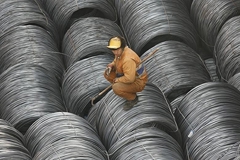
The European Union warned the United States on Thursday that its investigation into U.S. steel imports should be limited to issues of national security and not result in unjustified, sweeping measures on exporting nations.
President Donald Trump launched a trade investigation in April against China and other exporters of steel into the U.S. market, under a law that allows presidents to impose restrictions on imports for reasons of U.S. national security.
In a written submission to the U.S. Department of Commerce seen by Reuters, the European Commission said that restrictive actions based on national security could not provide the lasting solution that the steel market needs.
"On the contrary, their impact may create further distortions at global level with negative consequences, ultimately affecting the position of U.S. companies - both steel producers and also U.S. manufacturers which use steel," the submission to the U.S. investigation hearing said.
The Commission said that U.S. steel imports might be higher year-on-year, but had decreased by about 25 percent between 2014 and 2016, with anti-dumping and anti-subsidy duties limiting Chinese products.
The study, it said, should be limited to the issue of national security, adding that only about 3 percent of U.S. steel demand was used for national defense and homeland security purposes.
A Commission spokesman said there was no evidence that imports, and certainly those from the EU, threatened U.S. national security.
"Overcapacity is the root cause of the problems in the steel sector and only by working together can we find a solution and bring back fairness to the market and ensure a level playing field for our producers and workers," he said.
U.S. Commerce Secretary Wilbur Ross has until early next year to prepare a report for the president, who can then take action to "adjust the imports".
Trump's principle target would appear to be China, the world's largest steel producer, the subject of a pre-election pledge to crack down on Chinese trade practices.
Chinese premier Li Keqiang arrives in Brussels on Thursday and is expected to commit with the European Union to the Paris climate accord and to address steel overcapacity "at its roots".
June 1, 2017
Source: Reuters
President Donald Trump launched a trade investigation in April against China and other exporters of steel into the U.S. market, under a law that allows presidents to impose restrictions on imports for reasons of U.S. national security.
In a written submission to the U.S. Department of Commerce seen by Reuters, the European Commission said that restrictive actions based on national security could not provide the lasting solution that the steel market needs.
"On the contrary, their impact may create further distortions at global level with negative consequences, ultimately affecting the position of U.S. companies - both steel producers and also U.S. manufacturers which use steel," the submission to the U.S. investigation hearing said.
The Commission said that U.S. steel imports might be higher year-on-year, but had decreased by about 25 percent between 2014 and 2016, with anti-dumping and anti-subsidy duties limiting Chinese products.
The study, it said, should be limited to the issue of national security, adding that only about 3 percent of U.S. steel demand was used for national defense and homeland security purposes.
A Commission spokesman said there was no evidence that imports, and certainly those from the EU, threatened U.S. national security.
"Overcapacity is the root cause of the problems in the steel sector and only by working together can we find a solution and bring back fairness to the market and ensure a level playing field for our producers and workers," he said.
U.S. Commerce Secretary Wilbur Ross has until early next year to prepare a report for the president, who can then take action to "adjust the imports".
Trump's principle target would appear to be China, the world's largest steel producer, the subject of a pre-election pledge to crack down on Chinese trade practices.
Chinese premier Li Keqiang arrives in Brussels on Thursday and is expected to commit with the European Union to the Paris climate accord and to address steel overcapacity "at its roots".
June 1, 2017
Source: Reuters
Các tin khác
- New-generation FTAs open wider export opportunities to Middle East and South Asia (15/06/2026)
- Updated regulations on foreign trade management and import quotas (15/06/2026)
- Mandatory traceability for high-risk goods from July 1st: What should businesses prepare for? (15/06/2026)
- Tariff pressure is forcing businesses to restructure in order to adapt. (15/06/2026)
- Coffee Citizens model aims to lift Vietnamese value chain (15/06/2026)