Home
Home
 About Us



Ending the Catfish Fight
25/05/2016 12:00
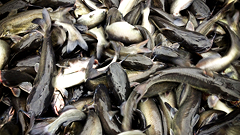
President Obama is in Vietnam and Japan this week, where he’ll probably be getting an earful about America’s rising antitrade sentiment and the threat that poses to the Trans-Pacific Partnership trade deal. So here’s hoping the U.S. Senate can provide at least some leadership by ending the protectionist treatment of one of Vietnam’s most valuable exports: catfish.
Vietnamese exporters have competed with U.S. catfish farmers from the Mississippi Delta since the 1990s. Trouble began in 2002, when Mississippi Republican Thad Cochran and other Southern lawmakers barred foreigners from calling their product “catfish” because technically it’s pangasius, also called basa or swai, an Asian cousin with similar taste, texture and whiskers. This didn’t stop Americans from buying the tasty, cheaper imports, and neither did a round of spurious antidumping tariffs imposed on the Vietnamese fish in 2003.
So Mr. Cochran went further, using the 2008 farm bill to transfer oversight of catfish to the Department of Agriculture from the Food and Drug Administration, even though the meat and poultry experts at the USDA regulate no other fish. This required classifying pangasius as catfish after all, and claiming that there was a public-health risk where none existed. The true motive was to impose high new compliance costs on Vietnamese exporters, who might then be priced out of the U.S. market.
The Government Accountability Office has slammed the new inspection regime 10 times, estimating its cost at $30 million to start and $14 million annually to operate, as compared with $700,000 a year for the original program. Repeal would “save taxpayers millions of dollars annually without affecting the safety of catfish intended for human consumption,” says the GAO. It would also let Americans keep buying the fish they prefer, while eliminating the likelihood that Vietnam and others will sue at the World Trade Organization and retaliate against U.S. exports of beef, soybeans and other products.
Yet multiple bipartisan efforts at repeal have failed, so the wasteful program took effect in March, beginning an 18-month phase-in period. Exporters in Vietnam are already feeling squeezed, and our sources say that Vietnam’s top leader planned to raise the issue with Mr. Obama in Hanoi, echoing years of complaints from lower-level officials.
The good news is that more than 30 Senators from both parties introduced a measure Monday to repeal the program in a straight up-or-down vote under the Congressional Review Act. That may be easier than attaching it to larger bills, as in the past, that Mr. Cochran and his allies could block. A vote could come before Mr. Obama leaves Asia. Repeal would boost U.S. credibility in a region that needs trade leadership.
Vietnamese exporters have competed with U.S. catfish farmers from the Mississippi Delta since the 1990s. Trouble began in 2002, when Mississippi Republican Thad Cochran and other Southern lawmakers barred foreigners from calling their product “catfish” because technically it’s pangasius, also called basa or swai, an Asian cousin with similar taste, texture and whiskers. This didn’t stop Americans from buying the tasty, cheaper imports, and neither did a round of spurious antidumping tariffs imposed on the Vietnamese fish in 2003.
So Mr. Cochran went further, using the 2008 farm bill to transfer oversight of catfish to the Department of Agriculture from the Food and Drug Administration, even though the meat and poultry experts at the USDA regulate no other fish. This required classifying pangasius as catfish after all, and claiming that there was a public-health risk where none existed. The true motive was to impose high new compliance costs on Vietnamese exporters, who might then be priced out of the U.S. market.
The Government Accountability Office has slammed the new inspection regime 10 times, estimating its cost at $30 million to start and $14 million annually to operate, as compared with $700,000 a year for the original program. Repeal would “save taxpayers millions of dollars annually without affecting the safety of catfish intended for human consumption,” says the GAO. It would also let Americans keep buying the fish they prefer, while eliminating the likelihood that Vietnam and others will sue at the World Trade Organization and retaliate against U.S. exports of beef, soybeans and other products.
Yet multiple bipartisan efforts at repeal have failed, so the wasteful program took effect in March, beginning an 18-month phase-in period. Exporters in Vietnam are already feeling squeezed, and our sources say that Vietnam’s top leader planned to raise the issue with Mr. Obama in Hanoi, echoing years of complaints from lower-level officials.
The good news is that more than 30 Senators from both parties introduced a measure Monday to repeal the program in a straight up-or-down vote under the Congressional Review Act. That may be easier than attaching it to larger bills, as in the past, that Mr. Cochran and his allies could block. A vote could come before Mr. Obama leaves Asia. Repeal would boost U.S. credibility in a region that needs trade leadership.
Source: Wall Street Journal
Các tin khác
- New-generation FTAs open wider export opportunities to Middle East and South Asia (15/06/2026)
- Updated regulations on foreign trade management and import quotas (15/06/2026)
- Mandatory traceability for high-risk goods from July 1st: What should businesses prepare for? (15/06/2026)
- Tariff pressure is forcing businesses to restructure in order to adapt. (15/06/2026)
- Coffee Citizens model aims to lift Vietnamese value chain (15/06/2026)