Home
Home
 About Us



Deadlock as India rejects subsidies deal
23/12/2015 12:00
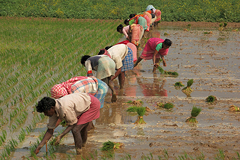
Talks at the World Trade Organisation 10th ministerial conference hit a snag on Friday when delegates failed to agree on agriculture and export subsidies.
The closing ceremony was postponed twice and talks went into the night as negotiators worked out issues around weak texts for public stockholding and special safeguard mechanisms.
Other thorny issues included the lengthy phase-out period for export subsidies by developed countries, longer repayment periods and watering down of the food aid element.
The Indian delegation found itself cast as the villain when talks stretched into the fourth day without a resolution.
Foreign Affairs Cabinet Secretary Amina Mohamed dismissed fears that talks had stalled.
She, however, admitted that the text on agriculture was posing a problem. India is largely an agrarian economy.
“At this point I don’t think we can talk about specifics but yes the agriculture negotiations are delicate,” Ms Mohamed told journalists late in the evening.
The world’s largest rice producer found itself in the same spot it had in Bali, where it was accused of scuttling the talks.
REJECTED TEXT
India has been defending the developing world through the G33 block and had by Thursday rejected a draft text on agriculture, saying it lacked a clear deadline to cut subsidies in the next five years.
Together with Indonesia and Turkey, India submitted an alternative text with language it said was suitable for developing countries.
However, Ms Mohamed said the talks were not a developing vs developed world fight, insisting that Nairobi had bridged the divide.
“We have gone beyond the point of the developing world on one side and the developed world on the other. Kenya will be remembered for bridging that gap,” she said.
The CS added that the first part of the Nairobi declaration that had very many brackets on Thursday had almost been cleaned.
The second part where decisions for the work programme would be inserted was posing problems, especially around agriculture and export subsidies.
An agreement on export competition will force the developed nations to cut direct subsidies by 2020.
Developing countries would be allowed to continue with transport and marketing export subsidies till 2028.
Least developed and net food-importing developing countries would have another two years to phase out these payments.
On Agriculture, even Lesotho minister Joshua Setipa who drafted the text admitted that it had problems but insisted that it was the best that could come out of technical meetings.
NO DEADLINE
It committed to eliminating subsidies but the final text did not set a deadline and had little substance on the Special safeguard mechanism that India-led G33 want enforced to protect their markets from inflows of subsidised produce.
Developed nations would only agree to the mechanism as part of a broader deal to cut tariffs.
The draft on cotton demanded an immediate end to export subsidies and gave developing nations one year to reduce them.
The US has not reduced cotton subsidies agreed 10 years ago in Hong Kong but enacted a law in 2014, which could push cotton subsidies to $1.5 million (Sh153 million)
A draft on credit repayment was also agreed on with members stating that no loan should go for more than 18 months and interests rates should be risk-based. Long term loans would be brought down to two and a half years.
There were mixed signals on fish subsidies between the proposals of the Africa, Caribbean and Pacific states and the developed nations.
Some members were uncomfortable with a paragraph that said countries should “aim to refrain” from providing capacity enhancing subsidies to fishing fleets insofar as these affect the sustainability of fish stocks, undermine development and threaten food security.
CLEAR OUTCOMES
There were divisions on the text of special and differential treatment over sanitary measures and barriers to trade.
Food aid proposing to bar countries from using humanitarian assistance to disguise export subsidies was not very contentious.
The least developing countries were the only ones assured of clear outcomes as heads of delegates agreed on rules of origin and service waivers.
“The only two issues which have been approved without contentions are rules of origin and services waiver for least developed countries,” WTO spokesperson Keith Rockwell said at an earlier briefing.
The countries got a breakthrough with a package on preferential trade access when members agreed on rules of origin.
The closing ceremony will be held on Saturday as the meeting holds the clock until a consensus is reached.
The closing ceremony was postponed twice and talks went into the night as negotiators worked out issues around weak texts for public stockholding and special safeguard mechanisms.
Other thorny issues included the lengthy phase-out period for export subsidies by developed countries, longer repayment periods and watering down of the food aid element.
The Indian delegation found itself cast as the villain when talks stretched into the fourth day without a resolution.
Foreign Affairs Cabinet Secretary Amina Mohamed dismissed fears that talks had stalled.
She, however, admitted that the text on agriculture was posing a problem. India is largely an agrarian economy.
“At this point I don’t think we can talk about specifics but yes the agriculture negotiations are delicate,” Ms Mohamed told journalists late in the evening.
The world’s largest rice producer found itself in the same spot it had in Bali, where it was accused of scuttling the talks.
REJECTED TEXT
India has been defending the developing world through the G33 block and had by Thursday rejected a draft text on agriculture, saying it lacked a clear deadline to cut subsidies in the next five years.
Together with Indonesia and Turkey, India submitted an alternative text with language it said was suitable for developing countries.
However, Ms Mohamed said the talks were not a developing vs developed world fight, insisting that Nairobi had bridged the divide.
“We have gone beyond the point of the developing world on one side and the developed world on the other. Kenya will be remembered for bridging that gap,” she said.
The CS added that the first part of the Nairobi declaration that had very many brackets on Thursday had almost been cleaned.
The second part where decisions for the work programme would be inserted was posing problems, especially around agriculture and export subsidies.
An agreement on export competition will force the developed nations to cut direct subsidies by 2020.
Developing countries would be allowed to continue with transport and marketing export subsidies till 2028.
Least developed and net food-importing developing countries would have another two years to phase out these payments.
On Agriculture, even Lesotho minister Joshua Setipa who drafted the text admitted that it had problems but insisted that it was the best that could come out of technical meetings.
NO DEADLINE
It committed to eliminating subsidies but the final text did not set a deadline and had little substance on the Special safeguard mechanism that India-led G33 want enforced to protect their markets from inflows of subsidised produce.
Developed nations would only agree to the mechanism as part of a broader deal to cut tariffs.
The draft on cotton demanded an immediate end to export subsidies and gave developing nations one year to reduce them.
The US has not reduced cotton subsidies agreed 10 years ago in Hong Kong but enacted a law in 2014, which could push cotton subsidies to $1.5 million (Sh153 million)
A draft on credit repayment was also agreed on with members stating that no loan should go for more than 18 months and interests rates should be risk-based. Long term loans would be brought down to two and a half years.
There were mixed signals on fish subsidies between the proposals of the Africa, Caribbean and Pacific states and the developed nations.
Some members were uncomfortable with a paragraph that said countries should “aim to refrain” from providing capacity enhancing subsidies to fishing fleets insofar as these affect the sustainability of fish stocks, undermine development and threaten food security.
CLEAR OUTCOMES
There were divisions on the text of special and differential treatment over sanitary measures and barriers to trade.
Food aid proposing to bar countries from using humanitarian assistance to disguise export subsidies was not very contentious.
The least developing countries were the only ones assured of clear outcomes as heads of delegates agreed on rules of origin and service waivers.
“The only two issues which have been approved without contentions are rules of origin and services waiver for least developed countries,” WTO spokesperson Keith Rockwell said at an earlier briefing.
The countries got a breakthrough with a package on preferential trade access when members agreed on rules of origin.
The closing ceremony will be held on Saturday as the meeting holds the clock until a consensus is reached.
Source: nation.co.ke
Các tin khác
- New-generation FTAs open wider export opportunities to Middle East and South Asia (15/06/2026)
- Updated regulations on foreign trade management and import quotas (15/06/2026)
- Mandatory traceability for high-risk goods from July 1st: What should businesses prepare for? (15/06/2026)
- Tariff pressure is forcing businesses to restructure in order to adapt. (15/06/2026)
- Coffee Citizens model aims to lift Vietnamese value chain (15/06/2026)