Home
Home
 About Us


China's steel export push raises trade tensions
25/04/2016 12:00
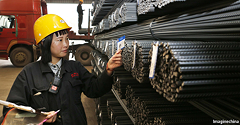
BEIJING -Regulators told Chinese banks on Thursday to finance steel exports to help reduce a supply glut in a move that could worsen trade tensions with Europe and the U.S.
Beijing faces pressure from the U.S. and Europe to stop what they complain is a strategy of trying to clear away a backlog of steel by exporting at unfairly low prices. Washington imposed antidumping duties last month on Chinese steel.
The latest order to finance exports is part of instructions from the Chinese central bank and financial regulators to lenders to support the overhaul of state-owned steel and coal industries.
Beijing is trying to shrink bloated companies, many of them state-owned, in industries including steel, coal, glass, cement and aluminum in which supply exceeds demand. That has led to price-cutting wars and heavy losses.
Last month, Washington announced antidumping tariffs of up to 266 percent on some Chinese steel.
Britain's government faces pressure to act after Tata Steel cited low-cost Chinese competition when it announced plans this month to sell money-losing operations there that employ 20,000 people. In Brussels, European steelworkers have protested outside the European Union headquarters.
Chinese bank support to steel and coal companies can include "syndicated loans, export credit and project financing," according to the order by the central bank and the securities, banking and insurance regulators.
It gave no financial targets but said financing might be extended for shifting operations abroad.
China's minister of human resources announced plans in February to eliminate some 1.8 million jobs in coal and steel. Beijing announced a 100 billion yuan ($15 billion) fund last week to cushion the blow to workers who lose their jobs in the restructuring and help them find new jobs.
Targets for other industries have yet to be announced.
China pushed back against its trading partners this month, announcing antidumping duties on steel from the European Union, Japan and South Korea.
Beijing faces pressure from the U.S. and Europe to stop what they complain is a strategy of trying to clear away a backlog of steel by exporting at unfairly low prices. Washington imposed antidumping duties last month on Chinese steel.
The latest order to finance exports is part of instructions from the Chinese central bank and financial regulators to lenders to support the overhaul of state-owned steel and coal industries.
Beijing is trying to shrink bloated companies, many of them state-owned, in industries including steel, coal, glass, cement and aluminum in which supply exceeds demand. That has led to price-cutting wars and heavy losses.
Last month, Washington announced antidumping tariffs of up to 266 percent on some Chinese steel.
Britain's government faces pressure to act after Tata Steel cited low-cost Chinese competition when it announced plans this month to sell money-losing operations there that employ 20,000 people. In Brussels, European steelworkers have protested outside the European Union headquarters.
Chinese bank support to steel and coal companies can include "syndicated loans, export credit and project financing," according to the order by the central bank and the securities, banking and insurance regulators.
It gave no financial targets but said financing might be extended for shifting operations abroad.
China's minister of human resources announced plans in February to eliminate some 1.8 million jobs in coal and steel. Beijing announced a 100 billion yuan ($15 billion) fund last week to cushion the blow to workers who lose their jobs in the restructuring and help them find new jobs.
Targets for other industries have yet to be announced.
China pushed back against its trading partners this month, announcing antidumping duties on steel from the European Union, Japan and South Korea.
Source: CBS News
Các tin khác
- New-generation FTAs open wider export opportunities to Middle East and South Asia (15/06/2026)
- Updated regulations on foreign trade management and import quotas (15/06/2026)
- Mandatory traceability for high-risk goods from July 1st: What should businesses prepare for? (15/06/2026)
- Tariff pressure is forcing businesses to restructure in order to adapt. (15/06/2026)
- Coffee Citizens model aims to lift Vietnamese value chain (15/06/2026)