Home
Home
 About Us


China's smartphone firms to win in WTO tariffs cut on more than 200 tech products
30/07/2015 12:00
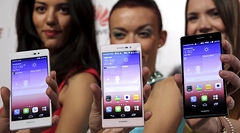
China's smartphone manufacturers and consumers will win after dozens of countries agreed to abolish duties on more than 200 technology products - from advanced computer chips to GPS devices, printer cartridges and video-game consoles.
The agreement announced on Friday marks the World Trade Organisation's first tariff-killing deal in 18 years. It is an expansion of the 1997 Information Technology Agreement.
"Today's agreement is a landmark," said WTO director-general Roberto Azevedo. "Annual trade in these 201 products is valued at over US$1.3 trillion per year, and accounts for approximately 7 per cent of total global trade today. This is larger than global trade in automotive products — or trade in textiles, clothing, iron and steel combined."
Rui Meng, a professor with China Europe International Business School, suggested Chinese consumers would benefit, as well as the smartphone industry.
"From the consumption perspective, Chinese consumers will no longer need to go overseas to purchase IT products as the price gap in different countries will shrink," Rui said.
"Meanwhile, I believe China's smartphone industry will be a big winner. Manufacturers such as Huawei, ZTE and Xiaomi have been expanding aggressively in global markets with their quality products and bargain prices, and their edge in pricing will be further enhanced with the zero tariff policy."
However, Zhang Jianping, a researcher with the National Development and Reform Commission, told China National Radio that some Chinese industries would feel extra pressure.
"The mobile phone, computer, telecommunication and software industries are becoming increasingly competitive in global markets and will benefit from the new agreement. However, those of LED screens, semiconductors, medical equipment, video games, copying machine toners, as well as global positioning systems, are still weak compared to the world's top technology standard. Chinese enterprises in relevant industries will be under significant pressure and face severe challenge in the case of zero tariffs."
Not all 161 WTO members signed up for the expanded deal; 49 did. Taiwan, a big producer of electronics, has faced considerable domestic pressure not to join. Along with Thailand, Turkey, Columbia and Mauritius, Taiwan asked on Friday for more time to consider the agreement.
Talks on revising the agreement began in 2012. A breakthrough came when the US and China worked out differences during President Xi Jinping's visit to Washington last November.
Negotiators must still complete details and a timetable for eliminating the tariffs. The work is expected to be complete by the time WTO trade ministers meet in Nairobi, Kenya, in December.
The agreement announced on Friday marks the World Trade Organisation's first tariff-killing deal in 18 years. It is an expansion of the 1997 Information Technology Agreement.
"Today's agreement is a landmark," said WTO director-general Roberto Azevedo. "Annual trade in these 201 products is valued at over US$1.3 trillion per year, and accounts for approximately 7 per cent of total global trade today. This is larger than global trade in automotive products — or trade in textiles, clothing, iron and steel combined."
Rui Meng, a professor with China Europe International Business School, suggested Chinese consumers would benefit, as well as the smartphone industry.
"From the consumption perspective, Chinese consumers will no longer need to go overseas to purchase IT products as the price gap in different countries will shrink," Rui said.
"Meanwhile, I believe China's smartphone industry will be a big winner. Manufacturers such as Huawei, ZTE and Xiaomi have been expanding aggressively in global markets with their quality products and bargain prices, and their edge in pricing will be further enhanced with the zero tariff policy."
However, Zhang Jianping, a researcher with the National Development and Reform Commission, told China National Radio that some Chinese industries would feel extra pressure.
"The mobile phone, computer, telecommunication and software industries are becoming increasingly competitive in global markets and will benefit from the new agreement. However, those of LED screens, semiconductors, medical equipment, video games, copying machine toners, as well as global positioning systems, are still weak compared to the world's top technology standard. Chinese enterprises in relevant industries will be under significant pressure and face severe challenge in the case of zero tariffs."
Not all 161 WTO members signed up for the expanded deal; 49 did. Taiwan, a big producer of electronics, has faced considerable domestic pressure not to join. Along with Thailand, Turkey, Columbia and Mauritius, Taiwan asked on Friday for more time to consider the agreement.
Talks on revising the agreement began in 2012. A breakthrough came when the US and China worked out differences during President Xi Jinping's visit to Washington last November.
Negotiators must still complete details and a timetable for eliminating the tariffs. The work is expected to be complete by the time WTO trade ministers meet in Nairobi, Kenya, in December.
July 26, 2015
Source: scmp.com
Source: scmp.com
| Tải tài liệu | |
|---|---|
| 150726 China's smartphone firms to win in WTO tariffs cut on more than 200 tech products | |
Các tin khác
- New-generation FTAs open wider export opportunities to Middle East and South Asia (15/06/2026)
- Updated regulations on foreign trade management and import quotas (15/06/2026)
- Mandatory traceability for high-risk goods from July 1st: What should businesses prepare for? (15/06/2026)
- Tariff pressure is forcing businesses to restructure in order to adapt. (15/06/2026)
- Coffee Citizens model aims to lift Vietnamese value chain (15/06/2026)