Home
Home
 About Us


China Tariff reductions show country continues to open its market
12/01/2024 06:44
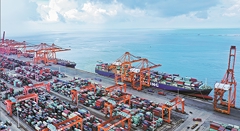
The overall level of tariffs is an important indicator of a country's openness to the outside. Since it joined the World Trade Organization, China has continuously lowered tariffs and expanded imports. However, in recent years, protectionism and unilateralism have intensified, and some countries have abused the concept of national security, engaging in technological blockades and trade barriers, which have caused shocks to the multilateral trading system.
Despite the globalization headwinds, China has continued to reduce tariffs and further open up its market, lowering its tariff level from 15.3 percent in 2001 to 7.3 percent in 2023. This reflects its firm stance in supporting economic globalization and its commitment to opening wider to the outside world.
China's tariff cuts have enabled the international community to better share the opportunities in the Chinese market. Taking Argentina as an example, driven by favorable trade policies such as tariff reductions, against the impact of the COVID-19 pandemic, bilateral trade between China and Argentina has risen in recent years to reach $25.5 billion in 2023. At present, China is Argentina's second-largest trading partner and largest agricultural export market. The steady development of China-Argentina trade is giving a huge boost to the Argentine economy which has encountered difficulties.
Some least developed countries have also benefited greatly from China's targeted tariff cuts. In order to help the least developed countries accelerate their development, China announced in 2021 a decision to further expand the scope of zero-tariff products to China from the least developed countries having diplomatic relations with it, applying a zero-tariff preferential rate to 98 percent of products originating from the least developed countries. Such measures well demonstrate that China's development provides opportunities for the world.
It should be noted that China's tariff cuts also fully benefit the domestic economy and people's livelihood while benefiting the international community. For example, in the adjustment of tariffs, medicines have been a key area for tax reduction, and the import tariffs on many anti-cancer drugs, drugs for some rare diseases, and related raw materials have been reduced to zero, effectively improving their accessibility and affordability for people in China. Lowered tariffs on some key raw materials have also helped domestic enterprises reduce production costs and improve the resilience of relevant industry and supply chains.
Source:China Daily
Các tin khác
- Viet Nam extends anti-dumping duties on some Thai sugar products to 2031 (05/06/2026)
- Hong Kong: Ministry of Commerce Rules on Inheritance of Anti-dumping Duty Rates for Copolymer Polyoxymethylene Imports Originating from S Korea, Thailand and Malaysia (05/06/2026)
- Early-season Vietnamese lychees conquer US consumers (05/06/2026)
- Global rubber prices surge, raising hopes for Vietnamese exporters (05/06/2026)
- Modern logistics creates new growth opportunities for Lang Son’s border-gate economy (05/06/2026)