Home
Home
 About Us



Australian, S Korea Receive Further Chinese FTA Tariff Cuts
07/01/2016 12:00
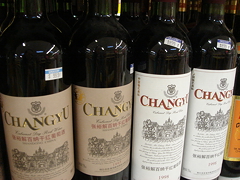
On January 1, 2016, Australian and South Korean exporters benefitted from a second round of tariff reductions from their countries' new free trade agreements (FTAs) with China, with the first round having occurred when both agreements entered into force on December 20, 2015.
The Australian Minister Assisting the Minister for Trade and Investment, Richard Colbeck, stated: "The additional tariff cuts will go further towards enhancing many of our major exports including wine, lamb, horticulture, seafood, processed foods, vitamins, and other health products. Remaining tariffs on Australian resources and energy exports will also be further reduced."
Australia's Minister for Trade and Investment, Andrew Robb, had previously added that there would be "a very material early harvest for our exporters in the form of two rounds of annual tariff cuts in quick succession. This will save our exporters hundreds-of-millions-of-dollars in extra tariff payments next year alone compared to if entry into force had been delayed until sometime in 2016."
When the China-Australia FTA is fully implemented, 96 percent of Australia's agricultural, resource, energy, and manufactured goods exports to China (worth around USD63bn in 2014) will be tariff free.
Under the South Korea-China FTA, a wide range of goods also experienced further tariff cuts. When the agreement is fully implemented, over 90 percent of Chinese imports from South Korea will be duty free. China is already South Korea's primary trading partner, receiving a quarter of its exports.
The Australian Minister Assisting the Minister for Trade and Investment, Richard Colbeck, stated: "The additional tariff cuts will go further towards enhancing many of our major exports including wine, lamb, horticulture, seafood, processed foods, vitamins, and other health products. Remaining tariffs on Australian resources and energy exports will also be further reduced."
Australia's Minister for Trade and Investment, Andrew Robb, had previously added that there would be "a very material early harvest for our exporters in the form of two rounds of annual tariff cuts in quick succession. This will save our exporters hundreds-of-millions-of-dollars in extra tariff payments next year alone compared to if entry into force had been delayed until sometime in 2016."
When the China-Australia FTA is fully implemented, 96 percent of Australia's agricultural, resource, energy, and manufactured goods exports to China (worth around USD63bn in 2014) will be tariff free.
Under the South Korea-China FTA, a wide range of goods also experienced further tariff cuts. When the agreement is fully implemented, over 90 percent of Chinese imports from South Korea will be duty free. China is already South Korea's primary trading partner, receiving a quarter of its exports.
Source: Tax-news
Các tin khác
- New-generation FTAs open wider export opportunities to Middle East and South Asia (15/06/2026)
- Updated regulations on foreign trade management and import quotas (15/06/2026)
- Mandatory traceability for high-risk goods from July 1st: What should businesses prepare for? (15/06/2026)
- Tariff pressure is forcing businesses to restructure in order to adapt. (15/06/2026)
- Coffee Citizens model aims to lift Vietnamese value chain (15/06/2026)