Home
Home
 About Us



Australia: Tariffs on Chinese wind towers to be lifted to help seal wine deal
20/10/2023 04:59
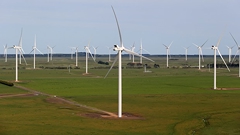
The Albanese government will not cancel a Chinese company’s lease of Darwin Port and is poised to axe anti-dumping tariffs on Chinese-made wind towers, satisfying a key demand of Beijing that is hampering talks to remove punitive trade barriers on Australian wine exports.
The Anti-Dumping Commissioner this week released a preliminary recommendation that tariffs of up to 10.9 per cent on wind towers not be extended when they expire on April 16, concluding there would be no harm to local industry even though dumping would continue.
China’s Ministry of Commerce welcomed the move, which it said would boost co-operation between Australia and China.
“China believes that this will help the two countries deepen co-operation in the field of clean energy, help combat climate change, and achieve mutual benefit and win-win results,” the commerce ministry said in a statement on its website.
Beijing insists Australia’s anti-dumping tariffs on Chinese-made wind towers, kitchen sinks and railway wheels be considered a package deal to be resolved along with China’s tariffs of up to 220 per cent on Australian wine.
“China raised concerns about Australia’s anti-dumping and countervailing measures against three Chinese products – wind towers, railway wheels and deep drawn stainless-steel sinks – as well as inappropriate practices in Australia’s trade remedy investigations against China,” a Commerce Ministry spokesman told reporters last month.
However, the Albanese government’s stance is that each trade issue should be resolved individually on its merits.
Wine decision soon
The Morrison government launched a World Trade Organisation challenge to the wine tariffs on June 22, 2021. They had been imposed a year earlier in a move widely regarded as part of Beijing’s campaign of economic coercion as bilateral relations soured.
Two days after Australia initiated its wine WTO challenge, China launched one against the tariffs on steel products. The WTO panel has handed its findings on the wine case to both governments, and it is expected to be made public by the end of the month.
The anti-dumping commission is now seeking public comment on its preliminary findings on the wind towers before making its final recommendation to Industry Minister Ed Husic by February 5. He has to make the final decision within 30 days of receiving the report.
Although the tariff on wind towers was introduced to protect Australian manufacturers from being undercut by Chinese imports, the commission has noted the last time towers were produced locally was in 2020. It concludes manufacturers are not price competitive with imports, nor do they produce the larger sizes of towers now being installed.
“The commissioner accepts that, should the measures be allowed to expire, it is likely that wind towers will be exported to Australia at dumped prices in the future,” the commission’s report said.
“However, the commissioner is not satisfied that future exports of dumped goods will be likely to cause material injury to the Australian industry.”
The commission is reviewing whether the 17.4 per cent tariff on Chinese-made railway wheels should be allowed to expire mid-next year. Its preliminary recommendation is due by December 2.
Mining giants BHP and Rio Tinto, which use the wheels in their operations, have urged that the tariff be dropped.
However, the tariff of up to 53.9 per cent on Chinese sinks does not expire until 2025, and no review process is under way.
The move is the latest breakthrough in efforts to stabilise relations with Beijing. Defence Minister Richard Marles said an Australian official would take part in China’s top international security forum, the Xiangshan Forum, later next week. Mr Marles said Australia wanted to move defence dialogue with China forward.
“We are seeking to stabilise the relationship with China, and we value a productive relationship with China,” he said during a visit to Tokyo.
Source: Financial Review
Các tin khác
- Viet Nam extends anti-dumping duties on some Thai sugar products to 2031 (05/06/2026)
- Hong Kong: Ministry of Commerce Rules on Inheritance of Anti-dumping Duty Rates for Copolymer Polyoxymethylene Imports Originating from S Korea, Thailand and Malaysia (05/06/2026)
- Early-season Vietnamese lychees conquer US consumers (05/06/2026)
- Global rubber prices surge, raising hopes for Vietnamese exporters (05/06/2026)
- Modern logistics creates new growth opportunities for Lang Son’s border-gate economy (05/06/2026)