Home
Home
 About Us



WTO Reverses Ruling on U.S. Steel Duties, Backing China
15/03/2011 12:00
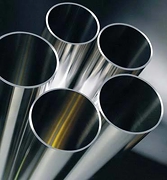
World Trade Organization appeals judges reversed key parts of a ruling that largely backed the U.S. following a Chinese complaint about duties on imports of steel pipes, some off-road tires and woven sacks.
The U.S. announced levies in July 2008 on $200 million of steel-pipe shipments from China, South Korea and Mexico. Chinese exporters of the light, rectangular piping face countervailing duties, used to offset subsidies, of as much as 200 percent of the product’s price. They also face anti-dumping duties, which compensate for goods sold overseas at prices below those at home, of as much as 265 percent.
In October, WTO judges in Geneva upheld the right of the U.S. to impose both sets of tariffs on the Chinese products. It was the second time the U.S. had imposed duties on Chinese imports to compensate for subsidies, after a similar case in June 2008 involving a different type of steel pipe.
Today, appeals judges determined that “in the four sets of anti-dumping and countervailing duty investigations, the U.S. acted inconsistently” with global trade rules.
China welcomed the reversal, saying the WTO has “conclusively established that the U.S. acts unlawfully in the methods by which it calculates and imposes countervailing duties on imports from China.”
‘Strikes at Heart’
“Today’s decision strikes at the heart of how the U.S. has applied countervailing duties to Chinese products, not only in the four investigations at issue in this dispute, but in the many investigations that have come since,” China’s mission in Geneva said in a statement today.
The U.S. criticized the decision.
“I am deeply troubled by this report,” U.S. Trade Representative Ron Kirk said in an e-mailed statement. “It appears to be a clear case of overreaching by the Appellate Body. We are reviewing the findings closely in order to understand fully their implications.”
The initial panel backed the right of an importer to set duties on goods from countries that aren’t market economies to compensate for unfair pricing and subsidies. China had challenged the way the U.S. calculated the levies and the fact that it suffered both anti-dumping tariffs for unfairly priced goods and countervailing duties for subsidized products.
“The imposition of double remedies is inconsistent” with global trade rules, the Appellate Body said in its 228-page report on the WTO’s website.
Judges agreed with China, the world’s biggest steel producer, that the duties themselves weren’t compliant with WTO rules and called on the U.S. to bring these measures into line with global trade law.
While WTO rules allow countries to impose anti-dumping duties on imports that are dumped, it’s not clear what a fair domestic price is in a non-market economy or how far it has been undercut. That means the normal rules don’t apply and importers have some discretion in calculating the duties for goods from these nations.
By Jennifer M. Freedman
Source: Bloomberg.com
Các tin khác
- Following the imposition of the highest tariff of 37.13%, the Ministry of Industry and Trade is reviewing galvanized steel from China (19/06/2026)
- Official tariffs have been imposed on colorless float glass imported from Indonesia and Malaysia (19/06/2026)
- India seeks to continue anti-dumping duties on Bangladesh’s jute products (19/06/2026)
- Turkey Initiates Anti-Dumping Investigation into Polyester Cord Fabric from Viet Nam (19/06/2026)
- Chinese dumping in Brazil affected the entire garlic supply chain (19/06/2026)