Home
Home
 About Us



Chinese dumping in Brazil affected the entire garlic supply chain
19/06/2026 03:22
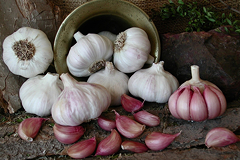
Argentina is currently in the midst of its garlic planting season. Stocks from the previous season are scarce, with some bulbs stored in cold storage, and international markets are supplied by Egypt, Spain, and China. It's time to assess the situation.
The 2024/25 season saw a major disruption in the main market for Mendoza's garlic: "Brazil, which accounts for about 70% of Argentine exports. Starting October 1, Brazil changed how it calculates the anti-dumping duty on Chinese garlic, allowing large volumes to enter at prices below $17 per unit, with entry permitted only through four authorized companies. There were also imports via third countries and legal injunctions, which further lowered prices," stated Aldo Miguel López, an agricultural engineer at the National Institute of Agricultural Technology – INTA La Consulta (Argentina).
"Exporters looked for alternative markets, leading to large amounts of Argentine garlic flooding into the United States and Spain, which also contributed to falling prices. We can say with a degree of certainty that we incurred losses this year," López said.
Producer associations in Argentina and Brazil are working together to prevent this from happening again. The negotiations include their respective governments, although the technical sector recognizes that progress relies on institutional bodies beyond the agricultural domain.
Despite facing economic challenges, Mendoza's structural competitiveness is undeniable. The region benefits from excellent conditions: A dry climate, plentiful meltwater, and severe winter temperatures advantageous for cultivation. "Growing organic garlic without pesticides is straightforward here because we lack significant pests or complex diseases," he said. These factors contribute to lower costs and establish Argentina as the sole major producer in the southern hemisphere.
The new growing season has gotten off to a promising start: low seed prices encouraged many growers to choose higher-quality seeds, sowing occurred early, and autumn weather has been favorable. INTA continues its active research into water efficiency (especially due to decreased snowfall in the Andes), biological control of white rot, virus-free seed production, and the maintenance of over 27 registered varieties.
The main market focus remains Brazil, but diversification remains a strategic goal. Argentina exports to over 32 countries, mainly those limiting Chinese garlic imports. Key destinations include the United States, Spain, Taiwan, Mexico, and Italy. "If China weren't operating at such low prices, we could access many more markets. We are well placed to double our cultivation area if market conditions permit," López stated.
Source: Freshplaza
Các tin khác
- Trump says Viet Nam to face 20% tariff under 'great' deal (10/07/2026)
- Customs pushes ahead with digital Transformation and streamlined procedures (10/07/2026)
- Argentina removes anti-dumping duties on Chinese aluminium tubes (10/07/2026)
- India extends anti-dumping duty on seamless tubes, pipes till Jan 2027 (10/07/2026)
- Korea levies anti-dumping duties on European PVC paste resin (10/07/2026)