Home
Home
 About Us



WTO finds for Vietnam in U.S. shrimp dumping case
13/07/2011 12:00
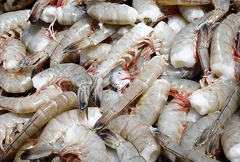
GENEVA — World Trade Organization judges on Monday ruledthat the United States is violating global trade rules in using itscontroversial "zeroing" method to impose anti-dumping tariffs onshrimp from Vietnam.
The decision by a three-member panel was the latest of aseries in which zeroing — a framework for calculating duties on goods sold atless than their price on the exporter's home market — has been found illegalunder WTO agreements.
The panel said the United States "has actedinconsistently with provisions of the Anti-Dumping Agreement and the GATT"— key WTO accords — and said the U.S. should bring its calculation method intoline with the two agreements.
Zeroing, which is used by the U.S. Department of Commerceand can be applied to a variety of goods, has been widely condemned by othercountries.
The European Union, China, India, Japan and Mexico declaredan interest in Vietnam's case — taken to the WTO in February 2010 — and Chinalaunched its own case over shrimp in February of this year.
WTO rules allow countries to impose duties on imports thatthey determine to be dumped, but the calculation of how much the duties shouldbe involves comparing batches of goods.
In zeroing, U.S. officials do not take into account casesin which the imported goods are cheaper on their home market but apply acrossthe board a duty rate based only on those that are more expensive at home.
Other shrimp producers argue that this is unfair.
Argentina, Brazil, Canada, Ecuador, the EU, Japan, Mexico,South Korea and Thailand have all won zeroing cases at the WTO, and in Januarythe United States promised its trading partners that it would change themethod.
In the interim, it has reduced its use of zeroing.
But in March, the U.S. International Trade Commission votedto continue import duties for five more years on shrimp from Thailand, the U.S.main supplier, as well as from China, Vietnam, Brazil and India.
That came after strong lobbying from U.S. shrimpers in theGulf of Mexico, reeling from last year's huge oil spill and from devastatinghurricanes, who want zeroing to be continued to shield them while theirindustry recovers.
Source: Los Angeles Times
Các tin khác
- Following the imposition of the highest tariff of 37.13%, the Ministry of Industry and Trade is reviewing galvanized steel from China (19/06/2026)
- Official tariffs have been imposed on colorless float glass imported from Indonesia and Malaysia (19/06/2026)
- India seeks to continue anti-dumping duties on Bangladesh’s jute products (19/06/2026)
- Turkey Initiates Anti-Dumping Investigation into Polyester Cord Fabric from Viet Nam (19/06/2026)
- Chinese dumping in Brazil affected the entire garlic supply chain (19/06/2026)