Home
Home
 About Us



WRAPUP 1-China flexes muscles at WTO in disputes
06/08/2009 12:00
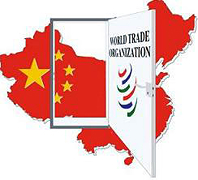
GENEVA, July 31 (Reuters) - China flexed its muscles on the international trade stage on Friday, launching its first dispute against the European Union and setting litigation at the World Trade Organisation in train in a row with the United States.
The moves showed a growing willingness by China, which only joined the WTO in 2001, to use the global trade watchdog's procedures to advance its own interests.
In practice that means that China -- one of the most frequent targets of trade measures from both developed and developing countries -- is increasingly appearing as plaintiff.
"I think it is a very important step for China to adapt itself to professionalism with WTO rules," a trade official at the Ministry of Commerce said in Beijing.
"As a new WTO member with only seven years, China needs to learn and this is a learning step," he said, commenting on the move against the European Union.
In that case China called for consultations with Brussels over the EU's antidumping duties of up to 85 percent on imports of Chinese screws and bolts. [ID:nLV425796]
Consultations are the first stage in a WTO dispute, normally lasting up to 60 days. If they fail to resolve it they can be followed by the creation of a WTO panel to examine the case.
The consultations stage had already passed in the other dispute with the United States, over a ban on imports of Chinese poultry. Beijing obtained a WTO panel in that case after Washington blocked a previous attempt on July 20. [ID:nLV529461]
"PROTECTIONIST, BIASED, DISCRIMINATORY"
In both cases China condemned protectionism by the two rich trading powers, denouncing EU policy as biased and the U.S. approach as discriminatory.
A Chinese press statement said Washington's "naked discriminative protectionism measure" violated WTO rules, impeded Sino-U.S. trade in poultry and hurt Chinese businesses.
A U.S. statement to the specially convened session of the WTO's dispute settlement body that agreed to establish the panel denied its measures were discriminatory or protectionist.
But it sounded a conciliatory note to Washington's increasingly important trade partner, arguing the U.S. measure should not disrupt normal trade between the two countries, and noting that recourse to WTO dispute procedures was normal.
"The United States and China have a broad and deep trade relationship, and we continue to work together closely on a bilateral and multilateral basis to resolve any problems that may arise," it said.
China's case has won backing from an unlikely quarter -- the U.S. meat industry which fears that Beijing could retaliate, cutting it out of the biggest market for U.S. poultry worth nearly $700 million a year. [ID:nN2887834]
The U.S. Congress has blocked Chinese poultry imports since 2007 by refusing to fund measures such as reviewing Chinese poultry plant standards that would facilitate them.
Consumer lobbyists cite a series of lethal food scandals in China in recent years and U.S. officials say China is not willing to work with normal U.S. safety compliance procedures.
But the case highlights concerns that safety standards may be abused for protectionist purposes -- to help inefficient domestic producers ward off foreign competition.
In the EU case, Beijing moved against a trading partner that has been one of keenest users of anti-dumping measures against China, with over 140 investigations since 1979. [ID:nLV425796]
The import duties were imposed in January and target as many as 200 Chinese companies selling components widely used for cars, white goods and machinery in the EU worth some 575 million euros ($812 million) a year. [ID:nLV207690]
China believes they are discriminatory, as they exempt two Chinese subsidiaries of European firms -- Italy's Agrati and Celo (CELO.BC) of Spain.
European Commission trade spokesman Lutz Guellner said the measure was not protectionist but countered unfair trade arising from China's state manipulation of raw materials prices.
"This is harming the otherwise competitive EU industry, with potentially dire long-term effects," he said in a statement.
China's export duties on raw materials, which help domestic producers by keeping the costs of their inputs below those of foreign competitors, are the target of a trade dispute launched by the United States and European Union.
[ID:nPEK171904] (Additional reporting by Eadie Chen in Beijing)
By Jonathan Lynn
Source: www.reuters.com
Các tin khác
- Rising global shipping costs put pressure on Viet Nam’s seafood exporters (22/06/2026)
- India likely to retain anti-dumping duties on Bangladeshi jute products (22/06/2026)
- Japan slaps anti-dumping duties on Chinese, Taiwanese steel (22/06/2026)
- India initiates anti-dumping probe against a Chinese, Japanese chemical used in tyre, rubber items (22/06/2026)
- Reasons why the US continues to suspend customs clearance for Vietnamese trailers (22/06/2026)