Home
Home
 About Us



World Bank VP warns of double dip recession risks
16/09/2010 12:00
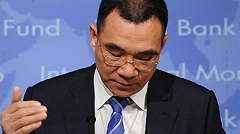
BEIJING, Sept. 13 (Xinhua) -- Justin Yifu Lin, Chief Economist and Senior Vice President of the World Bank, warned of the risks of double-dip recession for the global economy on Monday, calling for prudence on the withdrawal of stimulus policies.
“There remain risks of a double dip recession, although it has not occurred yet," Lin told Xinhua on the sidelines of a seminar here marking the 30th anniversary of the China-World Bank partnership.
"Nations should be cautious about withdrawing stimulus policies they have in place and make moves according to new circumstances," Lin added.
Developed nations were facing a dilemma on whether to continue proactive fiscal policies to buoy their economies, Lin said.
To continue the measures would add fiscal pressure on the governments and threaten economic security and, on the other hand, to withdraw policies now would result in a slump in demand and an increase in unemployment rates, Lin explained.
"Luckily, the developing countries have maintained good economic strength and relatively strong domestic demand, which would increase imports from developed economies and help them to recover," Lin said.
The most important thing for China at present is to develop its own economy, which would be conducive to the global economy, Lin said, adding the priority for the next five years should be to improve economic quality, rather than to pursue continuously accelerating development.
“There remain risks of a double dip recession, although it has not occurred yet," Lin told Xinhua on the sidelines of a seminar here marking the 30th anniversary of the China-World Bank partnership.
"Nations should be cautious about withdrawing stimulus policies they have in place and make moves according to new circumstances," Lin added.
Developed nations were facing a dilemma on whether to continue proactive fiscal policies to buoy their economies, Lin said.
To continue the measures would add fiscal pressure on the governments and threaten economic security and, on the other hand, to withdraw policies now would result in a slump in demand and an increase in unemployment rates, Lin explained.
"Luckily, the developing countries have maintained good economic strength and relatively strong domestic demand, which would increase imports from developed economies and help them to recover," Lin said.
The most important thing for China at present is to develop its own economy, which would be conducive to the global economy, Lin said, adding the priority for the next five years should be to improve economic quality, rather than to pursue continuously accelerating development.
2010-09-14 00:14:51
Editor: Mu Xuequan
Source: English.news.cn
Editor: Mu Xuequan
Source: English.news.cn
Các tin khác
- Following the imposition of the highest tariff of 37.13%, the Ministry of Industry and Trade is reviewing galvanized steel from China (19/06/2026)
- Official tariffs have been imposed on colorless float glass imported from Indonesia and Malaysia (19/06/2026)
- India seeks to continue anti-dumping duties on Bangladesh’s jute products (19/06/2026)
- Turkey Initiates Anti-Dumping Investigation into Polyester Cord Fabric from Viet Nam (19/06/2026)
- Chinese dumping in Brazil affected the entire garlic supply chain (19/06/2026)