Home
Home
 About Us


Why does China's steel industry encounter frequent anti-dumping sanctions?
14/01/2010 12:00
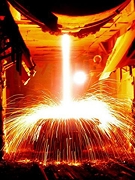
In recent months, the U.S. has imposed continuous anti-dumping measures against iron and steel products imported from China.
In June, 2009, the U.S. Department of Commerce launched three dual investigations, namely anti-dumping and countervailing investigations, in ten days onto China-made wire trays, steel grating, and stranded steel wire on June 26, June 19 and June 17.
On December 31, 2009, the U.S. International Trade Commission (ITC) made affirmative determination in its final phase countervailing duty investigation on China-made oil pipes, imposing duties from 10.36 percent to 15.78 percent.
On January 5, 2010, the U.S. government slapped preliminary anti-dumping duties on imports of more than 300 million dollars worth on wire decking from China. Tariffs of between 42.61 to 289 percent will be imposed and collected until a final determination is made in the case.
Wu Guohua, an analyst with Hengyang Valin Steel Tube Co. Ltd., one of China's largest steel pipe producer, noted that the company's' export to the U.S. dropped by around 50 percent in 2009. The 2008 figure was 190,000 tons.
The U.S. has so far refused to recognize China's market economy status. Instead, it chose another country as a substitute to calculate Chinese steel mills' cost. As a result, China was accused of dumping goods to the U.S. at an unreasonably low price.
Facing mounting trade frictions, Chinese steel producers have started adjusting their market strategies. Baosteel, China's largest iron and steel maker has ceased its steel pipe export to the U.S. since last April. It signed a cooperation agreement with China National Offshore Oil Corp (CNOOC), striving to expand its domestic market. Hengyang Valin Steel Tube Co. Ltd. chose to cultivate new business in emerging markets in Africa, South Asia, Middle East and Latin America.
Wuhan Iron and Steel Group (Wugang) and Laigang Steel Corp. also expressed their anxiety about the international trade environment, although trade frictions have no severe impact on them. "More steel products may face sanctions in the future. We feel high pressure," said an official with Laigang Corp.
Li Hongbo, director of Wugang's sales and marketing center, noted that the U.S. is "over sensitive" to China's steel export products. "Chinese steelmakers should actively answer the anti-dumping cases, and make more efforts in R&D and market expansion, to avoid probable trade frictions."
In June, 2009, the U.S. Department of Commerce launched three dual investigations, namely anti-dumping and countervailing investigations, in ten days onto China-made wire trays, steel grating, and stranded steel wire on June 26, June 19 and June 17.
On December 31, 2009, the U.S. International Trade Commission (ITC) made affirmative determination in its final phase countervailing duty investigation on China-made oil pipes, imposing duties from 10.36 percent to 15.78 percent.
On January 5, 2010, the U.S. government slapped preliminary anti-dumping duties on imports of more than 300 million dollars worth on wire decking from China. Tariffs of between 42.61 to 289 percent will be imposed and collected until a final determination is made in the case.
Wu Guohua, an analyst with Hengyang Valin Steel Tube Co. Ltd., one of China's largest steel pipe producer, noted that the company's' export to the U.S. dropped by around 50 percent in 2009. The 2008 figure was 190,000 tons.
The U.S. has so far refused to recognize China's market economy status. Instead, it chose another country as a substitute to calculate Chinese steel mills' cost. As a result, China was accused of dumping goods to the U.S. at an unreasonably low price.
Facing mounting trade frictions, Chinese steel producers have started adjusting their market strategies. Baosteel, China's largest iron and steel maker has ceased its steel pipe export to the U.S. since last April. It signed a cooperation agreement with China National Offshore Oil Corp (CNOOC), striving to expand its domestic market. Hengyang Valin Steel Tube Co. Ltd. chose to cultivate new business in emerging markets in Africa, South Asia, Middle East and Latin America.
Wuhan Iron and Steel Group (Wugang) and Laigang Steel Corp. also expressed their anxiety about the international trade environment, although trade frictions have no severe impact on them. "More steel products may face sanctions in the future. We feel high pressure," said an official with Laigang Corp.
Li Hongbo, director of Wugang's sales and marketing center, noted that the U.S. is "over sensitive" to China's steel export products. "Chinese steelmakers should actively answer the anti-dumping cases, and make more efforts in R&D and market expansion, to avoid probable trade frictions."
By People's Daily Online
12:05, January 11, 2010
Source: english.people.com.cn
12:05, January 11, 2010
Source: english.people.com.cn
Các tin khác
- Following the imposition of the highest tariff of 37.13%, the Ministry of Industry and Trade is reviewing galvanized steel from China (19/06/2026)
- Official tariffs have been imposed on colorless float glass imported from Indonesia and Malaysia (19/06/2026)
- India seeks to continue anti-dumping duties on Bangladesh’s jute products (19/06/2026)
- Turkey Initiates Anti-Dumping Investigation into Polyester Cord Fabric from Viet Nam (19/06/2026)
- Chinese dumping in Brazil affected the entire garlic supply chain (19/06/2026)