Home
Home
 About Us



Vietnamese engineers expanding role across global semiconductor value chain
22/06/2026 02:42
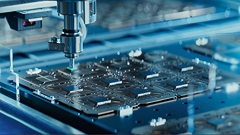
Vietnamese engineers are now capable of participating in almost the entire chip design value chain, including post-production testing and product validation.
Vietnamese engineers are now contributing to nearly every stage of the semiconductor chip design process, from product conceptualization and system architecture development to advanced technical tasks such as physical design and design-for-test (DFT), industry experts say.
Speaking at the International Workshop on Wafer Fabrication, Integrated Circuit Design and Sensor Technologies (WEFAB 2026), held on June 19 by the High Technology and Innovation Park under Viet Nam National University, Hanoi (VNU), Associate Professor Pham Bao Son, Vice President of VNU, said the ongoing restructuring of the global semiconductor industry presents significant opportunities for Viet Nam.
“Semiconductors are the foundation of technological breakthroughs, and many countries are making large-scale investments in technology, talent development and supply-chain resilience. For Viet Nam, this is a real opportunity,” Mr. Son said.
He noted, however, that mastering high-value segments of the semiconductor industry is a long-term endeavor. Universities play a critical role not only in training engineers, researchers and future technology leaders, but also in building the scientific and technical foundations needed for sustainable industry growth. Many universities across Viet Nam are currently investing in semiconductor laboratories as part of national development programs.
Mr. Le Quang Dam, CEO of Marvell Technology Viet Nam, said the country’s semiconductor design sector has grown dramatically over the past two decades. While only a handful of chip design firms operated in Viet Nam 20–25 years ago, he estimates that around 70 companies are now active in the field.
According to Mr. Dam, Vietnamese engineers are now capable of participating in almost the entire chip design value chain, including post-production testing and product validation.
“This demonstrates that Viet Nam is fully capable of undertaking high-tech, high-value-added work within the global semiconductor industry,” he said.
Source: VnEconomy
Các tin khác
- Rising global shipping costs put pressure on Viet Nam’s seafood exporters (22/06/2026)
- India likely to retain anti-dumping duties on Bangladeshi jute products (22/06/2026)
- Japan slaps anti-dumping duties on Chinese, Taiwanese steel (22/06/2026)
- India initiates anti-dumping probe against a Chinese, Japanese chemical used in tyre, rubber items (22/06/2026)
- Reasons why the US continues to suspend customs clearance for Vietnamese trailers (22/06/2026)