Home
Home
 About Us



Viet Nam shifts to value-driven farming in push to reach $100 billion in exports
26/06/2026 04:06
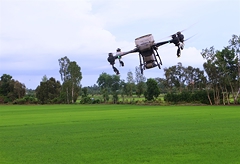
Viet Nam is reshaping its agricultural sector by prioritising value creation on each unit of land over production volumes, with an aim of lifting export revenue to a record US$74 billion this year and establishing a pathway to $100 billion in exports by 2030.
According to Nguyễn Đình Thọ of the Institute of Strategy and Policy on Agriculture and Environment, value creation per hectare has become a key indicator of competitiveness and resilience in modern agriculture.
There are significant differences in export earnings generated by major commodities, he said.
He pointed out that coffee leads with an estimated value of $15,446 per hectare, supported by high global prices and the development of integrated production ecosystems in the Central Highlands.
Aquaculture follows at nearly $12,938 per hectare, reflecting the effectiveness of intensive farming and value-added processing.
The fruit and vegetable industry has also made significant improvements in value creation in recent years, generating around $11,410 per hectare, driven largely by durian exports after China opened its market to official shipments. This development altered the land use structure in several provinces.
Rice, by comparison, generates only about $2,377 per hectare, despite its central role in ensuring food security. The relatively low returns have encouraged provinces in the Mekong Delta to expand rice-shrimp farming models and fruit cultivation to raise farmers' incomes.
"Beyond boosting export earnings, the sector is aiming to create a more resilient and value-based agricultural economy, focusing on land-use efficiency, sustainable production and higher rural incomes as it pursues a $100 billion export milestone,” Thọ said.
Market diversification and supply chain standardisation have become increasingly important to that strategy, experts noted, stressing that cultivation area management and packaging facility codes are critical for accessing overseas markets.
By this May, Viet Nam had issued more than 9,540 codes for cultivation areas and 1,525 for packaging facilities.
However, the path to hit $74 billion in exports this year faces challenges from climate risks, including El Niño-related weather's impacts, as well as stricter sustainability requirements in export markets.
New regulations on emissions reduction and traceability, including the European Union Deforestation Regulation, are forcing farmers and exporters to adopt more sustainable production methods.
Former minister of agriculture Lê Minh Hoan said Viet Nam’s agriculture is at a critical turning point, moving from a production-centred model focused on output towards an agricultural economy that prioritises value creation and risk management.
Supply chain disruptions, including cases where traders fail to comply with purchasing agreements, highlight weaknesses in market organisation and risk-sharing mechanisms, he said.
Hoan said achieving long-term export goals would require a comprehensive ecosystem involving processors, logistics firms, banks, researchers and industry associations working together to improve transparency, coordination and resilience.
At the centre of that transformation is the emergence of professional farmers who understand contracts, international standards and risk management, rather than operating as individual producers, he noted.
According to Hoan, modern cooperatives will play a pivotal role in coordinating quality standards, consolidating supply and connecting farmers with domestic and international markets to help strengthen Viet Nam's position in global agricultural value chains.
To support the growth of agriculture, the Ministry of Agriculture and Environment is focusing on climate adaptation, infrastructure upgrades, cold-chain logistics, value-added processing, stronger links between producers and businesses, and wider adoption of digital technologies and artificial intelligence.
Despite geopolitical uncertainties and growing trade protectionism, Vietnamese agricultural exports have maintained strong momentum in the first five months of this year.
Exports reached $29.82 billion in the first five months, up 6.1 per cent from a year earlier, according to customs data. The sector recorded a trade surplus of $7.54 billion, making a significant contribution to the country's overall trade balance.
Source: Vietnamnews
Các tin khác
- Why the Viet Nam ‘detour’ for US-bound Chinese goods hit a dead end (26/06/2026)
- EU-US trade agreement takes effect ahead of deadline (26/06/2026)
- Canada begins anti-dumping investigation into wheat gluten imports (26/06/2026)
- Mexico renews anti-dumping duties on U.S. welded carbon steel pipe imports (26/06/2026)
- AI is giving a boost to the wave of technology exports from Asia (26/06/2026)