Home
Home
 About Us



Viet Nam: Export markets erect new trade barriers
11/02/2011 12:00
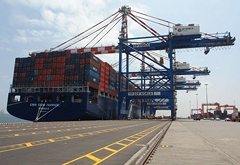
HA NOI — Trade barriers used by export markets will become more diverse and sophisticated in the future, says Deputy Minister of Industry and Trade Le Danh Vinh.
In addition to product quality standards, export subsidies, and food safety on farm produce and seafood, regulations on origin of goods and environmental standards would become more strict and causing greater difficulties for Vietnamese exporters, Vinh said.
In the EU market, the biggest challenge would be stricter rules on origin, since many Vietnamese export staples – including furniture, garments and footwear – greatly depended on imported raw materials and accessories.
The EU and the US, meanwhile, have been erecting barriers to protect their domestic wood products industries. These including stricter customs declarations requirements under the Lacey Act in the US, which took effect last April, and the EU's Forest Law Enforcement, Governance and Trade (FLEGT) which will take effect in 2012.
In the US, the Consumer Product Safety Improvement Act (CPSIA) imposes additional rules on imported garments. It takes effect next month.
The EU also applied a new standard on the Registration, Evaluation, and Authorisation of Chemicals (REACH). REACH includes requirements on registration and review, as well as restrictions on the use of chemicals.
Seafood exporters are facing new impediments under the Illegal Unreported and Unregulated Act in effect in the EU this month, while Indonesia has issued a rule requiring fruit and vegetable imports to be accompanied by a certificate of food safety analysis.
The Viet Nam Chamber of Commerce and Industry (VCCI), the Competition Administration Department, and various trade associations have been advising exporters to minimise the potential for future trade disputes.
The Competition Administration Department has set up an early warning system for actions against Vietnamese goods. The system includes alerts and a database for such key industries as footwear, garments, seafood, furniture, and electrical cables as well as warnings of lawsuit dangers.
Viet Nam has also initiated its first trade dispute since joining the WTO in 2007, challenging US restrictions on shrimp imports. Viet Nam also protested the World Wild Fund's inclusion of tra fish on its "red list." After a short time, the WWF took the fish off the list.
Some of the nation's export markets have also lowered import duties and anti-dumping tariffs on some goods. The European Commission abolished the anti-dumping duty on Vietnamese bicycles in July 2010, while the US has reduced the tariffs on shrimp. The reduction or removal of anti-dumping duties would also benefit consumers in those countries to access goods at lower prices.
Export earnings rise 18%
HCM CITY — The General Statistics Office reports that national export turnover in the first month of this year rose 18 per cent compared to the same period last year, reaching US$6 billion.
Garments and textiles led the list, with a total turnover of $900 million and an annual growth of 10.6 per cent.
Seafood followed with $400 million and a 30 per cent increase, while rubber rose to $337 million and grew 46.5 per cent.
However, January turnover was less than 20 per cent compared with December because other major export commodities, such as minerals, fuel, processing industry products, agriculture, forestry and seafood, fell on New Year's festival in exported markets.
In January, the trade deficit was $1 billion, a fall of 22.7 per cent compared with December.
Source: vietnamnews.vnagency.com.vn
Các tin khác
- Following the imposition of the highest tariff of 37.13%, the Ministry of Industry and Trade is reviewing galvanized steel from China (19/06/2026)
- Official tariffs have been imposed on colorless float glass imported from Indonesia and Malaysia (19/06/2026)
- India seeks to continue anti-dumping duties on Bangladesh’s jute products (19/06/2026)
- Turkey Initiates Anti-Dumping Investigation into Polyester Cord Fabric from Viet Nam (19/06/2026)
- Chinese dumping in Brazil affected the entire garlic supply chain (19/06/2026)