Home
Home
 About Us



U.S. may delay China currency report until Nov
18/10/2010 12:00
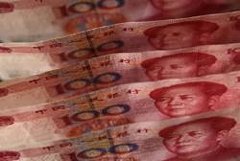
WASHINGTON (Reuters) - The Obama administration looks set to delay a much-anticipated decision on whether to label China as a currency manipulator, possibly until after the U.S. congressional elections and a Group of 20 summit in November.
Senate aides told Reuters the Treasury Department would hold off releasing its semi-annual report on the currency practices of U.S. trading partners. The report had been expected on Friday.
"So they're announcing that they're not going to issue it today," one of the aides said. "I'm not sure if they will be explicit but I imagine post-G20" would be the new timeframe for releasing the report.
Treasury Secretary Timothy Geithner told Congress last month he would rally other G20 nations to put pressure on China to let the yuan rise faster. G20 finance ministers meet on Oct. 22, with a leaders summit following on Nov. 11.
The United States and the European Union accuse China of keeping the yuan artificially low to boost exports, undermining jobs and competitiveness in Western economies.
PDF-Race to the Bottom r.reuters.com/gez77p
Graphic on currency tensions r.reuters.com/deh58p
Insider TV link.reuters.com/xyj28p
China left little doubt on Friday about the rancor that would ensue if it is branded as a currency manipulator -- a largely symbolic move by the United States that would mandate more consultations with Beijing but no immediate penalties.
"It is entirely wrong for the United States to make an issue of China's trade surplus and hence put pressure on the yuan exchange rate," Commerce Ministry spokesman Yao Jian said. "The Chinese yuan should not be a scapegoat for United States' domestic economic problems."
The Obama administration appears to favor a multilateral approach to resolving the dispute rather than provoking a bilateral confrontation, which could lead to a trade war and affect long-term interest rates.
There was speculation President Barack Obama might be tempted to label China as a currency manipulator for the first time in 16 years in a desire to look tough on "unfair" trade practices before the congressional elections on Nov. 2 in which his Democrats risk losing control of Congress.
But that was balanced by concerns about angering the largest holder of U.S. government debt and the need for Chinese support on a host of international issues, including the nuclear weapons programs of Iran and North Korea.
Diplomatic efforts have resulted in a nearly 2.5 percent rise in the value of the yuan against the dollar in recent months.
Additional reporting by Aileen Wang in Beijing;
Writing by Doug Palmer and Ross Colvin;
Editing by John O'Callaghan
Source: reuters.com
Các tin khác
- Following the imposition of the highest tariff of 37.13%, the Ministry of Industry and Trade is reviewing galvanized steel from China (19/06/2026)
- Official tariffs have been imposed on colorless float glass imported from Indonesia and Malaysia (19/06/2026)
- India seeks to continue anti-dumping duties on Bangladesh’s jute products (19/06/2026)
- Turkey Initiates Anti-Dumping Investigation into Polyester Cord Fabric from Viet Nam (19/06/2026)
- Chinese dumping in Brazil affected the entire garlic supply chain (19/06/2026)