Home
Home
 About Us



US farmers cash in on Chinese demand
14/07/2010 12:00
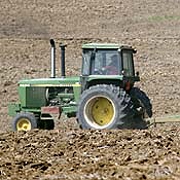
The concrete silos of the first US grain export depot to be built in 25 years are rising 66 miles up river from the Pacific Ocean, two mountain ranges and more than 1,500 miles away from the nation’s midwestern breadbasket.
The location is easily explained: traders who historically barged most of the US grain surplus to the Gulf of Mexico now want to be closer to Asia. “China is the major driver,” says Larry Clarke, chief executive of the joint venture of commodity traders Bunge and Itochu and South Korean shipowner STX Pan Ocean that is developing the $200m (€159m, £133m) terminal in Washington state.
As US politicians lose sleep over the trade deficit with China and the dollar-renminbi exchange rate, American farmers are eyeing a record $14bn in exports there this year. The US had a $4bn trade surplus in agricultural products with China in the first four months of 2010, helping shave the total deficit to $71bn in the period. The relationship will be in focus on Tuesday when monthly trade balance data are released.
Agricultural exports to Asia are reshaping the US logistics landscape. The new Port of Longview grain terminal will handle 8m tonnes a year. At nearby Port of Grays Harbor a midwestern soyabean co-operative is adding storage for 50,000 tonnes of grain.
Down the coast, California has surpassed New Orleans as the top point of departure for US cotton shipments, “given the Asian orientation of exports”, according to a report prepared for the ICE Futures exchange. At the port of South Louisiana on the Gulf of Mexico, still North America’s leading grain export hub, China last year blew past Japan to become the top destination for outbound bulk tonnage.
Ken O’Hollaren, executive director at the Port of Longview, says the grain project there will employ 50 permanent workers. “Clearly, the growth market they had in mind to accommodate was the China market,” he said.
The US is the world’s largest exporter of soyabeans and cotton, commodities for which China is the world’s top importer. Exports “exploded” after China’s 2001 accession to the World Trade Organisation, says the US Department of Agriculture. Growing livestock and textile industries have stoked demand for animal feed and fibres. “It’s huge,” says Randy Mann, who cultivates corn, soyabeans and wheat on 2,500 acres (1,000 hectares) in Kentucky and chairs a trade and international affairs committee of the American Soyabean Association. “Probably a third of the price on the Chicago Board of Trade is related to the soyabean market in China. That’s the impact it can have.” Soyabean prices have doubled in a decade to $10 a bushel.
US agricultural exports to China are a relative bright spot in the trade relationship, despite some tensions over farm products. US beef is banned in China over BSE fears dating from 2003, for example, and US chicken imports face high antidumping and antisubsidy duties. Dairy is also an area of concern, with the countries currently negotiating over a new certification requirement for US dairy imports.
But there are few non-tariff barriers on products like soyabeans and cotton. China has approved genetically modified soyabeans from the US, for example, and does not cap imports.
US politicians say China could do more to let in foreign agriculture. The US International Trade Commission is investigating complaints that imports are limited to a few products. “We face unjustified restrictions in the Chinese market,” says Max Baucus, the Montana Democrat who chairs the Senate finance committee. Barack Obama, US president, last week named Patricia Woertz, head of Archer Daniels Midland, an Illinois-based grain trading and processing company, to a council formed to invigorate US exports.
The Chinese government has made self-sufficiency in agricultural production a national goal, and China typically produces enough wheat, rice and corn to meet domestic demand. This year, for the first time in 15 years, US corn was shipped to China after a poor domestic crop last season, though total import volumes are small.
China’s agricultural production is constrained by shrinking arable land area, limited water supply, outdated technology and small plot sizes. The median Chinese farm plot is less than one acre, preventing economies of scale. China uses subsidies and price supports to farmers to remain nearly self-sufficient in wheat, the USDA says.
“Past liberalisation of policies for formerly strategic crops, such as soyabeans and cotton, indicates that China is willing to forgo self-sufficiency when costs are high and the crop is not ‘too strategic,’” the USDA said in a recent report.
Liberalisation has not moved fast enough for some. At a trade commission hearing last month, US potato farmers claimed that China showed a “willingness to use quarantine matters politically” as it keeps out American tubers.
The location is easily explained: traders who historically barged most of the US grain surplus to the Gulf of Mexico now want to be closer to Asia. “China is the major driver,” says Larry Clarke, chief executive of the joint venture of commodity traders Bunge and Itochu and South Korean shipowner STX Pan Ocean that is developing the $200m (€159m, £133m) terminal in Washington state.
As US politicians lose sleep over the trade deficit with China and the dollar-renminbi exchange rate, American farmers are eyeing a record $14bn in exports there this year. The US had a $4bn trade surplus in agricultural products with China in the first four months of 2010, helping shave the total deficit to $71bn in the period. The relationship will be in focus on Tuesday when monthly trade balance data are released.
Agricultural exports to Asia are reshaping the US logistics landscape. The new Port of Longview grain terminal will handle 8m tonnes a year. At nearby Port of Grays Harbor a midwestern soyabean co-operative is adding storage for 50,000 tonnes of grain.
Down the coast, California has surpassed New Orleans as the top point of departure for US cotton shipments, “given the Asian orientation of exports”, according to a report prepared for the ICE Futures exchange. At the port of South Louisiana on the Gulf of Mexico, still North America’s leading grain export hub, China last year blew past Japan to become the top destination for outbound bulk tonnage.
Ken O’Hollaren, executive director at the Port of Longview, says the grain project there will employ 50 permanent workers. “Clearly, the growth market they had in mind to accommodate was the China market,” he said.
The US is the world’s largest exporter of soyabeans and cotton, commodities for which China is the world’s top importer. Exports “exploded” after China’s 2001 accession to the World Trade Organisation, says the US Department of Agriculture. Growing livestock and textile industries have stoked demand for animal feed and fibres. “It’s huge,” says Randy Mann, who cultivates corn, soyabeans and wheat on 2,500 acres (1,000 hectares) in Kentucky and chairs a trade and international affairs committee of the American Soyabean Association. “Probably a third of the price on the Chicago Board of Trade is related to the soyabean market in China. That’s the impact it can have.” Soyabean prices have doubled in a decade to $10 a bushel.
US agricultural exports to China are a relative bright spot in the trade relationship, despite some tensions over farm products. US beef is banned in China over BSE fears dating from 2003, for example, and US chicken imports face high antidumping and antisubsidy duties. Dairy is also an area of concern, with the countries currently negotiating over a new certification requirement for US dairy imports.
But there are few non-tariff barriers on products like soyabeans and cotton. China has approved genetically modified soyabeans from the US, for example, and does not cap imports.
US politicians say China could do more to let in foreign agriculture. The US International Trade Commission is investigating complaints that imports are limited to a few products. “We face unjustified restrictions in the Chinese market,” says Max Baucus, the Montana Democrat who chairs the Senate finance committee. Barack Obama, US president, last week named Patricia Woertz, head of Archer Daniels Midland, an Illinois-based grain trading and processing company, to a council formed to invigorate US exports.
The Chinese government has made self-sufficiency in agricultural production a national goal, and China typically produces enough wheat, rice and corn to meet domestic demand. This year, for the first time in 15 years, US corn was shipped to China after a poor domestic crop last season, though total import volumes are small.
China’s agricultural production is constrained by shrinking arable land area, limited water supply, outdated technology and small plot sizes. The median Chinese farm plot is less than one acre, preventing economies of scale. China uses subsidies and price supports to farmers to remain nearly self-sufficient in wheat, the USDA says.
“Past liberalisation of policies for formerly strategic crops, such as soyabeans and cotton, indicates that China is willing to forgo self-sufficiency when costs are high and the crop is not ‘too strategic,’” the USDA said in a recent report.
Liberalisation has not moved fast enough for some. At a trade commission hearing last month, US potato farmers claimed that China showed a “willingness to use quarantine matters politically” as it keeps out American tubers.
By Gregory Meyer in New York and Leslie Hook in Hong Kong
Published: July 12 2010 20:35 | Last updated: July 12 2010 20:35
Source: www.ft.com
Published: July 12 2010 20:35 | Last updated: July 12 2010 20:35
Source: www.ft.com
Các tin khác
- Following the imposition of the highest tariff of 37.13%, the Ministry of Industry and Trade is reviewing galvanized steel from China (19/06/2026)
- Official tariffs have been imposed on colorless float glass imported from Indonesia and Malaysia (19/06/2026)
- India seeks to continue anti-dumping duties on Bangladesh’s jute products (19/06/2026)
- Turkey Initiates Anti-Dumping Investigation into Polyester Cord Fabric from Viet Nam (19/06/2026)
- Chinese dumping in Brazil affected the entire garlic supply chain (19/06/2026)