Home
Home
 About Us



US, China square up over trade disputes
29/12/2009 12:00
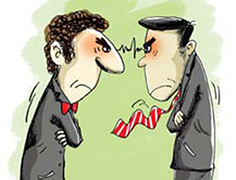
Tensions over trade frictions between China and the US heightened Wednesday with US trade authorities criticizing Beijing for imposing more trade restrictions in 2009, following confrontations over China's restrictions on the distribution of US films, music and books and the US' imposition of anti-subsidy tariffs on Chinese oil-well pipes.
Economic scholars observed that trade conflicts are a global issue rather than friction between China and the US against the background of a slow economic recovery.
"China continued to pursue industrial policies in 2009 that seek to limit market access for non-Chinese origin goods and foreign-service suppliers," the US Trade Representative's office said in its eighth annual report on how well China is complying with its World Trade Organization obligations.
The use of trade restraints and preferences, including export restraints, tax rebates, unique standards and the so-called "Buy China" policy, has been increasing during the past two years, the 121-page report said.
Intellectual property rights, trading rights, distribution services and the import of agricultural goods are also listed as the main areas of concern over China's adherence to ongoing WTO obligations.
China had a record $266 billion trade surplus with the US last year, according to government data. China is also the third-largest market for US exports, buying $70 billion worth of US-made products in 2008 compared to $19 billion in 2001, the trade office said.
China's Ministry of Commerce (MOC) could not be reached Wednesday. According to a quarterly review of trade released by the ministry Tuesday, China would maintain its export stimulus measures to tackle more complicated trade conditions next year after their success in offsetting the effects of the global economic crisis.
"Practice has proved that the policy mix to stabilize external demand is timely and effective. It has boosted market confidence and facilitated the steady recovery of foreign trade," it said.
The announcement came after the nation posted the best foreign trade performance in a year last month, rising 9.8 percent from a year ago after 12 consecutive monthly drops. The decline in exports narrowed to 1.2 percent in November while imports climbed 26.7 percent, year on year.
Since the crisis emerged, the government raised the tax rebate for exporters seven times and cut premium expenses to double export-credit insurance coverage, while introducing a fixed-rate yuan settlement in five cities in a pilot program to help exporters avoid the risks of exchange-rate fluctuations.
The report warned against "blind optimism" and said a daunting task remained as overseas demand was unlikely to rebound to pre-crisis levesl.
More covert measures
He Weiwen, of the University of International Business and Economics (UIBE) in Beijing, told the Global Times that the trade conflict is a global issue as the world economy struggles to recover from the recession and the global unemployment rate keeps rising.
A new report from the UK's Centre for Economic Policy Research showed that China is now the biggest victim of protectionism. Out of the 297 protectionist measures that nations have implemented since November 2008 to early this month, 47 target China.
"Governments prefer policies that would favor their domestic industries, while downplaying or ignoring free-trade regulations. China should prepare to see frequent occurrence of trade frictions until the global economic situation improves," He said.
Actually, China's exports last year only accounted for 8 percent of total global exports, but 35 percent of anti-dumping investigations and 71 percent of anti-subsidy investigations were aimed at China, making it the biggest target of the double investigations for the 15th consecutive year, figures from the WTO show.
As of the end of November, 19 countries and regions had launched 103 trade remedy investigations against Chinese products. Both the number of the cases and the money involved hit a record high, Zhou Xiaoyan, director of the fair trade bureau of the MOC, said on Monday.
The US made a decision late last month to impose duties ranging from 10.36 percent to 15.78 percent on Chinese oil-well pipes for alleged unfair subsidies. It was the largest case of trade sanctions against China by the US, and which involved $ 3.2 billion.
As counter measures, China launched 11 anti-dumping and anti-subsidy investigations this year and made rulings on 9 cases.
"The authorities are obliged to assist Chinese enterprises with their trade activities and expansion efforts in overseas markets by offering them accurate, abundant and timely information concerning the local market situation and laws based on thorough research and study of the WTO rules," He suggested.
The State Information Center said Tuesday it expected China's exports and imports to rise six percent and 11 percent, year on year, respectively, in 2010. It forecast the country's trade surplus to stand at $184 billion next year.
Zhang Hanlin, director of the WTO research institute at the UIBE, said the trade environment for China would be more severe next year and protectionist measures would be more covert and strategically oriented, citing carbon tariffs as an example.
The government should upgrade its export structure by encouraging the exports of indigenous brands and products using Chinese technology, and step up imports of technology, key machinery parts and strategic resources, the MOC noted in its Tuesday review.
By Kang Juan
Qiu Wei contributed to this story
Published: 23 Dec 2009 12:02:03 PST
Source: news.alibaba.com
Các tin khác
- Following the imposition of the highest tariff of 37.13%, the Ministry of Industry and Trade is reviewing galvanized steel from China (19/06/2026)
- Official tariffs have been imposed on colorless float glass imported from Indonesia and Malaysia (19/06/2026)
- India seeks to continue anti-dumping duties on Bangladesh’s jute products (19/06/2026)
- Turkey Initiates Anti-Dumping Investigation into Polyester Cord Fabric from Viet Nam (19/06/2026)
- Chinese dumping in Brazil affected the entire garlic supply chain (19/06/2026)