Home
Home
 About Us



U.S. barking up wrong tree by picking at China's clean energy industry
09/11/2010 12:00
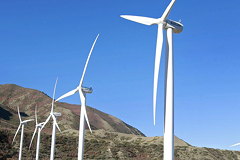
BEIJING, Nov. 4 (Xinhua) -- Experts on a TV interview program for Xinhua News Agency Thursday said they were surprised at the U.S. 301 probe into China's clean energy practices and policies, adding that the United States was barking up the wrong tree in making this decision.
"It is naturally a great cause for each country to develop renewable energy...the development of the renewable energy industry calls for substantial support from the government in combating climate change," said Qin Haiyan, a senior fellow with the Chinese Wind Energy Association.
However, rapid development of the industry, still new in terms of development, would be impossible without support from the government, Qin said during the show, China View, broadcast on Xinhua's 24-hour TV service, CNC World.
Throughout the world, government subsidies to boost green technology industries are common practices, noted Qin, "For instance, countries like Germany and Denmark have the so-called feed-in tariff policy, while the United States is putting in place policies such as PTC (Production Tax Credit) and ITC (Investment Tax Credit)."
China encourages the development of this sector through subsidizing the terminal market and giving financial support to the scientific research and development in the field, with 7 billion yuan (1 billion U.S. dollars) allocated last year to subsidize producers of renewable electricity, Qin said.
China's top energy chief, Zhang Guobao, said last month that subsidies given by the U.S. government to its new energy enterprises amounted to 4.6 billion U.S. dollars in the first nine months of this year, including 3 billion U.S. dollars for wind power businesses.
The probe decision was made by the U.S. government on Oct. 15 following a petition filed by the United Steelworkers union, who claim China's "massive" subsidies were responsible for job losses in the United States and market share reductions of U.S. companies amid heightened fears that U.S. protectionist measures against its trade partners may be on the rise due to its sluggish economic recovery.
"I think it's very difficult to make a correlation (that China's subsidies cause woes in the United States) for such a statement," said Pan Weiping, a senior consultant from GL Garrad Hassan, an independent renewable energy consultancy firm based in the UK.
Pan said, on the one hand, there were only 13 Chinese wind turbines installed in the United States so far, while on the other, "U.S. suppliers in the supply chain are benefiting from China's large renewable energy market."
Pan said the U.S. company, American Superconductor, has been supplying a large amount of power electronics to wind turbines installed in China, but due to the gap in technology and products, Chinese turbine suppliers have not made much progress in selling the products in the United States.
Though foreign companies are seeing their market shares dwindling in China after Chinese companies gradually caught up after 2005, the scale of their businesses is now expanding, Qin said.
"Take GE, for example, in 2005 the company only sold 80,000 kilowatts of wind power generation products to China, but in 2009 the number increased to 300,000, an increase of three fold," Qin said.
Pan Weiping also rebuked the claim by the United Steelworkers that China's subsidies have threatened European producers of green technologies, as Europe has been the leading continent in the world in wind energy after decades of development, whereas large-scale development of the sector only began about five years ago in China.
Experts attending the program agreed China must develop its varied renewable energies. "It's what China must do, being a responsible citizen in the global community. Also, the development of the industry in China would provide immense market opportunities for the world." Qin said.
By Zhu Shaobin
Editor: yan
Source: English.news.cn
Các tin khác
- Following the imposition of the highest tariff of 37.13%, the Ministry of Industry and Trade is reviewing galvanized steel from China (19/06/2026)
- Official tariffs have been imposed on colorless float glass imported from Indonesia and Malaysia (19/06/2026)
- India seeks to continue anti-dumping duties on Bangladesh’s jute products (19/06/2026)
- Turkey Initiates Anti-Dumping Investigation into Polyester Cord Fabric from Viet Nam (19/06/2026)
- Chinese dumping in Brazil affected the entire garlic supply chain (19/06/2026)