Home
Home
 About Us



Uganda Poultry Sector Asks for Protection for Brazilian imports
13/07/2012 12:00
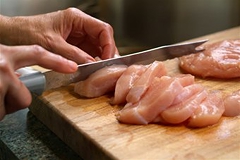
The poultry industry is in dire need of support from the government in order to avoid a collapse of the industry, as the effects of the Eurozone financial crisis take hold and the threat of cheaper products being opportunistically imported or dumped in the South African market adds more pressure to keep costs down.
Poultry producers in Uganda are losing billions of shillings as Brazilian poultry imports flood the market, according to investigations.
Incidences of chicken dumping in South Africa are likely to increase over the next few months as suppliers in struggling EU economies look for ways to dispose of surplus product. This will place severe pressure on the already struggling local industry.
Experts say that when ‘dumping’ a product, the producer is simply looking to dispose of the product and recover input costs. Therefore, poultry products that are dumped into the South African market can be sold at a much lower price than local products.
Uganda’s Daily newspaper, New Vision, investigated that between July 1 and December 3, 2011, one company Fresh Cuts (U) Ltd alone imported 725 tonnes of frozen chicken. This means that if Ugandan farmers had supplied these one million birds they would have earned sh5.7b from the sales.
Chicken for export in Brazil is sold in 22 or 24 tonnes. According to online prices, a kilogram of poultry meat before payment of transport and taxes (FOB) costs $2.10 (sh5200) meaning that the 725 tons imported by Fresh Cuts cost $1.522m (sh2.24b). The landed cost (C&F Kampala) would be approximately $1.848m (sh4.58b). When contacted, Uganda Revenue Authority confirmed that the main importers of frozen chicken were Fresh Cuts and Your Choice Ltd while American Embassy imports in small quantities for domestic consumption.
New Vision also established that although some companies advertise that their poultry products as 100% Ugandan, the reality is that some poultry meat is imported and re-packaged in Uganda, leading to loss of revenue to farmers. The Animal Diseases Act imposes a fine of sh2m or imprisonment of two years or both for illegal imports including loss of the product imported. Only hatching eggs and day old chicks are permitted to increase poultry production in the country.
Acting Chairman of the Poultry Association of Uganda Aga Sekalala junior stated, “It is very unfortunate that this has been allowed to happen, because it is a risk to the food security of the country. To wake up in the morning and we are dependent on poultry imports would be a disaster.”
He said the imports had already caused a slowdown in the regular growth of the poultry sector. “We appeal to the government to re-affirm the policy and ensure long term development of the poultry industry. He also called for a higher tax on poultry imports saying, “If the imports continue, they may wipe out our industry.”
In the 2005/06 financial year, the government passed a policy that stopped importation of any meat products into the country. This was to guard against the risk of the outbreak of Highly Pathogenic Avian Influenza (HPAI) that occurred in many countries in Asia, Europe and Africa since 2003. However special permits were allocated to institutions such as Diplomatic missions and agencies for unique meat products which could not be secured from Uganda.
Dr. Chris Rutebarika, the Assistant Commissioner Disease Control in the Agriculture ministry explained that the ban was partially lifted to allow importation from countries without the Avian Influenza outbreak. He however warned that importation of poultry products would kill the local industries involved in poultry production.
The local market is already oversupplied with poultry products and this puts local producers under a lot of pressure. Furthermore, the rise of costs such as electricity and fuel makes it extremely difficult for local producers to keep costs low, in order to compete with cheaper imported products.
The Brazilian government subsidizes up to 90% of local producers maize as part of an employment creation programme. This subsidy enables them to produce at much lower costs than South African producers. Such a grant would be highly beneficial to local producers.
Moreover, he says the price of chicken remains at the same level as in 2008, however the feed price, which currently represents 60% of the chicken producer’s costs, has double in the same time. “It’s not sustainable for an industry to keep absorbing these costs and many small and medium operations will not be able to continue doing business if this continues.
“Another major concern is that the safety of poultry products is likely to be exacerbated by the dumping. Often food gets diverted to continents whose products are not subject to the same import tariffs, to avoid import duties. This adds to the link in the elongated supply chain the food safety risk increases significantly and further to this, as more components are added it becomes more difficult to guarantee the hygiene and safety of the end product, which could potentially compromise the high levels of food safety in the local food production industry.”
Poultry producers in Uganda are losing billions of shillings as Brazilian poultry imports flood the market, according to investigations.
Incidences of chicken dumping in South Africa are likely to increase over the next few months as suppliers in struggling EU economies look for ways to dispose of surplus product. This will place severe pressure on the already struggling local industry.
Experts say that when ‘dumping’ a product, the producer is simply looking to dispose of the product and recover input costs. Therefore, poultry products that are dumped into the South African market can be sold at a much lower price than local products.
Uganda’s Daily newspaper, New Vision, investigated that between July 1 and December 3, 2011, one company Fresh Cuts (U) Ltd alone imported 725 tonnes of frozen chicken. This means that if Ugandan farmers had supplied these one million birds they would have earned sh5.7b from the sales.
Chicken for export in Brazil is sold in 22 or 24 tonnes. According to online prices, a kilogram of poultry meat before payment of transport and taxes (FOB) costs $2.10 (sh5200) meaning that the 725 tons imported by Fresh Cuts cost $1.522m (sh2.24b). The landed cost (C&F Kampala) would be approximately $1.848m (sh4.58b). When contacted, Uganda Revenue Authority confirmed that the main importers of frozen chicken were Fresh Cuts and Your Choice Ltd while American Embassy imports in small quantities for domestic consumption.
New Vision also established that although some companies advertise that their poultry products as 100% Ugandan, the reality is that some poultry meat is imported and re-packaged in Uganda, leading to loss of revenue to farmers. The Animal Diseases Act imposes a fine of sh2m or imprisonment of two years or both for illegal imports including loss of the product imported. Only hatching eggs and day old chicks are permitted to increase poultry production in the country.
Acting Chairman of the Poultry Association of Uganda Aga Sekalala junior stated, “It is very unfortunate that this has been allowed to happen, because it is a risk to the food security of the country. To wake up in the morning and we are dependent on poultry imports would be a disaster.”
He said the imports had already caused a slowdown in the regular growth of the poultry sector. “We appeal to the government to re-affirm the policy and ensure long term development of the poultry industry. He also called for a higher tax on poultry imports saying, “If the imports continue, they may wipe out our industry.”
In the 2005/06 financial year, the government passed a policy that stopped importation of any meat products into the country. This was to guard against the risk of the outbreak of Highly Pathogenic Avian Influenza (HPAI) that occurred in many countries in Asia, Europe and Africa since 2003. However special permits were allocated to institutions such as Diplomatic missions and agencies for unique meat products which could not be secured from Uganda.
Dr. Chris Rutebarika, the Assistant Commissioner Disease Control in the Agriculture ministry explained that the ban was partially lifted to allow importation from countries without the Avian Influenza outbreak. He however warned that importation of poultry products would kill the local industries involved in poultry production.
The local market is already oversupplied with poultry products and this puts local producers under a lot of pressure. Furthermore, the rise of costs such as electricity and fuel makes it extremely difficult for local producers to keep costs low, in order to compete with cheaper imported products.
The Brazilian government subsidizes up to 90% of local producers maize as part of an employment creation programme. This subsidy enables them to produce at much lower costs than South African producers. Such a grant would be highly beneficial to local producers.
Moreover, he says the price of chicken remains at the same level as in 2008, however the feed price, which currently represents 60% of the chicken producer’s costs, has double in the same time. “It’s not sustainable for an industry to keep absorbing these costs and many small and medium operations will not be able to continue doing business if this continues.
“Another major concern is that the safety of poultry products is likely to be exacerbated by the dumping. Often food gets diverted to continents whose products are not subject to the same import tariffs, to avoid import duties. This adds to the link in the elongated supply chain the food safety risk increases significantly and further to this, as more components are added it becomes more difficult to guarantee the hygiene and safety of the end product, which could potentially compromise the high levels of food safety in the local food production industry.”
UGANDA - 09 Jul, 2012
Source: papaak.com
Source: papaak.com
Các tin khác
- Following the imposition of the highest tariff of 37.13%, the Ministry of Industry and Trade is reviewing galvanized steel from China (19/06/2026)
- Official tariffs have been imposed on colorless float glass imported from Indonesia and Malaysia (19/06/2026)
- India seeks to continue anti-dumping duties on Bangladesh’s jute products (19/06/2026)
- Turkey Initiates Anti-Dumping Investigation into Polyester Cord Fabric from Viet Nam (19/06/2026)
- Chinese dumping in Brazil affected the entire garlic supply chain (19/06/2026)