Home
Home
 About Us



Trade Gap With China Widens: Are Protectionist Tariffs Next?
14/06/2010 12:00
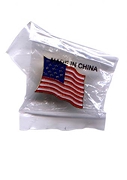
U.S. trade relations with China were in focus on Thursday, as new federal data showed trade between the nations to be growing increasingly lopsided and some in Washington threatening a protectionist response.
The Commerce Department report showed the U.S. trade deficit with China expanded in April to $19.31 billion a month. That’s a huge number — the equivalent of every living American sending $2 to China every single day. At the same time, China is using that cash to buy more and more U.S. debt — it currently holds $895.2 billion in Treasuries.
Sen. Charles Schumer (D, N.Y.) vowed that the Senate would vote within two weeks on his bill to allow countervailing duties and other anti-dumping measures against Chinese exports.
Schumer and other critics of China’s cheap goods say they hurt American workers and the American economy. Those goods are cheap for at least two reasons. One are underpaid Chinese workers (who are starting to demand and get better treatment; there’s been increasing unrest and strikes there.)
Two — and the more vexing problem for U.S. policymakers — is the unwavering and unrealistic relationship between the currencies of the two nations. The Chinese yuan has been effectively (if unofficially) pegged to the U.S. dollar for two years at the artificially low rate of 6.83 yuan to the dollar. While it’s been rising recently against the euro, it hasn’t budged against the buck. Treasury Secretary Tim Geithner has been laid back about pushing China on the currency issue to keep relations between the two countries comfortable, his critics have said.
“Treasury’s failure to call China out on its illegal currency and trade practices is disappointing to say the least,” Schumer told the U.S.-China Economic and Security Review Commission, a federal watchdog group, on Wednesday.
Something will have to give. Perhaps it will be Washington’s free-trade stance; everyone is angry these days and China is as good a target as any. Perhaps it will be Chinese labor practices. Perhaps China’s artificially-stimulated economy will pop, creating its own credit crisis and rendering it unable to keep lending money cheaply and sell inexpensive goods. That may be good for American factories and their workers, but it won’t be good for the global economy. And if the U.S. Treasury hasn’t found somebody else to foot its deficit by then, it could become way more expensive for anyone depending on continued low interest rates to keep everything chugging along.
By Linda Stern | Jun 10, 2010 |
Source: moneywatch.bnet.com
Source: moneywatch.bnet.com
Các tin khác
- Following the imposition of the highest tariff of 37.13%, the Ministry of Industry and Trade is reviewing galvanized steel from China (19/06/2026)
- Official tariffs have been imposed on colorless float glass imported from Indonesia and Malaysia (19/06/2026)
- India seeks to continue anti-dumping duties on Bangladesh’s jute products (19/06/2026)
- Turkey Initiates Anti-Dumping Investigation into Polyester Cord Fabric from Viet Nam (19/06/2026)
- Chinese dumping in Brazil affected the entire garlic supply chain (19/06/2026)