Home
Home
 About Us


The new world trade order under President Obama?
18/11/2008 12:00
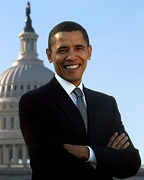
The most exciting and historic election campaign has just ended and Americans have elected their first African-American President. This election has attracted an unprecedented attention from the rest of the world who looked at this as a watershed in America’s role in the world repelled by Bush’s unilateralism and interventionist policies which unfairly made the world perceive America as arrogant yet incompetent despite being the world’s only remaining superpower. Many, including this writer, doubted whether America has changed enough to elect a black as its President. Well America delivered and at least for now, seems to have regained the world’s respect and affection.
After the euphoria, countries around the world are now evaluating what an Obama victory means for them. His pledge to be an internationalist and repair US relations with the international community has been universally welcome (save by Russia who took the opportunity to lambaste the US for meddling in Georgia and being responsible for the global economic crisis). I leave the analysis to others on what it means politically and diplomatically to the rest of the world. For me an important but unanswered question is what does an Obama Presidency and a Democratic-controlled Congress hold in store on the trade front? This is critical because that is the one area where the rest of the world, the Philippines included, will be impacted most directly and immediately.
Campaign promises
During the campaign, candidate Obama said that he would not encourage US firms that “export jobs”, i.e. outsourcing by taking away their tax breaks. He said he would like to see changes in the Korea-US Free Trade Agreement that would enable US car makers’ access to the Korean auto market. He would also like to renegotiate NAFTA to strengthen its labor and environmental provisions. He supports pressuring the WTO to better enforce agreements and halt government subsidies to foreign exporters and imposing other non-tariff barriers on US exports. He also wants to revamp the President’s ‘fast-track’ trade negotiating authority to require pre-screening of potential US free trade partners based on their labor and environmental standards and other factors. All these point to the possibility that he will carry a protectionist sentiment when he assumes office.
Wall Street versus Main Street
Divining Obama’s trade policy based on campaign rhetoric however would be inadequate since both candidates adjusted their personal ideology – McCain and Obama were essentially liberals – in order to reach out to their party base which in the case of Obama was blue collar workers who preferred Hillary Clinton during the primaries. So we may have to fallback on the Democratic Party trade platform which in itself has been undergoing a transformation over the years, particularly under Bill Clinton (the first to host APEC Summit, NAFTA, but also the same party who almost scuttled the Uruguay Round in Seattle over its support for labor and environmental standards). In essence it promises to use trade agreements to raise labor and environmental standards around the world, push open new markets for American goods and use new government programs to cushion the growing insecurity of American workers.
Within the party, the debate has been between who gets priority: Wall Street vs. Main Street? The former associated with a more liberal, deregulated world and the other, for protection from what it perceives as unfair competition and safety nets for affected sectors. Many of the new Democratic members of Congress were elected based on their stance on the side of Main Street. The state of the economy makes it even harder for the party to depart radically from this position. So how will all of these dynamics play out in the world outside U.S. borders?
Implications for Multilateral Trade
Let us take the multilateral trade system as governed by the WTO. We know from past history that where America goes, so goes the global trade regime. When America was most dependent on agriculture and textile industry, those two areas remain largely outside the GATT ambit while textiles were subjected to a special regime. As America shifted to manufacturing, industrial tariffs first and then later intellectual property rights, investments, anti-subsidies and anti-dumping took center stage in the global trade agenda. More recently, labor and environment, two issues that are central to the Democratic Party’s trade policy, have entered the multilateral trade lexicon. My take on this is that Obama will continue to support US engagement in the WTO and will back a successful conclusion of the Doha Round. Congress will give him fast track authority but will load it with conditions, chief among them labor and environmental standards and possibly lowering the threshold for initiating action against subsidies, dumping and other unfair trade practices.
Labor and environmental standards are anathema to developing countries because they fear that these would be used to discriminate against their exports and legitimize action similar to anti-dumping measures. That could complicate a resumption of negotiations but at the end of the day, the U.S. will impose these conditions anyway in any bilateral (as they did with Peru) or regional free trade agreements. They will try to seek legitimacy from the WTO to do so for the rest of the world but will not walk away if they don’t get it. A possible compromise, but still difficult, would be for the WTO to look only at trade-related issues and leave the rest to other international organizations like the ILO and UNEP.
Regional Trade: APEC
In APEC will Obama be as active as his Democratic predecessor Bill Clinton? George Bush seemed at best disinterested when APEC gets down to its main business though he came alive when security following 9/11 became APEC’s top agenda. He remained a top draw however and one reason why APEC Leaders make the annual pilgrimage to the APEC Summit so they can have their Kodak moment with Bush. Though Clinton started it all with the Blake Island summit he was a no-show in Kuala Lumpur where his representative, then vice-President Al Gore promptly excoriated the host for its undemocratic ways in dealing with “reformasi”. Obama will not make the same mistake and he would relish the idea of mixing with APEC Leaders. As for its agenda, the US will continue to use APEC as a platform to push its own trade policy priorities, so we can expect labor and the environment to be there. This presents a good opportunity for us to push for regional labor mobility to be in the mix as well.
Obama also complained about “jobs shipped overseas” or outsourcing during the campaign. But it may be more “hot air” than “hot issue” if one was to look closely at the rhetoric. He promised only to end subsidies that give companies an incentive to outsource — not to restrict outsourcing itself. Outsourcing will become a permanent feature of American business if they are to remain competitive and provide the level of service required by its customer so I would not lose sleep over it.
Early Test for Obama Trade Policy
When will be the first opportunity to test the direction of an Obama Administration’s trade policy? The earliest indication might come if Obama is invited to the G20 summit on November 15 and he accepts. The world’s economic leaders, who welcome Obama’s internationalist position on political relations, will be curious about his foreign trade stance, given his seemingly anti-globalization and pro-labor credentials. Although trade policy is not high in the immediate agenda of President Obama – stabilizing the financial market and stimulating the economy would be the most immediate – the real test though is when he assumes office and will be forced to reckon with that when the agreement with China to limit its exports of certain categories of textile and textile products to the U.S. via quotas expires at the end of this year. Then around June, the Treasury Secretary is required by law to make a bi-annual determination whether a country is manipulating its currency to gain export pricing advantage under Section 3004 of the 1988 Omnibus Trade and Competitiveness Act (P.L. 100-418), of which China is high in the list. How the Obama Administration handles this would be a good bellwether of its trade policy.
Already a slew of bills are in Congress aimed at curbing exports from China and one wonders whether these would now sail through a Democrat-dominated Congress. One hope is that Speaker Nancy Pelosi is far more friendlier to foreign trade (coming as she is from a Pacific Rim state) than her predecessor as head of House Democrats, Richard Gephardt, who is from the American heartland and a friend of labor and blue-collar workers.
At the end of the day, America will act as all other nations do, for its own national interest. We cannot expect any favors, even if John McCain had won. The Philippines just has to work on improving its global competitiveness so that it will be in a good position to deal with the shape of the global trade regime under Obama’s leadership.
After the euphoria, countries around the world are now evaluating what an Obama victory means for them. His pledge to be an internationalist and repair US relations with the international community has been universally welcome (save by Russia who took the opportunity to lambaste the US for meddling in Georgia and being responsible for the global economic crisis). I leave the analysis to others on what it means politically and diplomatically to the rest of the world. For me an important but unanswered question is what does an Obama Presidency and a Democratic-controlled Congress hold in store on the trade front? This is critical because that is the one area where the rest of the world, the Philippines included, will be impacted most directly and immediately.
Campaign promises
During the campaign, candidate Obama said that he would not encourage US firms that “export jobs”, i.e. outsourcing by taking away their tax breaks. He said he would like to see changes in the Korea-US Free Trade Agreement that would enable US car makers’ access to the Korean auto market. He would also like to renegotiate NAFTA to strengthen its labor and environmental provisions. He supports pressuring the WTO to better enforce agreements and halt government subsidies to foreign exporters and imposing other non-tariff barriers on US exports. He also wants to revamp the President’s ‘fast-track’ trade negotiating authority to require pre-screening of potential US free trade partners based on their labor and environmental standards and other factors. All these point to the possibility that he will carry a protectionist sentiment when he assumes office.
Wall Street versus Main Street
Divining Obama’s trade policy based on campaign rhetoric however would be inadequate since both candidates adjusted their personal ideology – McCain and Obama were essentially liberals – in order to reach out to their party base which in the case of Obama was blue collar workers who preferred Hillary Clinton during the primaries. So we may have to fallback on the Democratic Party trade platform which in itself has been undergoing a transformation over the years, particularly under Bill Clinton (the first to host APEC Summit, NAFTA, but also the same party who almost scuttled the Uruguay Round in Seattle over its support for labor and environmental standards). In essence it promises to use trade agreements to raise labor and environmental standards around the world, push open new markets for American goods and use new government programs to cushion the growing insecurity of American workers.
Within the party, the debate has been between who gets priority: Wall Street vs. Main Street? The former associated with a more liberal, deregulated world and the other, for protection from what it perceives as unfair competition and safety nets for affected sectors. Many of the new Democratic members of Congress were elected based on their stance on the side of Main Street. The state of the economy makes it even harder for the party to depart radically from this position. So how will all of these dynamics play out in the world outside U.S. borders?
Implications for Multilateral Trade
Let us take the multilateral trade system as governed by the WTO. We know from past history that where America goes, so goes the global trade regime. When America was most dependent on agriculture and textile industry, those two areas remain largely outside the GATT ambit while textiles were subjected to a special regime. As America shifted to manufacturing, industrial tariffs first and then later intellectual property rights, investments, anti-subsidies and anti-dumping took center stage in the global trade agenda. More recently, labor and environment, two issues that are central to the Democratic Party’s trade policy, have entered the multilateral trade lexicon. My take on this is that Obama will continue to support US engagement in the WTO and will back a successful conclusion of the Doha Round. Congress will give him fast track authority but will load it with conditions, chief among them labor and environmental standards and possibly lowering the threshold for initiating action against subsidies, dumping and other unfair trade practices.
Labor and environmental standards are anathema to developing countries because they fear that these would be used to discriminate against their exports and legitimize action similar to anti-dumping measures. That could complicate a resumption of negotiations but at the end of the day, the U.S. will impose these conditions anyway in any bilateral (as they did with Peru) or regional free trade agreements. They will try to seek legitimacy from the WTO to do so for the rest of the world but will not walk away if they don’t get it. A possible compromise, but still difficult, would be for the WTO to look only at trade-related issues and leave the rest to other international organizations like the ILO and UNEP.
Regional Trade: APEC
In APEC will Obama be as active as his Democratic predecessor Bill Clinton? George Bush seemed at best disinterested when APEC gets down to its main business though he came alive when security following 9/11 became APEC’s top agenda. He remained a top draw however and one reason why APEC Leaders make the annual pilgrimage to the APEC Summit so they can have their Kodak moment with Bush. Though Clinton started it all with the Blake Island summit he was a no-show in Kuala Lumpur where his representative, then vice-President Al Gore promptly excoriated the host for its undemocratic ways in dealing with “reformasi”. Obama will not make the same mistake and he would relish the idea of mixing with APEC Leaders. As for its agenda, the US will continue to use APEC as a platform to push its own trade policy priorities, so we can expect labor and the environment to be there. This presents a good opportunity for us to push for regional labor mobility to be in the mix as well.
Obama also complained about “jobs shipped overseas” or outsourcing during the campaign. But it may be more “hot air” than “hot issue” if one was to look closely at the rhetoric. He promised only to end subsidies that give companies an incentive to outsource — not to restrict outsourcing itself. Outsourcing will become a permanent feature of American business if they are to remain competitive and provide the level of service required by its customer so I would not lose sleep over it.
Early Test for Obama Trade Policy
When will be the first opportunity to test the direction of an Obama Administration’s trade policy? The earliest indication might come if Obama is invited to the G20 summit on November 15 and he accepts. The world’s economic leaders, who welcome Obama’s internationalist position on political relations, will be curious about his foreign trade stance, given his seemingly anti-globalization and pro-labor credentials. Although trade policy is not high in the immediate agenda of President Obama – stabilizing the financial market and stimulating the economy would be the most immediate – the real test though is when he assumes office and will be forced to reckon with that when the agreement with China to limit its exports of certain categories of textile and textile products to the U.S. via quotas expires at the end of this year. Then around June, the Treasury Secretary is required by law to make a bi-annual determination whether a country is manipulating its currency to gain export pricing advantage under Section 3004 of the 1988 Omnibus Trade and Competitiveness Act (P.L. 100-418), of which China is high in the list. How the Obama Administration handles this would be a good bellwether of its trade policy.
Already a slew of bills are in Congress aimed at curbing exports from China and one wonders whether these would now sail through a Democrat-dominated Congress. One hope is that Speaker Nancy Pelosi is far more friendlier to foreign trade (coming as she is from a Pacific Rim state) than her predecessor as head of House Democrats, Richard Gephardt, who is from the American heartland and a friend of labor and blue-collar workers.
At the end of the day, America will act as all other nations do, for its own national interest. We cannot expect any favors, even if John McCain had won. The Philippines just has to work on improving its global competitiveness so that it will be in a good position to deal with the shape of the global trade regime under Obama’s leadership.
FILIPINO WORLD VIEW By Roberto R. Romulo Updated November 07, 2008 12:00 AM
Source: beta.philstar.com
Source: beta.philstar.com
Các tin khác
- Rising global shipping costs put pressure on Viet Nam’s seafood exporters (22/06/2026)
- India likely to retain anti-dumping duties on Bangladeshi jute products (22/06/2026)
- Japan slaps anti-dumping duties on Chinese, Taiwanese steel (22/06/2026)
- India initiates anti-dumping probe against a Chinese, Japanese chemical used in tyre, rubber items (22/06/2026)
- Reasons why the US continues to suspend customs clearance for Vietnamese trailers (22/06/2026)