Home
Home
 About Us


South Korea solar firms may rise as China peers face trade barriers
29/08/2012 12:00
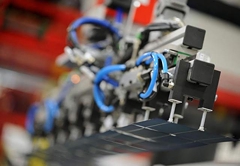
China-based solar firms have been urging Taiwan-based peers to form alliances in order to compete with South Korea-based solar firms if Europe decides to start anti-dumping and anti-subsidy investigations against China-based players.
According to industry sources in China, if the trade war begins, China-based solar firms will begin to move manufacturing facilities to non-China regions. This means there will be a period when China-based solar firms halt production prior to the move. South Korea-based solar firms may use this period to expand market share, added sources.
However, if Taiwan-based peers are willing to form alliances with China-based firms, the need to move plants to other regions will decrease. The cooperation is also a good opportunity for the latter to build distribution channels that they have been lacking. Sources added that if China-based solar firms move plants to other regions, reliance on Taiwan-based peers will decrease significantly.
Industry sources noted that it is unlikely for the US- and Europe-based firms to target Taiwan-based firms on anti-dumping and anti-subsidy investigations because it would be too expensive for these US and Europe firms to produce all of their own solar products and they would still need to have outsourcing partners in Taiwan.
South Korea-based firms such as Samsung, LG and Hyundai have been building solar product brands. Without strong competitions from China, the firms are likely to expand and dominate the market. In addition, South Korea-based solar firms have competitive production costs compared to peers from Taiwan and China. To maintain domination, solar firms in China hope to guard the market share through cooperation with Taiwan-based peers.
According to industry sources in China, if the trade war begins, China-based solar firms will begin to move manufacturing facilities to non-China regions. This means there will be a period when China-based solar firms halt production prior to the move. South Korea-based solar firms may use this period to expand market share, added sources.
However, if Taiwan-based peers are willing to form alliances with China-based firms, the need to move plants to other regions will decrease. The cooperation is also a good opportunity for the latter to build distribution channels that they have been lacking. Sources added that if China-based solar firms move plants to other regions, reliance on Taiwan-based peers will decrease significantly.
Industry sources noted that it is unlikely for the US- and Europe-based firms to target Taiwan-based firms on anti-dumping and anti-subsidy investigations because it would be too expensive for these US and Europe firms to produce all of their own solar products and they would still need to have outsourcing partners in Taiwan.
South Korea-based firms such as Samsung, LG and Hyundai have been building solar product brands. Without strong competitions from China, the firms are likely to expand and dominate the market. In addition, South Korea-based solar firms have competitive production costs compared to peers from Taiwan and China. To maintain domination, solar firms in China hope to guard the market share through cooperation with Taiwan-based peers.
Tuesday 28 August 2012
By Nuying Huang and Jackie Chang
Source: digitimes.com
By Nuying Huang and Jackie Chang
Source: digitimes.com
Các tin khác
- Following the imposition of the highest tariff of 37.13%, the Ministry of Industry and Trade is reviewing galvanized steel from China (19/06/2026)
- Official tariffs have been imposed on colorless float glass imported from Indonesia and Malaysia (19/06/2026)
- India seeks to continue anti-dumping duties on Bangladesh’s jute products (19/06/2026)
- Turkey Initiates Anti-Dumping Investigation into Polyester Cord Fabric from Viet Nam (19/06/2026)
- Chinese dumping in Brazil affected the entire garlic supply chain (19/06/2026)