Home
Home
 About Us



Seafood exports to EU losing sheen
09/06/2010 12:00
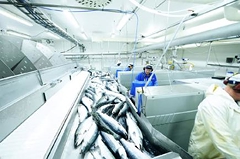
Kochi: India’s seafood exporters feel that the European Union, which was once touted the most lucrative export destination for Indian seafood exports, is slowly losing its sheen because of its stringent quality control norms coupled with the overall risk factors associated with exporting seafood to the EU.
Limited ability to appeal against European Union (EU) health authorities and rejections of seafood consignments have made the EU a high-risk destination for Indian exporters.
Sources at the Seafood Exporters Association of India (SEAI) said, irrational and binding decisions of the EU health authorities at Brussels and veterinary inspectors at destination ports lead to higher expenses and loss for exporters.
In a meeting attended by officials of the Marine Exports Product Development Authority (MPEDA), Exports Inspection Council and SEAI, exporters alleged that jurisdiction of EU veterinary inspectors are often limitless and not confined to a book of procedures.
The EU has recently tightened entry into the zone through various measures, which include catch certificate and mandatory testing of 20% of all aquaculture products.
In the recent past, the EU has displaced the US as the single largest market for Indian seafood. In 2009-10, the EU had a share of 30.07% in dollar realisation. Anti-dumping duty on Indian shrimps by the US saw exporters focusing on the EU countries to increase exports and de-risk trade. “But through new regulations, the EU is also putting non-tariff barriers on Indian exports,” an exporter told FE.
SEAI officials said that financial institutions are discouraging trade with the EU because of stringent penalties and uncertainties.
In the EU, unlike the US markets, rejection of consignment due to higher than permissible residue of anti-biotic or other toxins by EU veterinary inspectors is final and there is no scope for appeal. “In the case of the US, exporter can send the sample to an independent laboratory and dispute the findings and go in for an appeal,” SEAI officials told FE.
The EU also makes it mandatory to destroy the cargo, which the US does not.
“Even after several years, the health regulations of the EU are not harmonised in practical terms. An exporter has to deal individually and separately at each entry points if he has been put on alert,” sources said.
Earlier, if an exporter, who is on alert, managed to pass 10 consignments through a single EU member ports, he would have got his name removed from the negative...
Limited ability to appeal against European Union (EU) health authorities and rejections of seafood consignments have made the EU a high-risk destination for Indian exporters.
Sources at the Seafood Exporters Association of India (SEAI) said, irrational and binding decisions of the EU health authorities at Brussels and veterinary inspectors at destination ports lead to higher expenses and loss for exporters.
In a meeting attended by officials of the Marine Exports Product Development Authority (MPEDA), Exports Inspection Council and SEAI, exporters alleged that jurisdiction of EU veterinary inspectors are often limitless and not confined to a book of procedures.
The EU has recently tightened entry into the zone through various measures, which include catch certificate and mandatory testing of 20% of all aquaculture products.
In the recent past, the EU has displaced the US as the single largest market for Indian seafood. In 2009-10, the EU had a share of 30.07% in dollar realisation. Anti-dumping duty on Indian shrimps by the US saw exporters focusing on the EU countries to increase exports and de-risk trade. “But through new regulations, the EU is also putting non-tariff barriers on Indian exports,” an exporter told FE.
SEAI officials said that financial institutions are discouraging trade with the EU because of stringent penalties and uncertainties.
In the EU, unlike the US markets, rejection of consignment due to higher than permissible residue of anti-biotic or other toxins by EU veterinary inspectors is final and there is no scope for appeal. “In the case of the US, exporter can send the sample to an independent laboratory and dispute the findings and go in for an appeal,” SEAI officials told FE.
The EU also makes it mandatory to destroy the cargo, which the US does not.
“Even after several years, the health regulations of the EU are not harmonised in practical terms. An exporter has to deal individually and separately at each entry points if he has been put on alert,” sources said.
Earlier, if an exporter, who is on alert, managed to pass 10 consignments through a single EU member ports, he would have got his name removed from the negative...
Rajesh Ravi
Posted: Monday, Jun 07, 2010 at 2332 hrs IST
Source: www.financialexpress.com
Posted: Monday, Jun 07, 2010 at 2332 hrs IST
Source: www.financialexpress.com
Các tin khác
- Following the imposition of the highest tariff of 37.13%, the Ministry of Industry and Trade is reviewing galvanized steel from China (19/06/2026)
- Official tariffs have been imposed on colorless float glass imported from Indonesia and Malaysia (19/06/2026)
- India seeks to continue anti-dumping duties on Bangladesh’s jute products (19/06/2026)
- Turkey Initiates Anti-Dumping Investigation into Polyester Cord Fabric from Viet Nam (19/06/2026)
- Chinese dumping in Brazil affected the entire garlic supply chain (19/06/2026)