Home
Home
 About Us



Possible Russia-EU trade war beckons
03/10/2008 12:00
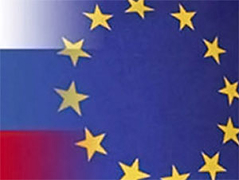
Russia, which avoided a trade war with the European Union after its conflict with Georgia over the break-away province of South Ossetia last month, may still face EU sanctions together with other countries accused of "resource nationalism."
Brussels is now drafting a package of measures against countries charging export duties and introducing other export restrictions against the backdrop of high raw-materials prices.
Although Russia may also be blacklisted, analysts said the EU had no right to demand duty-free trade from Moscow, and that it lacked the leverage for facilitating such trade.
"Naturally, the West does not like our export-regulation duties hindering operations on the Russian oil market," Mikhail Delyagin, head of research at the Moscow-based Institute of Globalization Problems, told the paper.
He said the EU should not expect free access to the Russian oil and gas pipeline network. "Unlike air or water, a common asset, this is Russian property," Delyagin said.
"Every state charges its own export duties. Nobody has the right to influence the export-duty policies of any country because this would be an attempt to interfere in its internal affairs," Alexei Skopin, deputy head of the regional economy and economic geography chair at the Higher School of Economics, told the paper.
The EU wants to include customs-duty restrictions in the agenda of talks on Russia's accession to the World Trade Organization and on signing free-trade agreements.
Moreover, Brussels wants to more actively use protectionist mechanisms, including anti-dumping duties.
Skopin said the proposed EU measures would not seriously influence Russia because Europe had already barred Moscow from virtually all sectors.
He said Brussels was charging anti-dumping duties on Russian iron-and-steel imports, and that low export duties in this field were Moscow's only motive for joining the WTO.
"Russian companies have already circumvented such restrictions, have become part of the European economy and now co-own European companies," Skopin told the paper.
"Anti-dumping duties could hurt separate companies, rather than the entire Russian economy, because Moscow does not export many products to the EU. Brussels, which is making empty threats, realizes that it cannot exert economic pressure on Russia," Delyagin said.
Brussels is now drafting a package of measures against countries charging export duties and introducing other export restrictions against the backdrop of high raw-materials prices.
Although Russia may also be blacklisted, analysts said the EU had no right to demand duty-free trade from Moscow, and that it lacked the leverage for facilitating such trade.
"Naturally, the West does not like our export-regulation duties hindering operations on the Russian oil market," Mikhail Delyagin, head of research at the Moscow-based Institute of Globalization Problems, told the paper.
He said the EU should not expect free access to the Russian oil and gas pipeline network. "Unlike air or water, a common asset, this is Russian property," Delyagin said.
"Every state charges its own export duties. Nobody has the right to influence the export-duty policies of any country because this would be an attempt to interfere in its internal affairs," Alexei Skopin, deputy head of the regional economy and economic geography chair at the Higher School of Economics, told the paper.
The EU wants to include customs-duty restrictions in the agenda of talks on Russia's accession to the World Trade Organization and on signing free-trade agreements.
Moreover, Brussels wants to more actively use protectionist mechanisms, including anti-dumping duties.
Skopin said the proposed EU measures would not seriously influence Russia because Europe had already barred Moscow from virtually all sectors.
He said Brussels was charging anti-dumping duties on Russian iron-and-steel imports, and that low export duties in this field were Moscow's only motive for joining the WTO.
"Russian companies have already circumvented such restrictions, have become part of the European economy and now co-own European companies," Skopin told the paper.
"Anti-dumping duties could hurt separate companies, rather than the entire Russian economy, because Moscow does not export many products to the EU. Brussels, which is making empty threats, realizes that it cannot exert economic pressure on Russia," Delyagin said.
Nezavisimaya Gazeta
Sep 30, 2008
Source: en.rian.ru
Sep 30, 2008
Source: en.rian.ru
Các tin khác
- Following the imposition of the highest tariff of 37.13%, the Ministry of Industry and Trade is reviewing galvanized steel from China (19/06/2026)
- Official tariffs have been imposed on colorless float glass imported from Indonesia and Malaysia (19/06/2026)
- India seeks to continue anti-dumping duties on Bangladesh’s jute products (19/06/2026)
- Turkey Initiates Anti-Dumping Investigation into Polyester Cord Fabric from Viet Nam (19/06/2026)
- Chinese dumping in Brazil affected the entire garlic supply chain (19/06/2026)