Home
Home
 About Us



Pakistan: Competition Commission calls for strengthening anti-dumping laws
28/03/2011 12:00
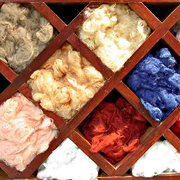
ISLAMABAD: The Competition Commission of Pakistan (CCP) has called for strengthening the anti-dumping law to protect the local industry from the continuous dumping of polyester staple fibre by Indonesia, Thailand, South Korea and China, sources said on Thursday.
A Competition Impact Assessment Report prepared by the commission found that these four countries are involved in dumping their fibre in Pakistan by selling their products at much cheaper rates than in their homelands.
The sector is directly affected by the developments in the textile industry, they said, adding that the country’s textile exports fell during the last three years, therefore, the PSF demand cannot be expected to remain stable, they said.
The cost of doing business is on the rise. In particular, the energy cost is not competitive as compared to other PSF manufacturing countries of the region, the sources said.
Closure of PSF unit of Dewan Salman is not only a setback for the industry but also hurting the PSF business.
Low tariffs and weaknesses in the application of the trade remedy law, the anti-dumping mechanism, have exposed the PSF sector to unfair foreign competition.
The commission recommended that the development of the textile industry is a pre-condition to boost the derived demand for PSF. The textile sector needs a stronger image and market development strategy, the sources said, adding that targeted efforts are required to check the rise in investors’ negative perception of political instability and its associated impact on investment and sourcing decisions.
Effective negotiations are needed to reduce access costs to major markets within the WTO framework or through bilateral arrangements.
Efforts are required to establish long-term competitiveness of the textile industry, focusing on the entire value chain, including PSF, the sources said.
Economies of scale impact the cost of production. Therefore, to reap the benefits in the form of elevated efficiency and productivity, the PSF sector needs to improve its scale of production and technology profile. This will also enable the sector to better meet the PSF demand, it was suggested.
Dewan Salman Fibres Limited holds around 40 percent of the total installed PSF production capacity. This unit needs to be put back in operation. The tariff structure for the PSF industry should be managed so as to provide the industry and potential entrants long-term viability for future planning and growth, while incentivizing them to increase their international competitiveness.
Disclosure of sensitive cost information through company websites is competition reducing in its effect. Therefore, the Securities and Exchange Commission of Pakistan (SECP) needs to work out an alternative mechanism to collect necessary cost data, the CCP said.
Market power may be gauged through production shares of market player. We find that the shares of major PSF producers changed during 2001-09. However, the market remained concentrated, with one producer holding a dominant position.
Dewan Salman reduced its share from 53 percent in 2001/02 to only six percent in 2008/09, while Ibrahim Fibre emerged as the largest player with a 49 percent share in 2008/09.
ICI steadily increased its share from 21 percent in 2001/02 to 33 percent in 2008/09.
Market share of Rupali and Pakistan Synthetics remained almost unchanged.
On the issue of competitive behaviour in the PSF market, the CCP said that this view is reinforced by the observation that during 2008, when the cost of production declined by 8.5 percent, the ex-factory sale price was also reduced by 7.23 percent, implying that a sizeable benefit of reduction in the cost was passed on to the buyers.
This behaviour reflects the presence of enough competitive pressure on the two major producers, it added.
By Mehtab Haider
Source: thenews.com.pk
Các tin khác
- Following the imposition of the highest tariff of 37.13%, the Ministry of Industry and Trade is reviewing galvanized steel from China (19/06/2026)
- Official tariffs have been imposed on colorless float glass imported from Indonesia and Malaysia (19/06/2026)
- India seeks to continue anti-dumping duties on Bangladesh’s jute products (19/06/2026)
- Turkey Initiates Anti-Dumping Investigation into Polyester Cord Fabric from Viet Nam (19/06/2026)
- Chinese dumping in Brazil affected the entire garlic supply chain (19/06/2026)